Fast push (aka shoving): Use your auto attacks and AoEs to kill enemy minions as quickly as you can. Once you've properly shoved, your wave crashes into the enemy tower, so their tower will start killing your minions, allowing your wave to reset on its own.
Fast pushing is probably the simplest wave state to actually achieve, but it's by no means simple. Targeting becomes an important aspect of shoving the wave, and knowing where it's going to crash can take a lot of thought as well. Once properly shoved, you'll be rewarded with some breathing room that you can use to roam, recall, or grab an objective. Also, pushing mindlessly leaves you wide open to getting ganked.
Pushing is underrated in LoL. Somehow, though, people have decided that freezing is the brainy option and pushing is the go-to for when you're out of ideas. That's backwards. A well-timed crash is how you leave lane without paying for it, and that's most of what wave management in League of Legends is for.
What Fast Pushing and Resetting Do to the Wave State
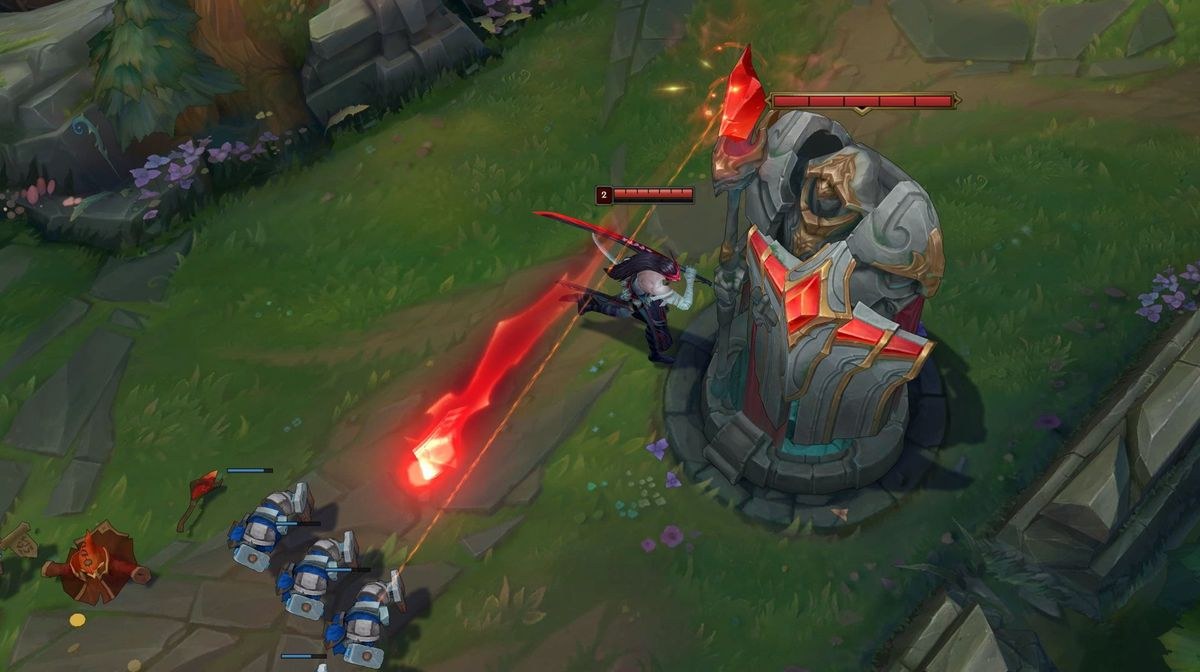
A fast push (aka shoving/crashing) refers to the situation in which you kill the enemy minion wave really fast, so your remaining minions walk into the other team's turret. When people say "crash the wave," they mean your minions reached the turret and started eating shots.
Once your crashed wave gets killed by the turret, the next wave from each side will meet outside of turret range, which is referred to as resetting a wave. The lane goes back to roughly neutral without you standing in it.
Why crash a wave? The whole concept of wave management comes down to one question: who loses gold when somebody leaves lane?
Imagine that the wave is currently in the middle of the lane and you recall to buy items. While you are at the fountain buying stuff, the wave will walk into your turret. Now imagine that you push the wave into the enemy tower and you recall. In this case, the other player will have to last hit minions under their turret.
Crashing the wave essentially means creating free time. Therefore, crashing the wave is the basis for recalling, roaming, prepping for teamfights/objectives, and even diving the other player.
For the full picture of every wave state, our League of Legends wave management guide covers the lot. In this post, however, we'll focus on shoving waves.
How a Fast Push Differs from a Slow Push and a Freeze
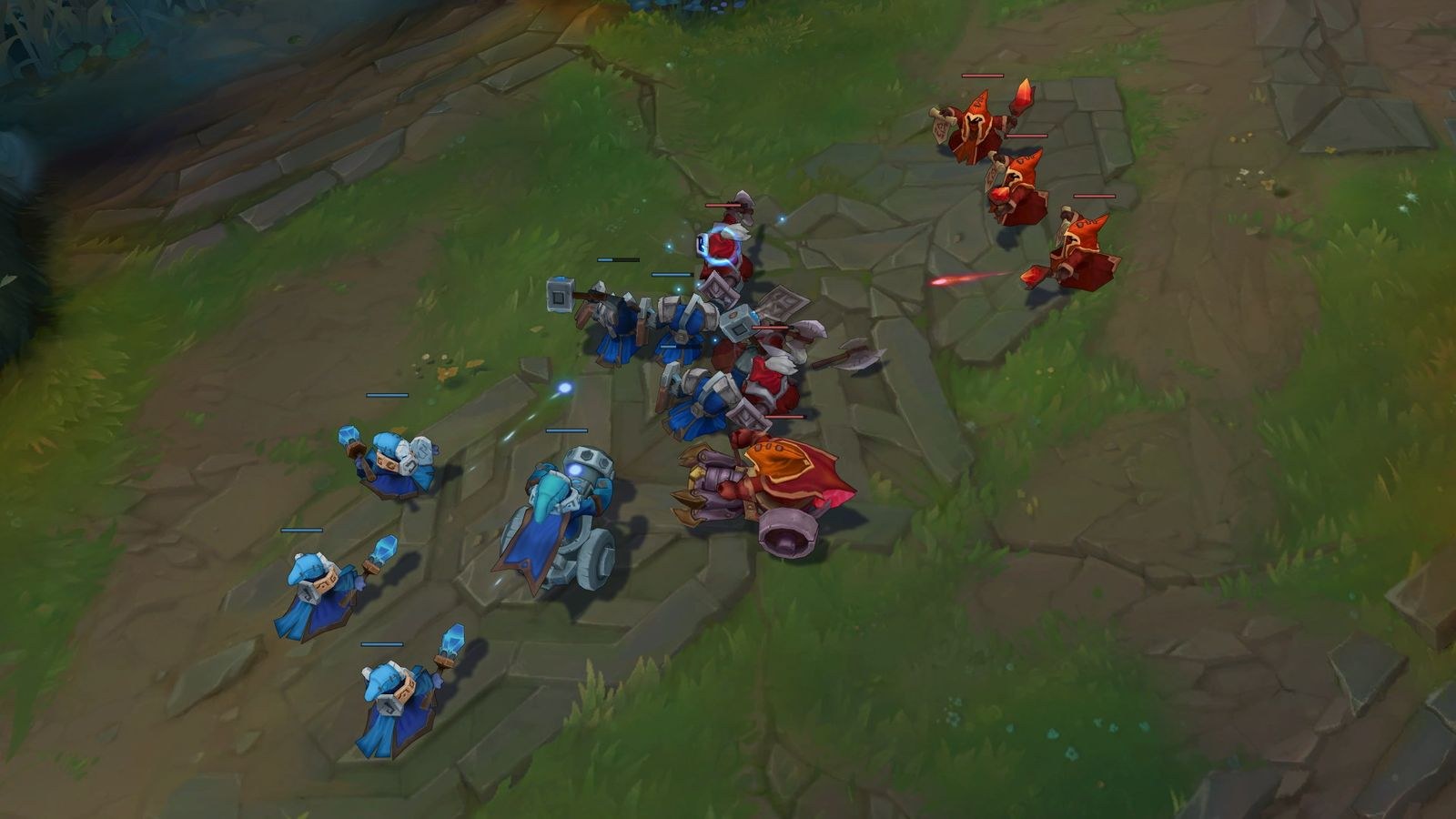
There are 3 basic wave states. Every other type of wave management is simply a combination of these 3 states.
Slow push. Kill only caster minions (besides last hitting) and allow the enemy melees to stay alive. Your wave keeps a couple of extra minions alive, the next wave adds to them, and after 2-3 waves you've stacked a big minion advantage that rolls into the enemy tower.
Freeze. Only last hit and allow the enemy wave a slight minion advantage, which will stop the wave right in front of your tower. Its value comes from the fact that your opponent now has to come very deep into your half of the map to last hit and can easily be ganked by your jungler.
Fast push. Kill all the minions asap without allowing a stack up or waiting. It sacrifices the minion advantage of the slow push and compensates with speed.
This is the golden rule of all wave states: the side with the most minions will win the minion war and push towards the other side. Controlling a wave is all about controlling which side has extra bodies.
When a Crashed Minion Wave Resets and When It Bounces
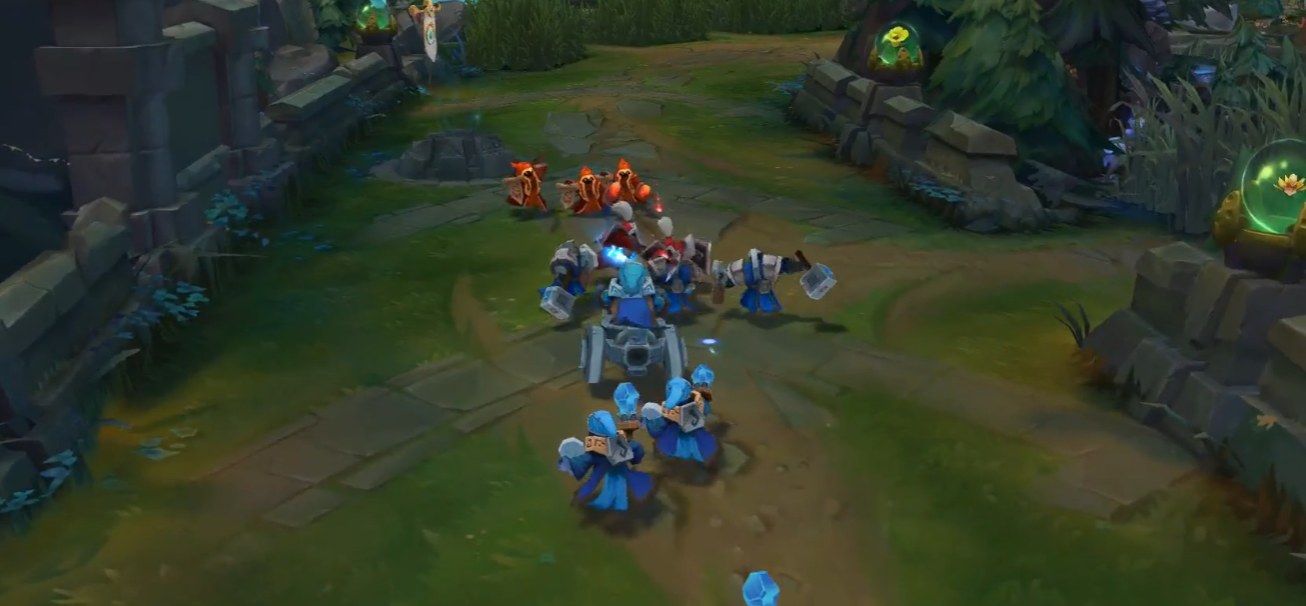
Many guides blur the wave reset and the wave bounce together, so it's important that you understand the difference.
When crashing a wave into the enemy tower, if it's a small wave, it will be cleared very quickly. To understand why, visit the LoL Wiki's turret page, which states that each tower shot takes 70% of a caster minion's max health and 45% of a melee's. In essence, towers two-tap casters and three-tap melees.
Because of this, if you shove a small wave into the enemy tower, they will die in a matter of seconds, before the enemy's next wave arrives. When the next two waves meet, there will be an even matchup, so the wave will form in the middle of the lane. This is known as resetting the wave.
If you shove a large wave into the enemy tower (say it has ten or twelve minions in it), it will take the tower much longer to get rid of them. The enemy reinforcements will make it in time, and the combined might of the extra minions and the tower will take your crashing minion wave down. There will now be leftover enemy minions that outnumber yours, so the wave will bounce back toward your side of the lane. This is known as bouncing a wave.
Reinforcements are the whole reason. The side closer to its own base gets reinforcements first, because the new wave has less ground to cover. So an even fight in your half tips your way and drifts toward the enemy, and an even fight in their half drifts toward you. That's also why a freeze needs the enemy to have a few extra minions: those bodies cancel out your reinforcement edge near your tower. Understanding wave movement mostly comes down to this one idea.
A wave bounce can actually be very helpful. You can crash a big wave just before you recall, which means the wave will be waiting on your side when you get back in lane.
If you actually want a wave reset, you can usually shove the wave back into the tower once. This time it should reset, since you probably won't shove the whole wave. The tower will be able to get rid of it quicker, and the next two waves will meet even.
How to Fast Push the Wave Step by Step
Here's the process. Four steps, in sequence. Skip the first step, and you will most likely find yourself looking at a gray screen when you go to shove.
1. Check the Map Before You Shove
A pushed wave puts you next to the enemy tower, which is as far from your own tower as you can get in lane. That's where ganks land. Before you push towards their turret, make sure to think through the following points:
- Can the other jungler gank? If you've seen them on the other side of the map, you're probably safe to push for a little while. If you have no idea, then you shouldn't.
- Can you ward off a gank? Do you have vision in the river/tri-bush area such that if a jungler tries to gank, it will just be a free retreat for you?
- Can the other laner gank? Check their HP as well as summoner spells - Flash and Ignite can really go a long way when paired with a ganker. If the enemy has them and you're at half HP, then when the jungler ganks, you'll be in for a 2v1 with no counter. Also check to see if their wave clear matches yours - if they clear faster than you, your wave stalls near their tower, and you will be spending an undesirable amount of time far away from your turret.
If any of the answers to those questions worries you, keep the wave near the middle or don't push at all.
2. Kill the Melee Minions and Cannon First
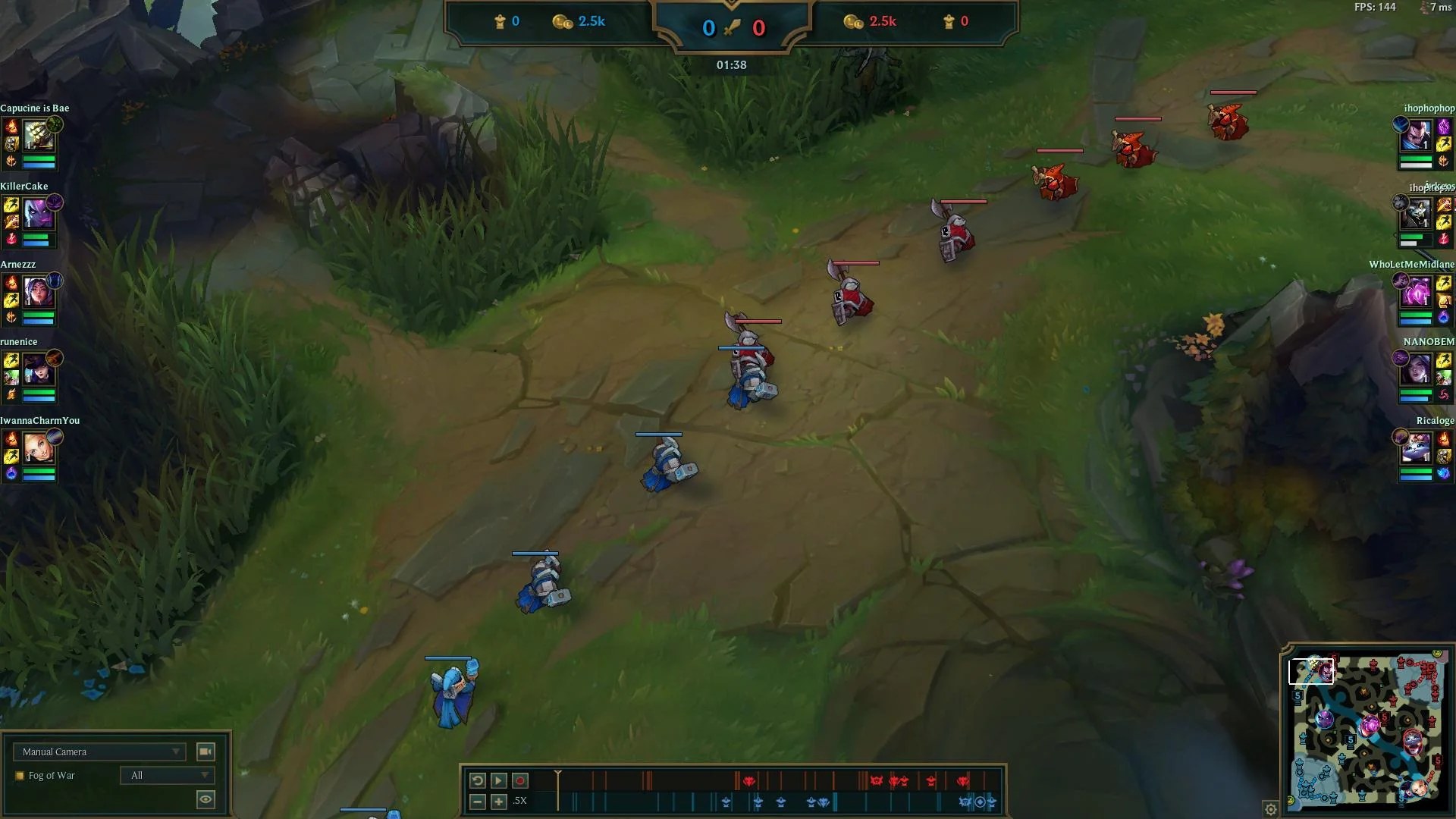
Popular gameplay guides will often contradict each other on whether to focus down the melee/cannon or casters first. The reason for this is that they both are correct. It just depends on whether or not you're looking to slow push or crash.
One thing to keep in mind when clearing is the fact that the melee minions, and cannon when one is present, have the most health and stand in front, meaning they will soak up damage from your casters (as your casters will focus down front-line minions, preventing your wave from advancing until they are dead).
If your goal is to crash (as discussed in this guide), it's in your best interest to quickly take out the front-line minions so your wave of minions can advance onto the squishy caster minions. Casters die very quickly. In addition, the enemy casters will pick up a lot of stray AoE ability damage.
On the other hand, "casters first" is the proper way to kill a wave if you're trying to set up a slow push, as more of your minions will make it through several waves this way.
A push with more minions will travel further/faster/harder, so keep in mind a cannon wave or a stacked wave crashes far quicker than a lone wave. Try to time your shoves accordingly.
3. Save Your AoE for When the Wave Is Bunched
Don't Q into a spread-out wave. Waiting for them to overlap (while AA'ing in the meantime, of course) and Q'ing when the caster minions bunch up with the melee will allow you to hit the entire wave. That makes one Q as effective as three.
Champions with natural wave clear make this almost free. Sivir, Ziggs, Malzahar, Taliyah: a couple Q's and the wave is dead once you get your key spells (this will vary from champion to champion, and kits get updated often, so check the patch notes if unsure).
With more single-target/less AoE champions, you'll have to work a little harder to clear the wave. It may just be AA'ing for champs like Fiora or Draven and leaving it to your minions to do their job. Try to crash on the cannon wave for these champions as the extra minion will help you.
4. Follow the Wave All the Way to the Tower
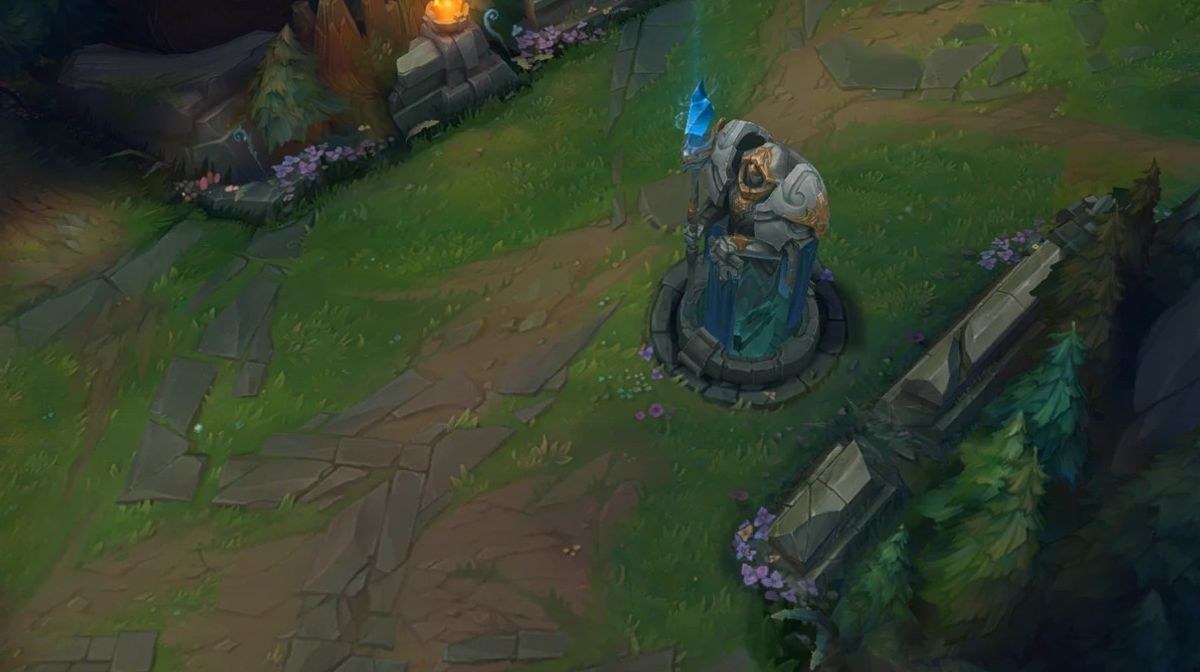
Common problem here: you clear most of the enemy wave, but you leave as yours are walking in, and your crash fails. Their remaining casters will meet their next wave sooner because they're closer. That means the wave will stop short of tower range and begin walking back, allowing your opponent to freeze in front of their tower. A half-crash is worse than not crashing at all.
Always see their tower attack your minions before you leave the crash. Then you've successfully crashed and need to immediately determine what you're going to do: recall, roam, ward, hit a plate on the tower. Pick one and do it. A crash gives you some tempo, so make use of that tempo.
How to Reset the Wave Before You Recall and Catch the Next Wave
Recall channels for 8 seconds, so recall the instant your crashed minions get hit by the enemy tower. Since you crashed them, it'll take several hits to take them out, so the lane will be reset by the time you get back.
Patch 26.1 moved the first minion spawn to 0:30, so update your timer if you are still timing it around 1:05. Per the LoL Wiki's minion page, waves spawn every 30 seconds until 14:00, every 25 seconds until 30:00, then every 20 seconds, and the cannon comes with every third wave until 14:00, every second wave until 25:00, then every wave. Older guides quote 15- or 20-minute thresholds; ignore guides that still say this.
An early cannon wave gives slightly above 150 gold. As of the same patch, there is 1 cannon minion that gives 50g (+1g per 90s of match time) and three melee minions that give 20g each. A caster minion gives 14g, so three casters + three melee minions without the cannon will still give 102g. Losing that cannon wave costs you more than a turret plate.
So you want to push the wave before leaving. Never recall just before an allied cannon wave would come out; stay, crash that wave as well, and recall then.
Set Up a Cheater Recall with a Slow Push
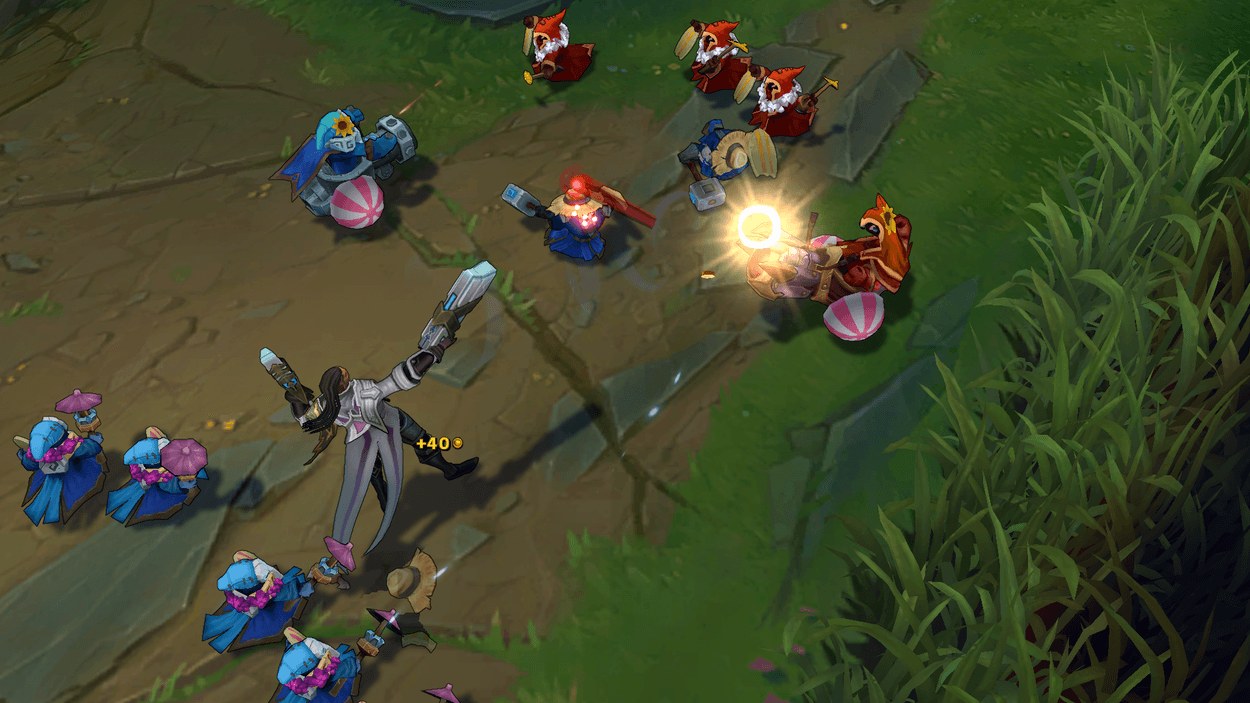
The best way to do a reset in lane is a technique called a cheater recall, and it's the reason slow pushing is best early in lane. To perform one, start a slow push 2-3 waves ahead of when you want to recall (only kill enemy caster minions besides last hitting). Time the wave so the stack includes a cannon wave. Crash the wave into tower and recall as soon as it starts to hit your minions.
Then walk back into lane with your new item. During this whole time, they have to farm under turret, and most players will drop some CS and XP. On top of that, when the wave crashes into their turret, it'll bounce back because it's so big, so the wave will be on your side of the lane.
In general, it's hard to fast push the wave in early levels (2/3) because you just don't do enough damage to make it worthwhile. It'll take forever to kill a wave, you'll waste your mana doing it, and you'll be in range of their tower. A slow-pushed wave does the work for you while you trade and last-hit.
The short version: slow push when you want to back in the next minute or so, fast push when you need to leave right now. Our guide on how to slow push walks through how to build a large wave from scratch, including how many waves to stack.
What to Do When You Can't Crash in Time
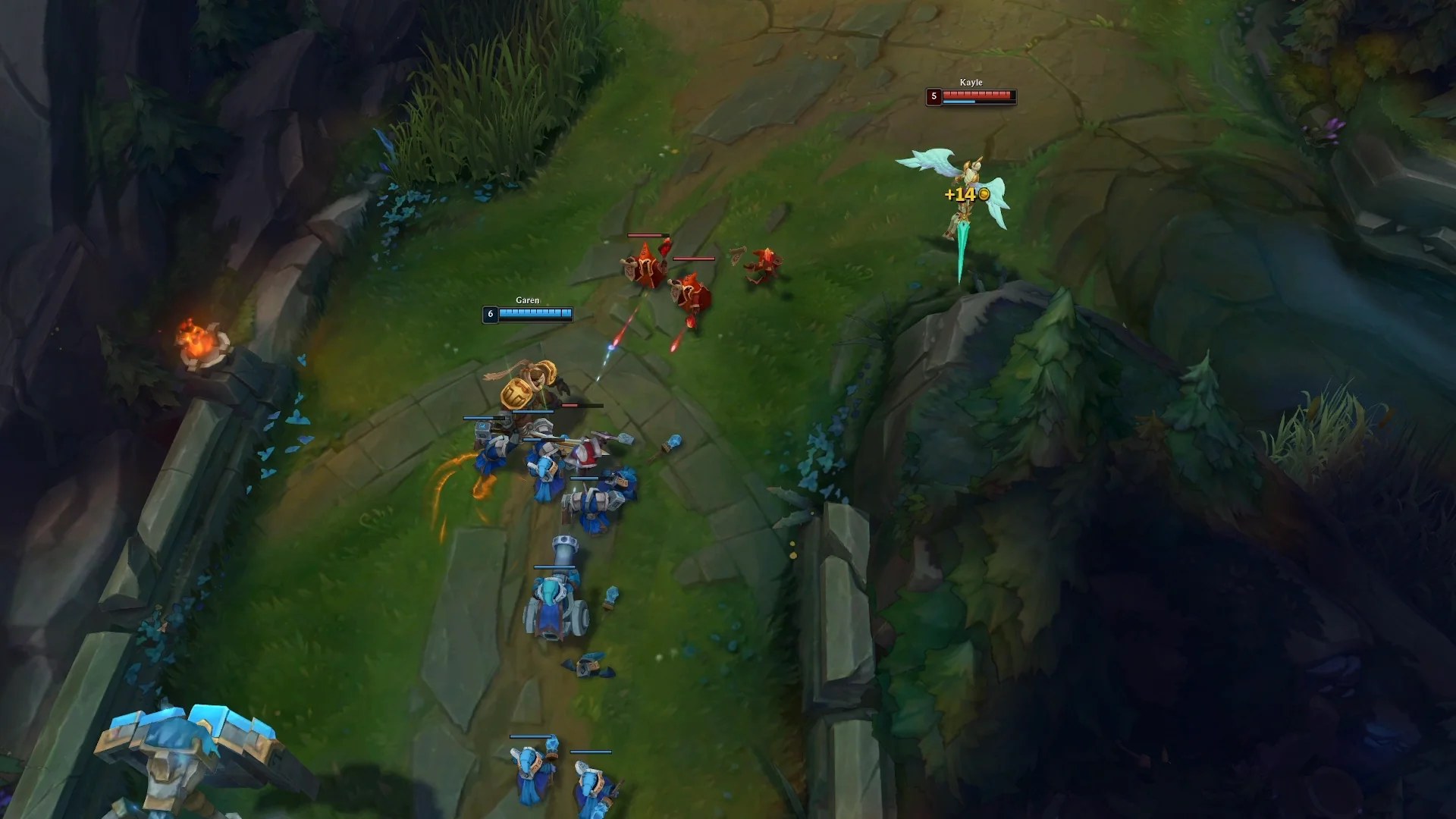
Sometimes you'll be in a situation where you absolutely need to leave the lane before being able to crash the wave. Maybe it's just too big of a wave for you to clear fast enough, or their jungler shows up on your side of the map. This is OK, but don't half-crash the wave.
- If the enemy wave is about to crash and you need to leave, just trim the wave until there's maybe three casters left. That way, when those three walk up to your reinforcements, they'll be just outside your tower and the wave stalls there instead of crashing. You come back to something close to a freeze. If one or two get hit, let them; casters are the cheapest minions there are.
- If the waves are even and you need to leave, just clear out a few of their minions so they keep a small edge. The wave starts to push toward you slowly, and by the time you're back it's sitting on your side of the lane.
- If their laner backs and their wave is pushing to you, you don't actually have to shove the wave back (doing so just gifts them a free reset). Hold the wave just outside your tower and freeze it, and they'll have to come to your side to last-hit the minions.
When to Fast Push and When Not To
Good Moments to Shove
- After your opponent dies / wants to recall / wants to roam, fast push the wave right away. The sooner it crashes, the more XP/CS they'll be missing. Sometimes it may be good to wait a second to see if they'll leave the bush. Faking a recall is very common, as it baits you into pushing.
- Before roaming. If you don't crash first, the wave will die to your tower, and they get free CS.
- Before an objective comes up that requires prio in your lane (first Dragon spawns at 5:00, Rift Herald arrives at 15:00, Void Grubs, etc.). This way, you can get to the pit a little earlier than they can. Note: Baron is also an objective to prepare for because patch 26.1 removed Atakhan and pulled Baron forward to 20:00.
- Before diving under their tower: minions tanking the shots will increase your survivability.
- Taking plates. Plates are permanent now: since patch 26.1 they no longer fall off at 14:00. They're worth 120g apiece, but from minute 11, outer plates begin to lose 10g per minute, with the reduction capping out at 40g. A crashed wave means free plate damage.
- To break their freeze. You may have to call your jungler to help with this. Once the wave crashes, the freeze is gone.
When Shoving Gets You Killed
- When the enemy jungler is unaccounted for and you have no vision/control in the river. A pushed wave with zero information is a donation.
- Against champs with an easier wave clear. Against champs like Nasus and Cassiopeia, crashing waves on them doesn't do much. Nasus will get stacks under his turret by spamming Q, and Cassiopeia spams Twin Fang. Champs that clear the next wave faster than you are generally controlling the wave and will often freeze it outside of their turret range after you crash it.
- When you're low HP against kill pressure. You will be basic attacking under their turret without abilities while they will have all theirs. In general, if you're at low health, stay on your side of the lane until you heal up.
Fast Pushing in Top, Mid Lane and Bot Lane
- Top lane is a side lane, longer than mid, so every walk back costs the most. Crash before TP plays to make sure you can TP bot if they do, without losing out on CS. Otherwise, following can give up an entire wave to your tower. The basic loop for winning in top lane is: crash wave, recall, freeze bounce, repeat. This is one of the first things a top lane coach will look for in your games.
- Mid lane is the shortest lane. Older guides will tell you that it takes ~32s for waves to meet in side lanes (at the middle of the lane) and ~22s for waves to meet in mid. However, since 13.10, side-lane minions get a temporary movement speed bonus before 14:00 to remove this discrepancy, so waves now meet around the same time. Mid is still physically shorter, though, so your crashes happen quicker, the bounce reaches you sooner, and overall mid can have tighter windows for action. Crash before every single roam.
- In bot lane, it's a 2v2 lane, so crashing the wave should be easier with your support using their AoE spells. This is also really important to do on Dragon timings so you can be the first to rotate there. Supports: it's important you don't touch the wave during a freeze since one AA can undo a freeze.
- For junglers: after a gank, help your laner(s) push the wave so they can recall with the kill(s). Sometimes your laner might want to freeze instead. Check for pings before AA'ing the wave.
How to Set Up a Freeze and Hold a Freeze on the Returning Wave
The bounce after a crash is the easiest freeze setup in the game. The wave is already coming to you, so you just have to catch the wave in the right spot: just outside your tower range. If the wave is under tower or in the middle of the lane, you've failed your freeze.
To do this, last hit only (don't AoE, or even AA minions unless they're going to die), and let the enemy keep a small minion advantage. Three or four extra enemy minions is a good starting point. Sources range from two to four, so test it with your champion and adjust.
Now that you've established your freeze, all you'll really have to worry about is making sure it doesn't go under tower. If it slides in, just get aggro for a sec by standing in front of your minions. If they have too many extra minions, kill a few extra minions so the wave stays put instead of crashing.
Keep the wave there and your opponent has two choices: walk into your half to farm, or lose CS and XP. Both are good for you. For the finer points, like holding a freeze near your tower against a ranged laner, our guide to freezing a lane covers it.
Common Wave Management Mistakes When Fast Pushing
Here are wave management mistakes we still see all the time when reviewing games (across all ranks), and how to fix them.
- Mistake: shoving the lane without a reason
How to fix: before you start shoving the wave, think about why you want to crash the wave. - Mistake: starting to crash a wave and not finishing it
How to fix: finish the crash or don't start it, because a stalled wave hands them a freeze. - Mistake: standing in lane after the crash
How to fix: the crash is a timer. Act within a few seconds or you've wasted it. - Mistake: recalling right before your cannon wave
How to fix: count your waves and crash the cannon wave first. - Mistake: not having vision of the lane when shoving
How to fix: run the four-question checklist you should go through every time you shove the wave. - Mistake: accidentally AoE'ing three of the other team's minions
How to fix: be mindful of who has minion advantage. Hitting three minions will flip minion advantage, melt a freeze, and take the wave to them. Trade with autos or aim your abilities away from the wave. - Mistake: crashing when you shouldn't be
How to fix: if the other person has better wave clear for the next wave, thin the wave and hold rather than shoving.
How to Practice Fast Pushes and Resets
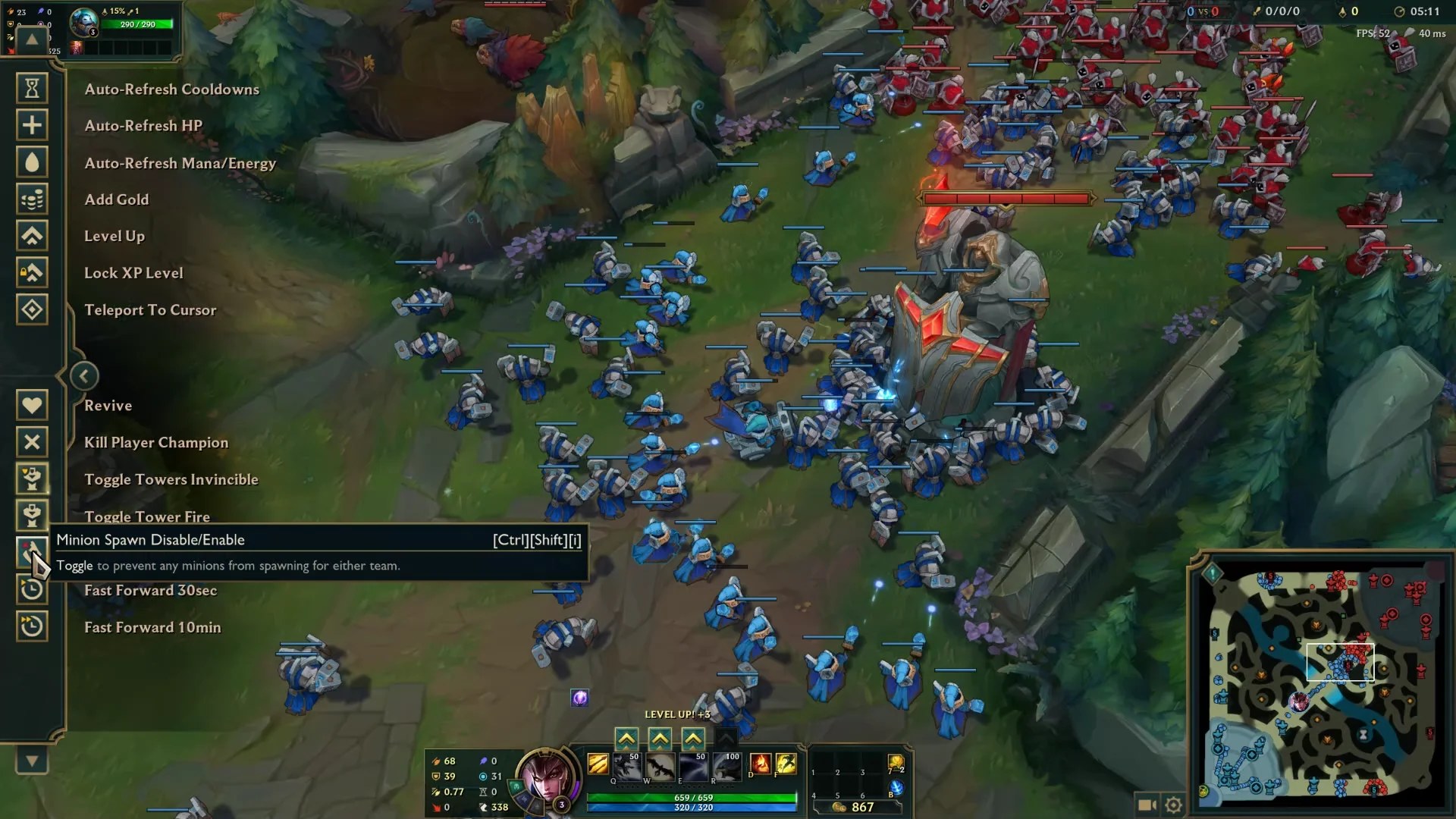
- Drill in the Practice Tool how fast you can crash waves at different levels (level 1, level 6, 9, and with your first item) including a standard wave and a cannon wave. This will allow you to better understand whether you can crash a wave before the jungler shows up.
- Force yourself to always follow the crash, recall, catch the bounce loop on each recall for a week. This will feel very robotic at first, but after a few games this will start to feel normal.
- Record some games and in each of your recalls pause the VOD to determine the wave state. Is it crashed, pushing in, or in the middle? Now take note of your lost CS in that recall. Chances are that you'll spot some half-crashes. Most players find two or three expensive recalls per game they didn't even notice in game.
Wave management is one of those skills that never shows up in a highlight clip and quietly decides a huge number of games.
If you'd rather not spend weeks guessing which waves cost you, get your VODs reviewed by a high-elo coach. A second set of eyes can point to the exact waves you mismanaged in a single session, and fixing those is the fastest LP you'll ever find.