

Tu as dominé la voie. Tu étais à 3-0 avec deux tours détruits à la 14e minute, et pourtant tu as perdu parce qu’à la 21e minute, ton équipe s’est précipitée un par un dans la fosse du Baron pendant que tu t’occupais d’une vague latérale dont personne ne voulait. Ce match va rejoindre les 49 autres dans la colonne des défaites, et ton taux de victoire stagne à 51 %, là où il se trouve depuis le printemps.
Voici le plus gênant : tes compétences techniques sont bonnes. On ne perd pas en Émeraude à cause des last hits. On perd à cause de la conversion, cet écart entre avoir une avance et la transformer en tour et en dragon, et à cause du timing des décisions, ces vingt secondes avant un combat plutôt que le combat lui-même. Être coincé en Émeraude, c’est un problème de prise de décision déguisé en problème de technique.
Donc : d'abord un diagnostic, puis un plan en 30 parties pour sortir de l'Émeraude et atteindre le Diamant.
Pourquoi le rang Émeraude est le plus difficile à quitter dans League of Legends
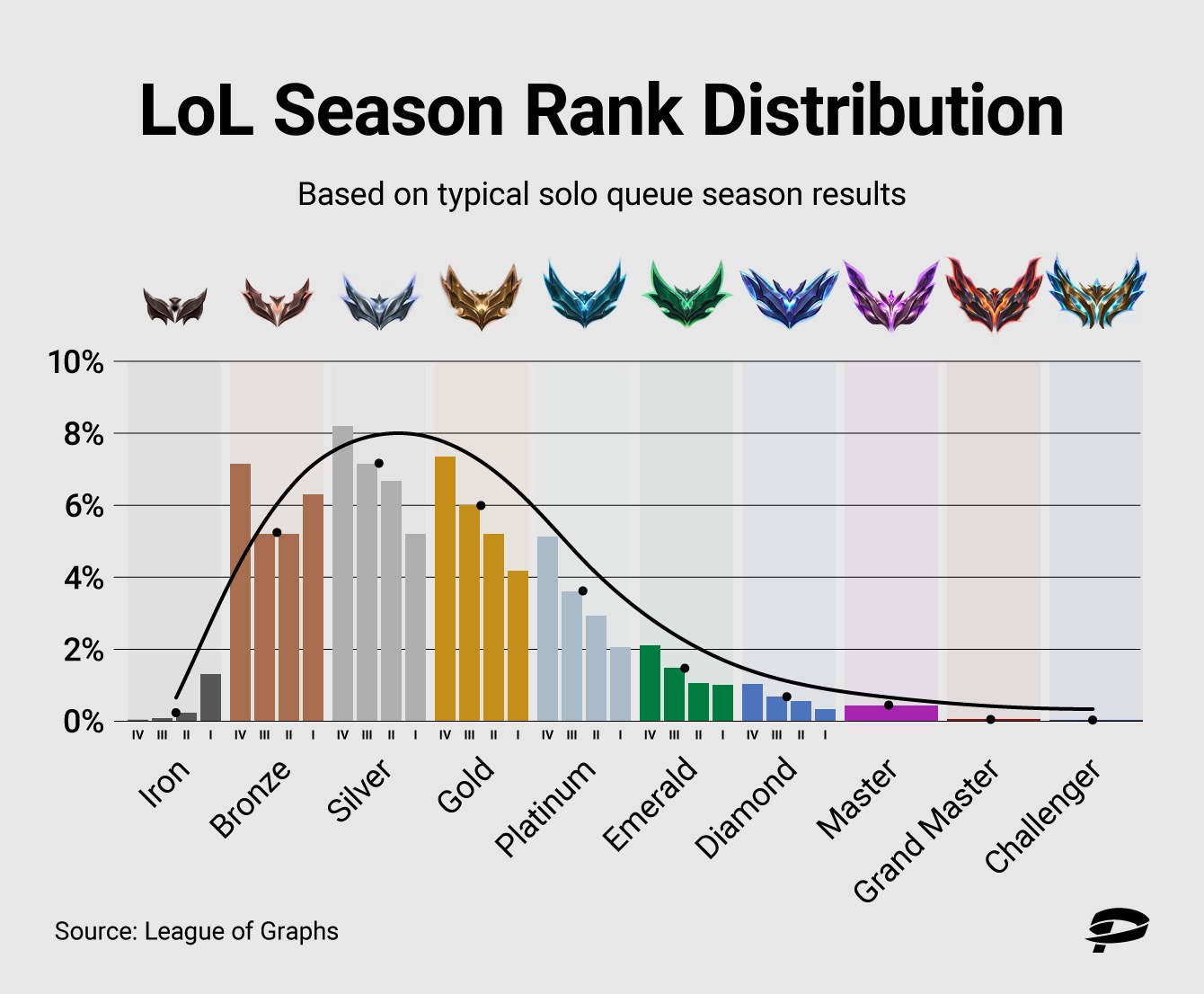
Le rang Émeraude n’est pas difficile parce que les joueurs sont bons. Il est difficile parce qu’ils sont très nombreux et qu’ils sont tous très différents les uns des autres.
En août 2026, le rang Émeraude représentait environ 13 % du classement en solo, et atteindre le niveau Émeraude IV vous place déjà parmi les 18 % des meilleurs joueurs classés de League of Legends. Le rang Diamant IV et au-delà ne représente que 4,9 %. Il suffit de franchir une seule barrière de niveau pour que la population diminue de près de quatre fois.
L’histoire de ce niveau explique sa composition. Riot a ajouté le niveau Émeraude en 2023, car l’aplatissement de la courbe de classement aurait submergé le niveau Diamant ; l’entreprise a donc créé un espace pour accueillir l’ancienne population du niveau Platine. Émeraude a hérité d’une base de joueurs calquée sur celle de Platine, puis a absorbé tous ceux qui avaient frôlé le niveau Diamant avant de redescendre. C’est désormais la fourchette de compétences la plus large du classement : un joueur de Diamant 2 sur un deuxième compte et un joueur d’Or qui s’est fait porter par ses coéquipiers lors des matchs de placement peuvent se retrouver dans la même salle d’attente.
Ce que tous les joueurs de cet Elo ont en commun, c’est qu’ils sanctionnent les erreurs. Ce que presque personne ne fait, c’est capitaliser sur ces erreurs. Votre adversaire de la voie du haut vous anéantira pour un mauvais Flash, puis passera quatre minutes à accumuler une avance qu’il ne concrétisera jamais. C’est la marque de fabrique de ce niveau, et c’est aussi votre moyen de vous en sortir.
Ce qui distingue réellement l’Émeraude du Diamant
Riot ne publie aucun seuil officiel par rôle ; voici donc les seuils minimaux utilisés par nos coachs lors des analyses de vidéos (VOD) en Émeraude.
CS par minute à la 20e minute : ADC 8,5 ; mid 8,0 ; top 7,5 ; jungle 6,0 (camps compris). Le support n’utilise pas cet indicateur, et tout guide imposant un seuil de CS à un support ne fait que copier un tableau qu’il n’a pas lu.
Score de vision par minute : support 1,6, jungle 1,1, joueurs en solo 0,8, ADC 0,7. Le calcul par minute est important car une partie de 45 minutes gonfle le score brut de vision et masque le fait que vous n’avez posé aucun ward avant la 20e minute.
Morts après la 20e minute : moins de 2 pour tous les rôles sauf le support, moins de 3 pour le support. C’est le chiffre le plus prédictif que nous suivons. Les joueurs Émeraude et Diamant meurent à peu près autant en ligne. Les joueurs Diamant cessent de mourir dès que la carte devient plus petite.
L’écart entre les habitudes est plus simple à comprendre que l’écart entre les statistiques. Les joueurs de niveau Diamant protègent leur avance au lieu de la creuser, renoncent à une vague qu’ils ne peuvent pas prendre en toute sécurité et posent des balises pour se déplacer en premier plutôt que pour anticiper le danger. Les joueurs de niveau Émeraude voient la balise s’allumer, paniquent et se battent quand même.
MMR, gains de LP et le taux de victoire dont vous avez réellement besoin
Regardez votre dernière partie. Si vous gagnez 18 points et en perdez 22, votre MMR se situe en dessous de votre rang affiché et le système vous fait discrètement redescendre. Dans la mise à jour du système de classement de Riot, environ la moitié des joueurs, de l’Émeraude au Maître, enregistraient des écarts négatifs tels que +21/-29 avant le correctif ; par la suite, les gains de LP négatifs dans toutes les tranches sont tombés à environ 3 %. Faire partie de ces 3 % aujourd’hui relève de l’information, et non de la malchance.
Voici maintenant le calcul que personne ne mentionne. Une division vaut 100 LP. Avec un solde constant de +22/-22, un taux de victoire de 51 % rapporte 0,44 LP par partie, soit 88 LP sur deux cents parties. Deux cents parties et vous n’avez pas franchi une seule division. C’est ce que signifie réellement « bloqué à 51 % ».
Pour passer une division au cours d’un bloc de 30 parties, il faut 18 victoires. De l’Émeraude IV au Diamant IV, il y a quatre divisions et 400 LP : environ 180 parties à 55 %, environ 90 à 60 %, et plus de 450 à 52 %. L’augmentation du MMR améliore vos gains au fur et à mesure, donc un joueur qui affiche réellement un taux de 60 % progresse plus vite que cela. La tendance reste toutefois la même. En dessous de 55 %, sortir de la division Émeraude prend une saison, pas un week-end.
Cessez de regarder le LP. Observez plutôt votre taux de victoire sur des séries de 30 parties classées.
Les cinq habitudes qui maintiennent les joueurs Émeraude dans l’impasse
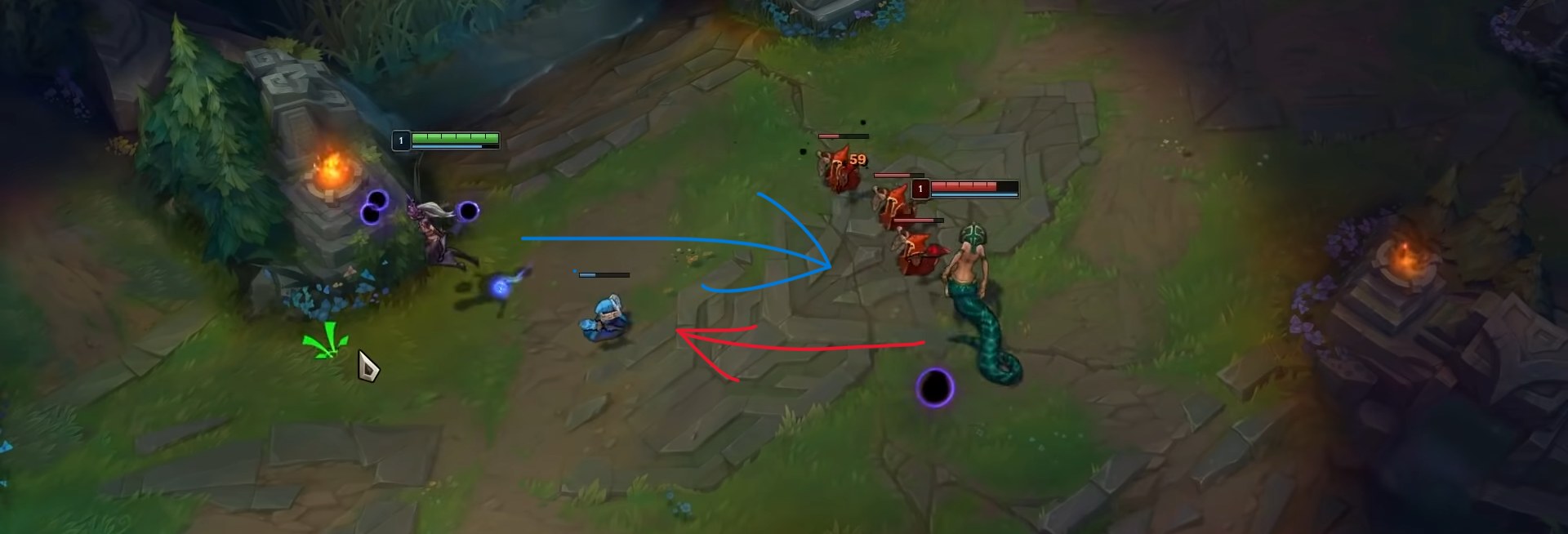
Chaque compte Émeraude que nous analysons perd des LP à cause d’une combinaison de ces facteurs. Généralement deux, pas les cinq.
1. Des escarmouches aléatoires, sans vision du terrain et sans supériorité numérique. Ce 2c2 au milieu de la rivière à la 9e minute dont aucune des deux équipes n’avait besoin. Vous la remportez 60 % du temps pour rien et la perdez 40 % du temps, offrant ainsi un dragon ennemi gratuit. Comptez les ennemis que vous pouvez réellement voir avant d’appuyer sur W. Si la réponse est « deux, probablement », vous prenez un risque.
2. Retourner à la fontaine lors d’une mauvaise vague. Vous êtes de retour à 1 400 pièces d’or, la vague est en plein milieu, vous sortez de la fontaine et elle se trouve sous votre tour, avec la moitié de sa santé déjà perdue. Vous n’avez pas perdu d’or. Vous avez perdu du tempo, ce qui est pire, car cela n’apparaît jamais au tableau d’affichage.
3. Jouer pour profiter de la dernière erreur de l’adversaire au lieu de viser l’objectif suivant. Votre soutien est mort à la 24e minute. Le dragon apparaît dans 40 secondes. Un joueur de niveau Émeraude se dirige vers le cadavre. Un joueur de niveau Diamant se dirige vers la fosse.
4. Ne pas déceler de condition de victoire dès la sélection des champions. Kayle et Kassadin dans votre équipe, et vous forcez les combats à la 16e minute. Renekton, Panthéon et Jarvan, et vous continuez à farmer jusqu’à la 30e minute. Dans les deux cas, ce sont des défaites que vous avez vous-même provoquées en vous inscrivant dans la file d’attente.
5. Choix dictés par l’ego et re-queue sous le coup de la frustration. Le soutien a été attribué automatiquement, alors vous choisissez un mage avec lequel vous n’avez joué que 12 parties pour prouver quelque chose, puis vous vous réinscrivez onze secondes après la défaite. Rien dans cet article ne peut remédier à cela, et cela vous coûte plus de LP que toutes les erreurs techniques réunies.
Constituez-vous un pool de champions capable de porter les parties Émeraude
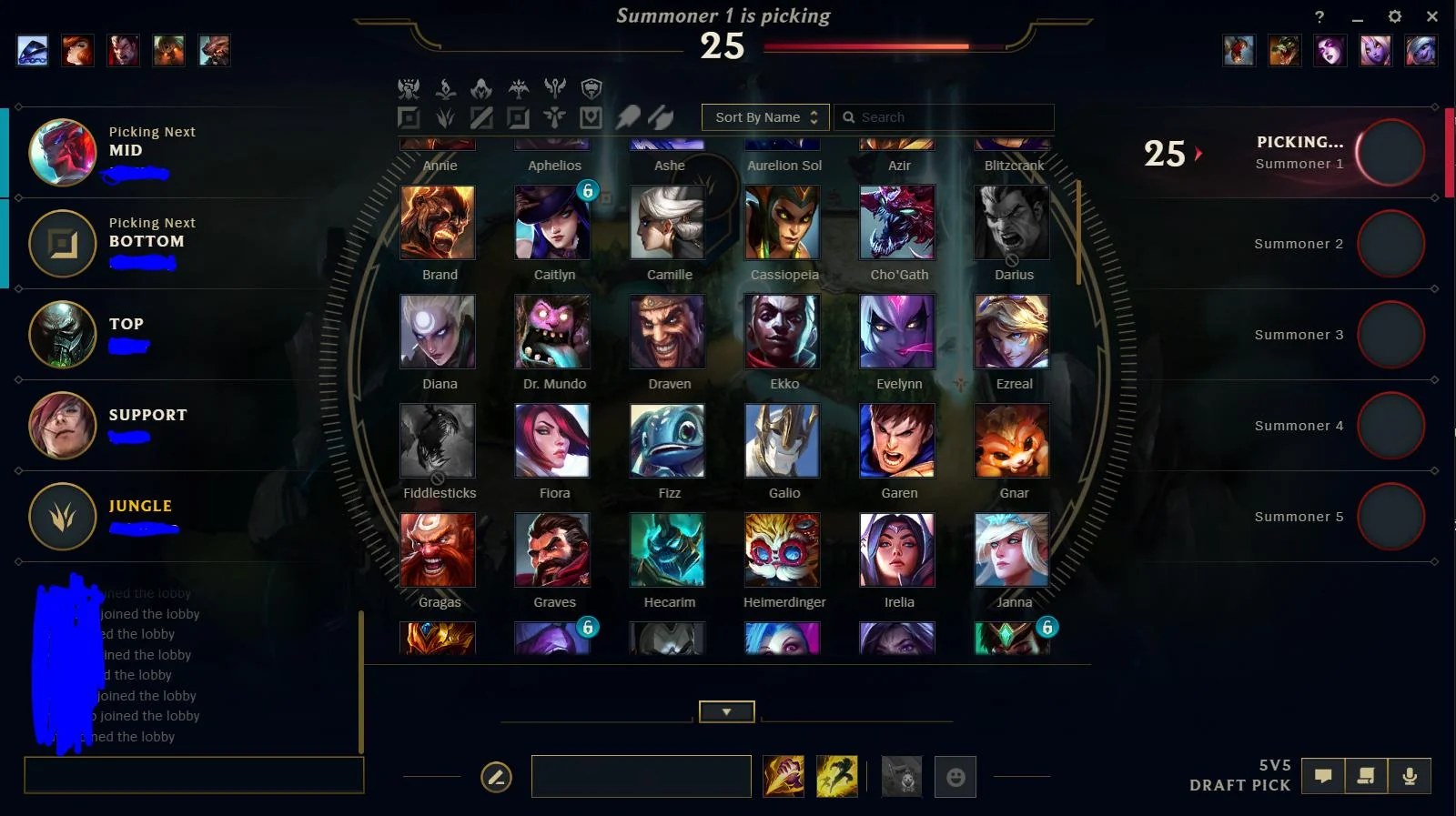
Deux champions principaux et un choix à l’aveugle. Voilà la recette.
Un champion à 80 % d’efficacité vaut mieux que quatre à 40 %, et la raison n’est pas une question de technique. La profondeur de votre pool vous donne une réponse reproductible à la question « que dois-je faire à la 14e minute ? ». Vous connaissez déjà le timing du niveau 6, le pic d’équipement, la vague que vous voulez quand votre jungler se montre en haut. Un nouveau champion tous les quatre matchs signifie réapprendre cette lecture tous les quatre matchs, ce qui correspond à un plateau.
Choisissez en fonction d’une condition de victoire, pas d’un classement de champions. Une question à vous poser lors de la sélection des champions : cette partie va-t-elle se gagner grâce à un pic de puissance précoce ou à une progression progressive, et par le regroupement ou par la pression latérale ? Choisissez ensuite le champion qui correspond le mieux à cette réponse.
Les matchups véritablement injouables sont rares. « Injouable » signifie que vous ne pouvez pas vous rendre jusqu’à la vague sans perdre de PV et que vous ne pouvez pas atteindre le niveau 6 à temps. « Difficile » signifie que vous prenez 6,0 CS par minute au lieu de 8,0, que vous concédez deux plaques et que vous ne mourez jamais. « Difficile » est un résultat tout à fait acceptable, et c’est en le considérant comme une défaite que les joueurs de niveau Émeraude forcent des échanges qu’ils ne peuvent pas gagner.
Changer de champion ne résout pas les problèmes de prise de décision. Cela ne fait que réinitialiser l’échantillon sur les mêmes erreurs.
Gagner la ligne sans céder la carte
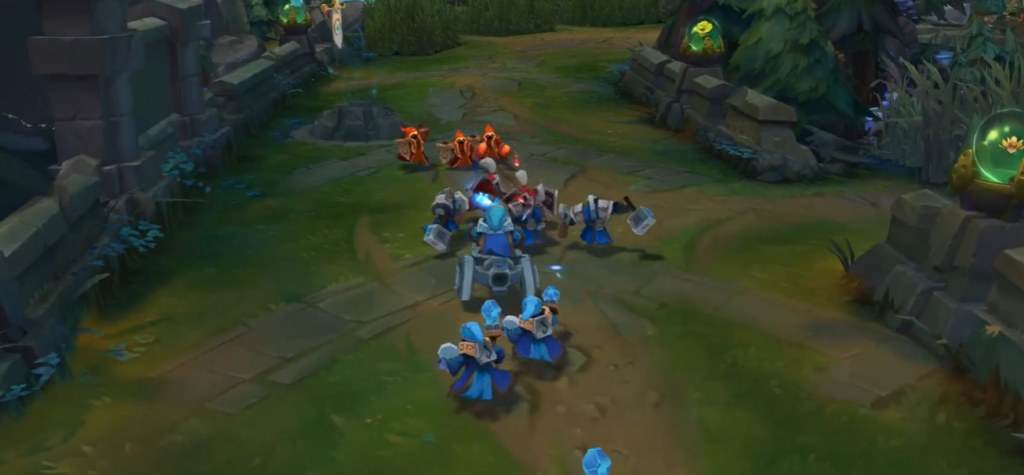
Une ligne remportée en Émeraude ne vaut presque rien, car la plupart des joueurs Émeraude la monnayent contre un kill et cèdent immédiatement la carte en retour. La liste de contrôle pour la conversion :
Atteignez votre seuil minimum de CS avant de vous lancer à la poursuite de quoi que ce soit. Passer à côté de 20 CS coûte plus cher que le kill pour lequel vous avez échangé un Flash.
Écrasez la vague, puis rapatriez-vous. Pas « pousser et espérer ». Écrasez-la contre la tour pour qu’elle vous revienne, puis réinitialisez. Vous revenez vers une vague qui arrive de votre côté plutôt que vers une vague bloquée sur la tour ennemie alors que vous n’avez plus que 40 % de PV. Si vous ne pouvez pas la faire rebondir, poussez lentement et profitez de la réinitialisation trois vagues plus tard.
Achetez un balise de contrôle lors des retours à la base qui comptent. 75 pièces d’or à chaque retour où vous prévoyez de combattre dans les 90 secondes suivantes. Les supports ont désormais la vie plus facile : une fois la quête de rôle de support terminée, les balises de contrôle ne coûtent plus que 40 pièces d’or, et vous pouvez en garder deux dans l’emplacement de quête. Le patch 26.1 a également ajouté les Faelights : un ward placé sur l’un d’entre eux devient un super-ward avec un rayon de vision accru de 25 %, qui révèle une zone supplémentaire pendant 45 secondes. Apprenez à repérer les quatre emplacements de porte et les deux buissons près du mur de la rivière, près du milieu.
Suivez suffisamment bien le jungler ennemi pour l’empêcher de pousser à l’aveuglette. Pas besoin de maîtriser toute la théorie des chemins. Vous devez savoir dans quel camp il a commencé, et remarquer quand votre coéquipier de ligne se projette soudainement vers l’avant sans raison.
Basez-vous sur les délais d’incantation des invocateurs, pas sur vos impressions. Il a utilisé son Flash à 4 min 30 s. Cela vous laisse une fenêtre de 300 secondes pour plonger dans la vague, prendre une plaque ou mettre en place une poussée progressive. Écrivez-le dans le chat si nécessaire.
Les plates et le tempo, voilà ce qui fait la valeur d’une voie gagnée. Les kills sont le moyen de les obtenir, pas le but en soi.
Milieu de partie : transformez l’or en objectifs avant que la carte ne rétrécisse
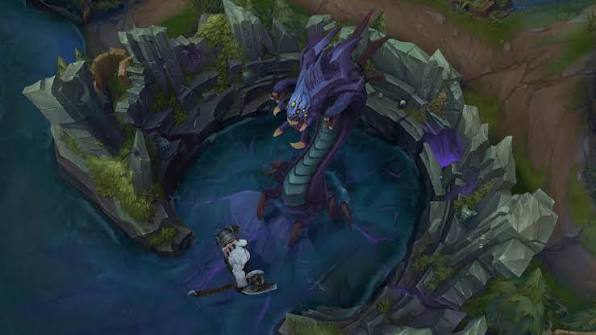
C’est la phase où se décident les parties de niveau Émeraude, et celle que personne ne s’entraîne à maîtriser.
L’erreur principale est d’arriver à l’heure, car la lutte pour un objectif commence avant même que celui-ci n’existe. Préparez-vous 30 à 45 secondes avant la fin du compte à rebours d’apparition : balayez la fosse, éliminez les balises de vision ennemies sur la voie d’approche, placez votre propre balise de vision à l’autre bout de la carte, et faites déferler une vague sur la tour la plus proche pour que quelqu’un soit obligé d’y répondre. L’objectif devient alors une simple formalité, et non plus un coup de pile ou face.
La carte 2026 rend cela plus facile qu’elle ne l’a été depuis des années. Riot a supprimé Atakhan et les « Feats of Strength » pour réduire la surcharge d’objectifs, et le Baron est revenu à une apparition à 20:00 avec un temps de réapparition de 6 minutes. Le Drake à 5:00 puis toutes les 5:00, quatre pour l’âme, le Baron à 20:00. Notez bien ces horaires.
Décidez de jouer en groupe ou en flancs en fonction de la composition, pas de l'humeur du moment. Deux carry immobiles signifient que vous jouez en groupe et que vous évoluez de l’avant vers l’arrière en fonction de la vision. Un split pusher et un leader des âmes signifient que vous prenez les vagues latérales et forcez l’ennemi à faire un choix qu’il ne peut pas faire. Choisissez une stratégie avant la 20e minute et communiquez-la à votre équipe.
Ensuite, envoyez un ping pour un plan, pas pour une réaction. « Drake dans 40 » accompagné d’un ping de balise à l’entrée de la rivière fait bouger quatre personnes. Suivre le coéquipier le plus bruyant dans un dive aléatoire parce qu’il a tapé « gg jg diff » fait mourir quatre personnes. Agir en premier permet de remporter les objectifs, et agir en premier est une question de vision, pas de courage.
Solutions spécifiques à chaque rôle pour sortir de la catégorie Émeraude
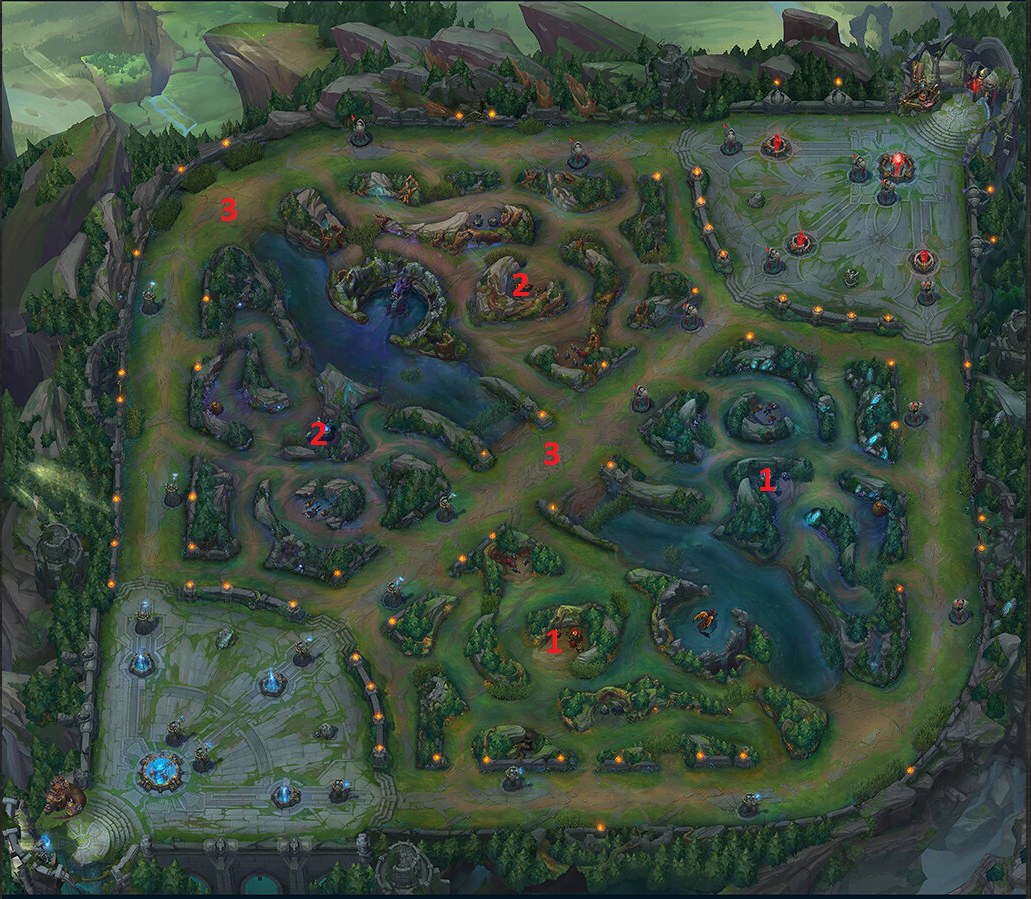
Jungle. La plus grande perte de LP en Émeraude, c’est de se diriger vers le côté perdant pour aider. Votre voie du bas a été éliminée deux fois, alors vous allez y faire un gank, et le jungler ennemi récupère des drakes sans effort pendant que vous vous retrouvez en 2 contre 3 sous une tour. Dirigez-vous vers le côté prioritaire, prenez l’objectif, laissez la voie en difficulté farmer. Deuxième perte de LP : forcer des contre-ganks sans vision et sans invocateurs de votre côté. Troisièmement : ne pas connaître le temps restant avant l’apparition de votre propre drake. Le jungler dans Emerald est le rôle le plus facile à corriger de cette liste, car les erreurs apparaissent sur un replay de la mini-carte en dix minutes ; c’est pourquoi une heure de coaching en jungle fait généralement plus de progrès qu’une cinquantaine de parties passées à tâtonner.
Top. Tu meurs pour une vague latérale à la 22e minute alors que Ton Téléportation est en temps de recharge et que tu n’as pas de balise. À chaque fois. Si la Téléportation est en temps de recharge, cette vague n’est pas pour toi. Prends la moitié sûre, rejoins ton équipe et arrête de payer 400 pièces d’or et un Baron pour six sbires.
Ligne du milieu. Roamer sans avoir d’abord géré la vague, ce n’est pas du roaming ; c’est un don. Poussez à fond ou lentement, puis partez. Si vous arrivez en bas alors que votre vague est en train de mourir sous votre propre tour, vous avez abandonné deux vagues et une armure pour transformer un 2c2 équilibré en un 3c2.
Bot et support. Dans ce jeu, les ADC meurent plus souvent après 25 minutes en s’avançant trop loin sur des vagues latérales qu’à cause de toute autre chose. Si vous voyez cinq ennemis en vie et que vous pouvez en repérer deux, cette vague est un piège. Soutiens : le patch 26.16 a augmenté la pénalité de roaming à une réduction de 33 % des CS, de l’or et de l’XP en dehors de la voie du bas jusqu’au niveau 5 ; ainsi, les déplacements précoces coûtent plus cher qu’au mois dernier. Rôdez sur une vague écrasée ou après un kill, jamais seul avec votre ADC dans une voie en poussée. Si votre voie du bas s’effondre de la même manière à chaque partie, le coaching du support est la solution la moins coûteuse au classement, car un seul changement d’habitude affecte deux joueurs.
Savoir quand une partie est encore gagnable
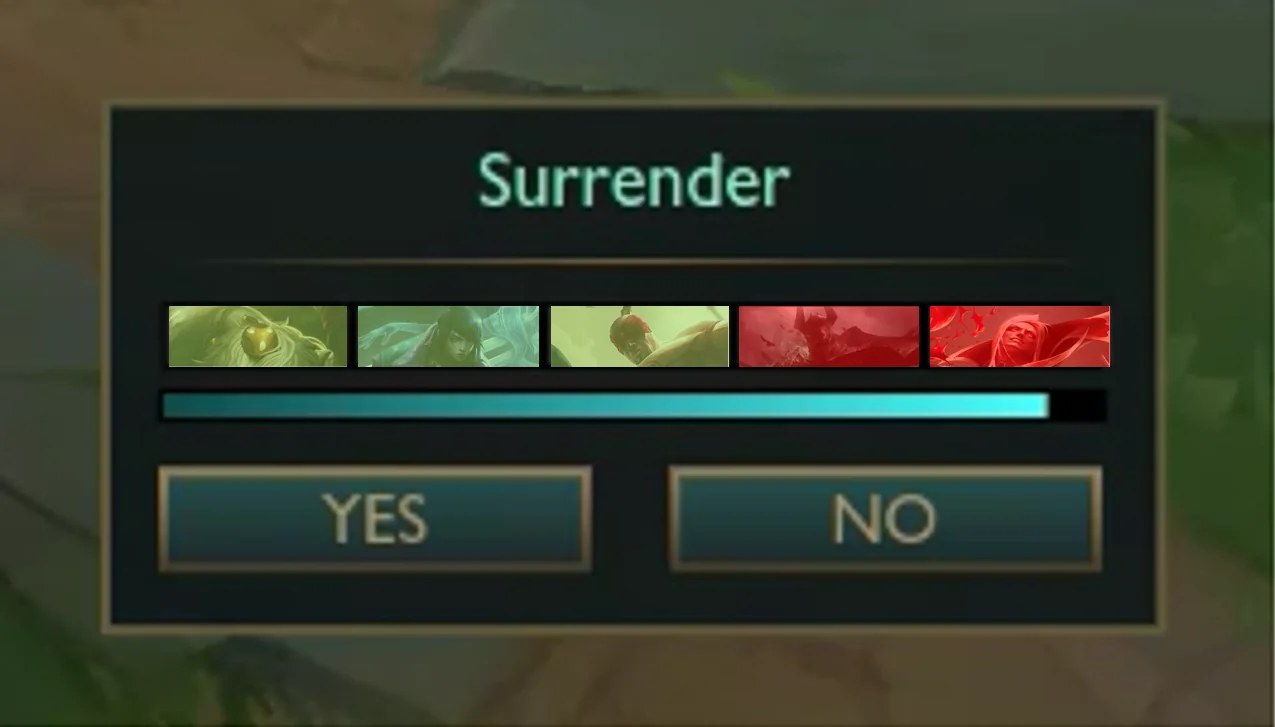
La plupart des défaites en Émeraude se soldent par un abandon avant même d’être perdues. Passez en revue la liste de contrôle avant de taper quoi que ce soit.
Vous êtes toujours dans la course si vous disposez d’une vision autour du prochain objectif majeur, si vos carry n’ont pas encore atteint leur pic de puissance à deux objets, si aucun Baron ni aucune âme n’a été converti, et si au moins un match-up de fin de partie est favorable à votre équipe. Si trois de ces quatre conditions sont remplies, la partie est encore ouverte. Les compositions qui s’améliorent avec le temps ne perdent pas à la 22e minute ; elles perdent à la 22e, puis à nouveau à la 35e, parce que tout le monde a arrêté de farmer.
Les véritables signes de défaite sont autres : l’âme et le Baron chez l’adversaire, des inhibiteurs détruits sans vague nettoyée, et un déficit de 5 000 pièces d’or alors que votre carry a un objet de retard. La partie est terminée, et mal la jouer pendant 12 minutes, c’est ce qui vous fera basculer dans les trois suivantes.
La barre des 30 minutes change la donne, car les morts ne coûtent plus une vague, mais un inhibiteur. Avant la 30e minute, un mauvais combat est un revers. Après la 30e minute, un mauvais combat signifie la fin de la partie.
À propos de l'abandon : depuis la mise à jour 13.7, un vote précoce à la 15e minute ne nécessite plus que quatre joueurs sur cinq, et les données de Riot ont montré que les parties où un vote 4 contre 1 avait échoué se soldaient de toute façon la plupart du temps par une défaite. Le mécanisme en lui-même est correct. Voter « oui » à la 15e minute simplement parce que votre jungler est mort deux fois ne l’est pas.
Le plan en 30 parties pour sortir de la division Émeraude
Trente parties, réparties en trois séries de dix.
Suivez trois chiffres par partie : le CS à la 20e minute, le nombre de morts après la 20e minute, et le nombre de balises de contrôle achetées. Notez-les après chaque partie. Quinze secondes de travail vous donneront un échantillon fiable dès la dixième partie, et c’est ce seul échantillon qui vous permettra de savoir si une correction a porté ses fruits.
Corrigez une habitude par série de dix. Pas cinq. Une seule. Série n° 1 : écrasez la vague avant chaque retour à la base. Série n° 2 : mettez-vous en place 40 secondes avant chaque Drake. Série n° 3 : pas d’escarmouche sans vision ni supériorité numérique. Une habitude ancrée au fil de dix parties reste. Cinq habitudes lues dans un article un dimanche ne le resteront pas.
Le protocole d’analyse vidéo qui vaut mieux que de regarder des guides sur YouTube
Vingt minutes, une partie. Mettez en pause à chaque mort et répondez à trois questions à voix haute : qu’est-ce que je voulais, qu’est-ce que je savais, qu’est-ce que j’ai ignoré ? « Je voulais la vague. Je savais que leur jungler était en haut de la carte il y a deux minutes. J’ai ignoré que le mid était absent. » Cela identifie la solution sans que personne ne vous le dise.
Ensuite, analysez une victoire pour trois défaites. Les défaites ne vous apprennent que ce qui n’a pas fonctionné. Les victoires vous montrent à quoi ressemble votre stratégie gagnante lorsqu’elle fonctionne, ce qui est justement l’information qui vous échappe systématiquement lors de la sélection des champions.
Arrêtez de vous connecter après deux défaites consécutives que vous ne pouvez pas expliquer en une seule phrase. C’est à ce moment-là que votre échantillon cesse de refléter votre niveau de compétence.
Les répétitions améliorent l’exécution. Elles ne corrigent pas ce que vous ne pouvez pas voir. Deux symptômes indiquent que vous avez besoin d’un regard extérieur : vous ne pouvez pas expliquer vos défaites autrement qu’en invoquant « l’équipe », ou bien vos statistiques se sont améliorées sur 30 parties sans que votre LP n’ait bougé. Ces deux cas indiquent que l’erreur réside dans vos choix, et non dans vos actions, et c’est ce qu’il y a de plus difficile à repérer dans vos propres rediffusions dans League of Legends. Si vous en arrivez là, réservez une séance avec un coach de niveau Challenger et apportez deux rediffusions de victoires, une défaite que vous ne pouvez pas expliquer, ainsi que votre profil op.gg. Les victoires comptent plus que vous ne le pensez.
Le niveau Émeraude n’est pas un mur de compétence ; c’est un mur de conversion, et la conversion est une habitude que vous pouvez acquérir en moins d’un mois de parties ciblées sur le patch actuel. Commencez votre série dès ce soir et vérifiez votre taux de victoire à la 30e partie, pas à la fin de la file d’attente de demain.
Foire aux questions
Quel est le rang le plus difficile à franchir dans League of Legends ?
En termes de population, ce sont les rangs Platine et Émeraude. Ils représentent respectivement environ 18 % et 13 % du classement, vous devez donc dépasser plus de joueurs à ces niveaux qu’ailleurs. Le rang Argent semble plus difficile, mais les joueurs Argent perdent à cause d’erreurs visibles et corrigibles. Les joueurs Émeraude perdent à cause du timing et de la conversion, qui sont bien plus difficiles à repérer dans vos propres rediffusions.
Peut-on redescendre de la division Émeraude à la division Platine dans League of Legends ?
Oui. Si vous perdez avec 0 LP en Émeraude IV, vous retombez en Platine I. Un bref bouclier de relégation vous protège pendant quelques parties après votre première promotion dans ce rang, mais Riot a supprimé la protection entre les divisions ; il n’y a donc rien pour amortir la chute de l’Émeraude I à l’Émeraude II. Lorsque vous descendez d’un niveau, vous atterrissez à 25, 50 ou 75 LP selon l’écart entre votre MMR et votre rang.
Combien de parties faut-il pour passer de Émeraude 4 à Diamant 4 ?
Quatre divisions correspondent à 400 LP. Avec un rapport fixe de +22/-22, un taux de victoire de 55 % rapporte 2,2 LP par partie, soit environ 180 parties. À 60 %, ce chiffre avoisine les 90. À 52 %, il vous en faudra plus de 450. L’augmentation de votre MMR accélère ce processus à mesure que vous remportez des victoires, mais un taux de victoire inférieur à 55 % transformera cette ascension en un parcours qui s’étendra sur toute la saison plutôt que sur un seul mois.