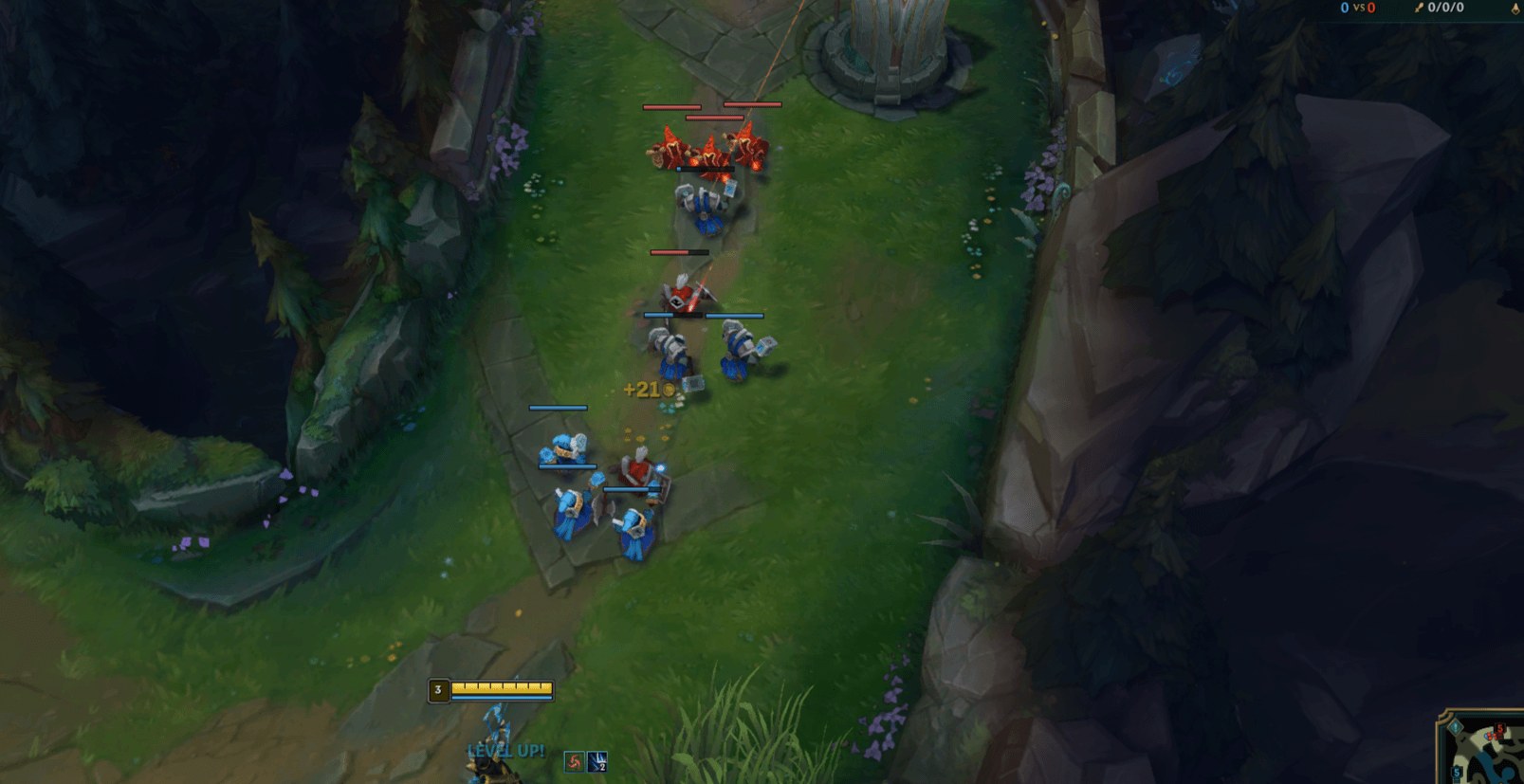
Most lanes aren't lost in a fight. They're lost in the 90 seconds before it, when the lane wave was sitting in the wrong spot and nobody noticed.
You got ganked because you stood in a pushed lane with nothing to hide behind. You won a trade and still fell behind in CS because the other laner froze and you couldn't touch the wave. Both come down to wave management in League, the most learnable edge in the game.
This guide covers the four wave states, when each is the right call, and the timings that changed in 2026. Control in League of Legends starts with a dozen minions walking down a lane. Learn to steer them and everything else gets easier.
What Wave Management Is and Why It Decides Lanes
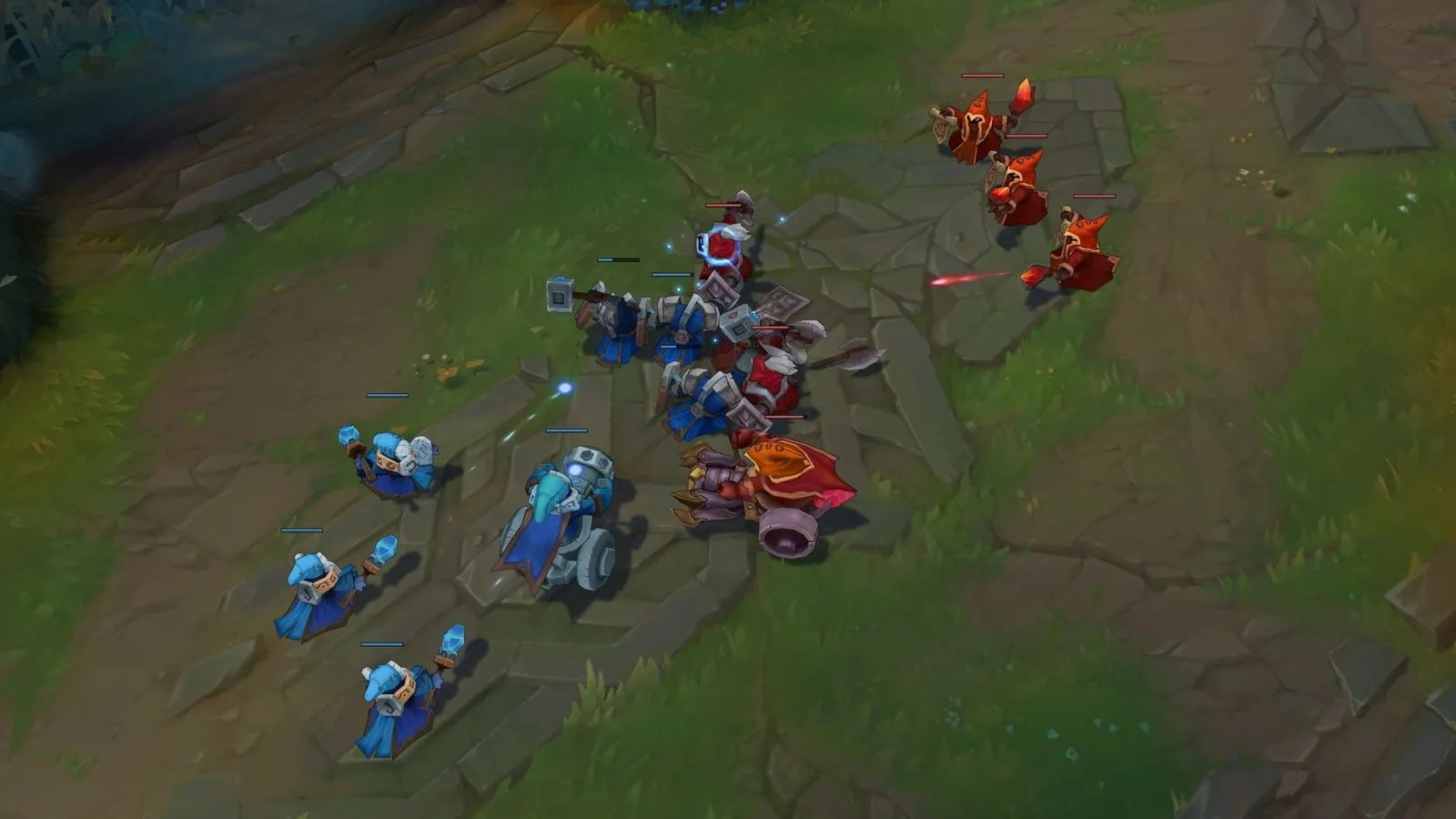
Wave management means controlling where the minion wave meets by choosing which minions die and when. Every last hit, every auto on a minion, every ability you throw into the wave changes the count on each side, and the count decides which way the wave walks.
Once that clicks, wave management comes down to one question you ask every 30 seconds: where do I want this wave in a minute?
Controlling where the minion wave sits pays you four ways:
- Denial. Pull the wave to your tower and your opponent has to walk up a long, unwarded lane to farm.
- Gank safety. A wave near your tower means a short escape route. A wave near theirs means a long one.
- Recall timing. Back at the right moment and you lose nothing. Back at the wrong one and you lose a wave, maybe a plate.
- Objective setup. The laner whose wave is crashed walks to river first.
Effective wave management compounds, and wave control in League of Legends feeds every other decision in lane. By the end of this, you'll know how to create each wave state and time it around recalls, roams and objectives. Wave management in LoL is mostly counting.
How Minions in League of Legends Decide Where the Minion Wave Goes
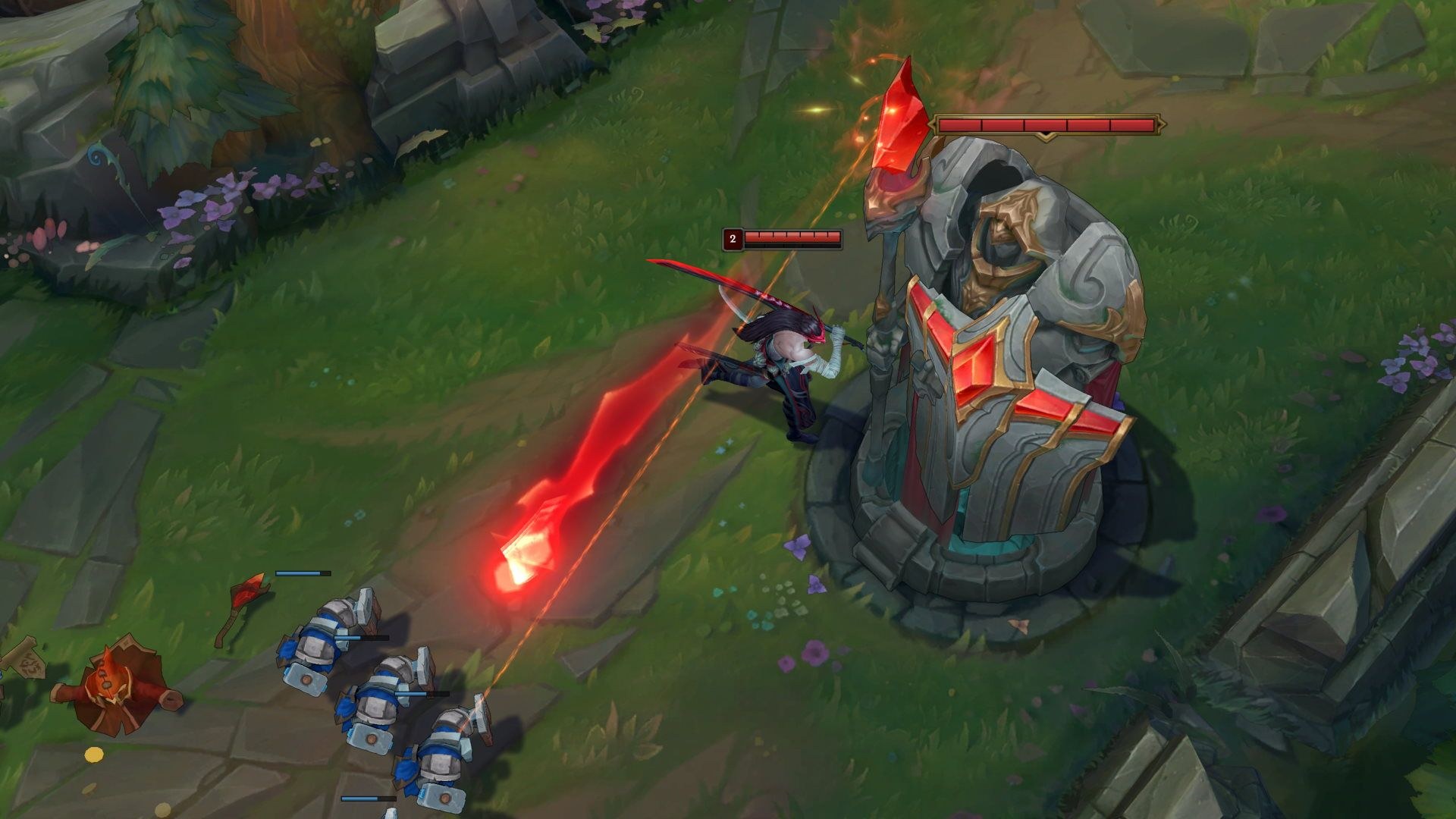
Everything below sits on three rules: spawn timing, minion fights, and towers.
The First Minion Wave, the Next Wave, and Every Third Wave's Cannon
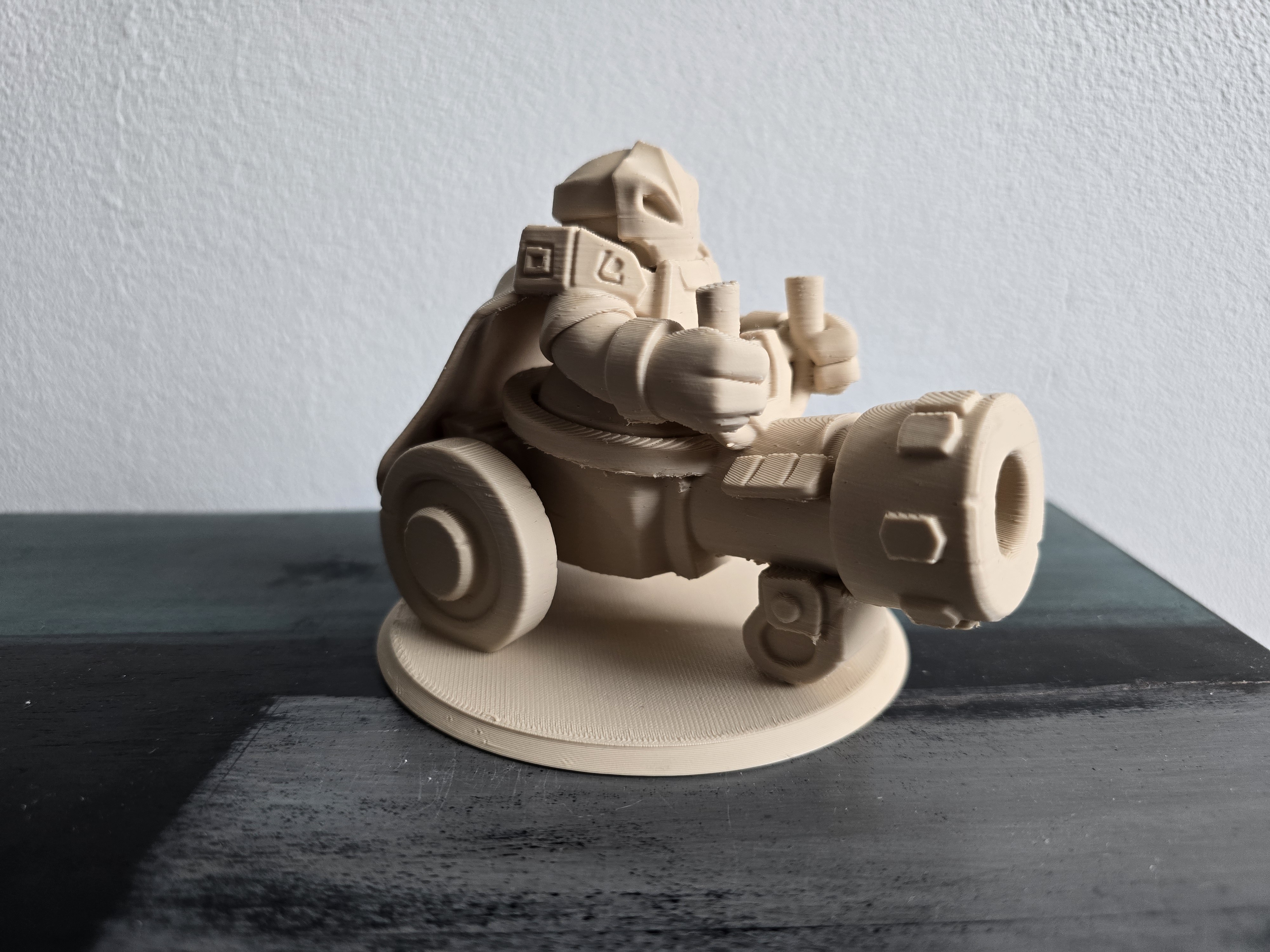
If you learned wave timings before 2026, forget 1:05. Riot moved the first spawn to 30 seconds this season, and the League wiki's minion page confirms the current schedule:
- The first minion wave spawns at 0:30.
- The next wave follows every 30 seconds through laning phase.
- A standard wave is 3 melee and 3 caster minions.
- The cannon (siege) minion joins every third wave, starting at 1:30. From 14:00 it comes every second wave, and from 25:00 every wave.
So in early laning, a cannon wave arrives every 90 seconds: 1:30, 3:00, 4:30, 6:00, 7:30. Memorize that list. Every slow push and cheater recall is built on it.
Why the Bigger Wave Always Pushes
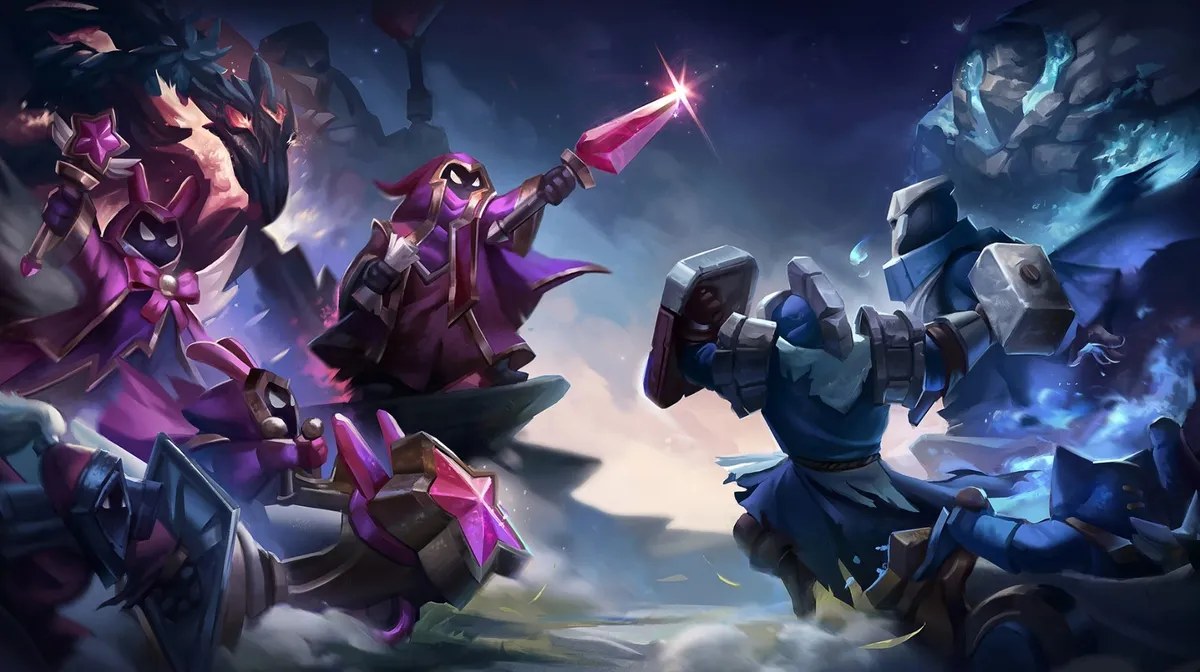
Minions fight minions. Whichever side has more minions (or more minion health) kills the other side first, and its survivors keep walking. That's all "the wave is pushing" means.
A few details decide how fast it happens:
- Melee minions soak. They start with 465 health against a caster's 284, so they absorb most of the damage.
- Casters die fast. Kill the three enemy casters and the enemy minion wave loses most of its damage.
- The cannon extends a push. It's tanky and hits hard, so it keeps a big wave alive much longer.
- Waves meet closer to the side whose wave arrives first. Less distance to walk means the meeting point drifts toward your tower.
- The tower resets everything. Any wave that walks into a tower gets eaten, and the next one starts from a new balance.
- Minions punish trades. Hit an enemy champion near their minions and those minions switch aggro to you.
So a large wave, especially one with a cannon, moves toward the other tower. The moment a wave starts to push, you know where the next minute goes.
Last-Hitting When the Wave Is Under Your Tower
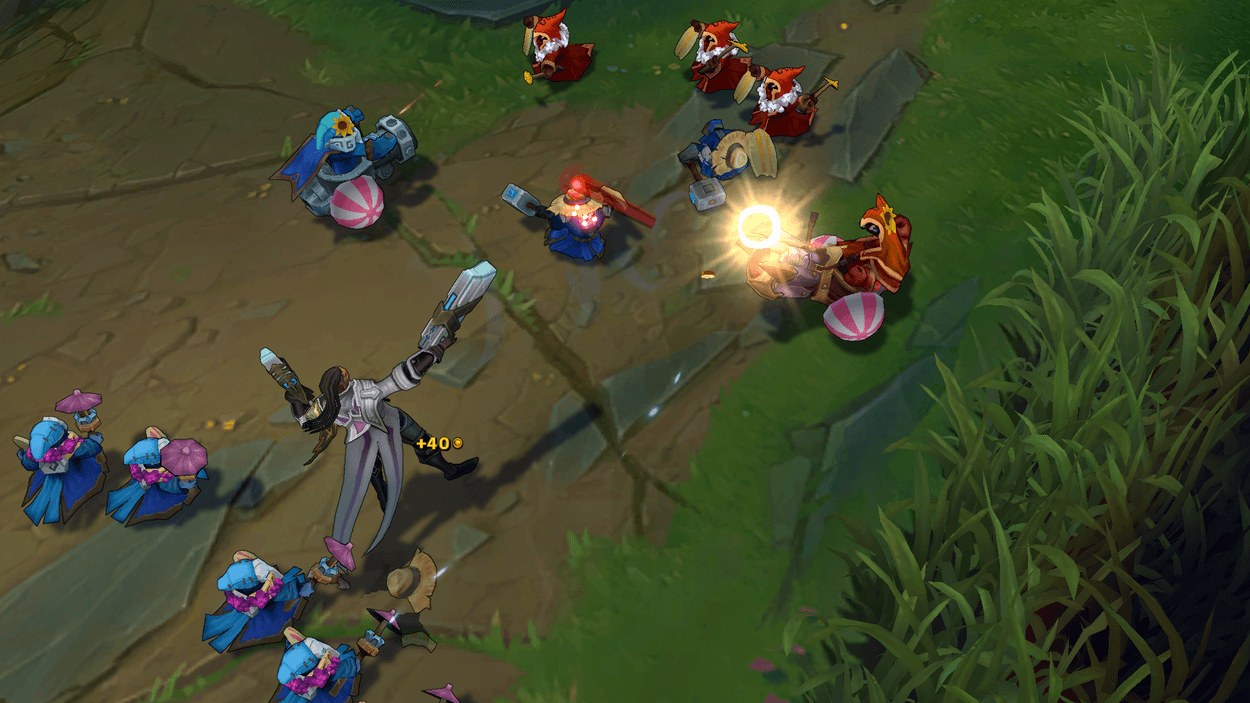
Most guides explain how to crash the wave onto the enemy. Few explain what to do when it crashes onto you.
Turrets don't deal normal damage to minions. They deal a fixed slice of max health: 45% to melee minions and 70% to casters. That makes a wave under tower predictable:
- Melee: turret, turret, auto. Two shots leave a full-health melee minion at 10%, and your auto finishes it. If it's already chipped, finish it early with an ability or the second shot steals it.
- Caster: auto, turret, auto. One shot leaves a caster at 30%, more than most early autos deal. Hit it once first and the turret drops it into last-hit range.
- Cannon: relax. Turrets deal only 8-14% of a siege minion's max health per shot. Last-hit it when it's low.
The ratios shift as minions scale, so watch the health bar, not the script.
The Four Wave States: Freeze, Slow Push, Fast Push and Bounce
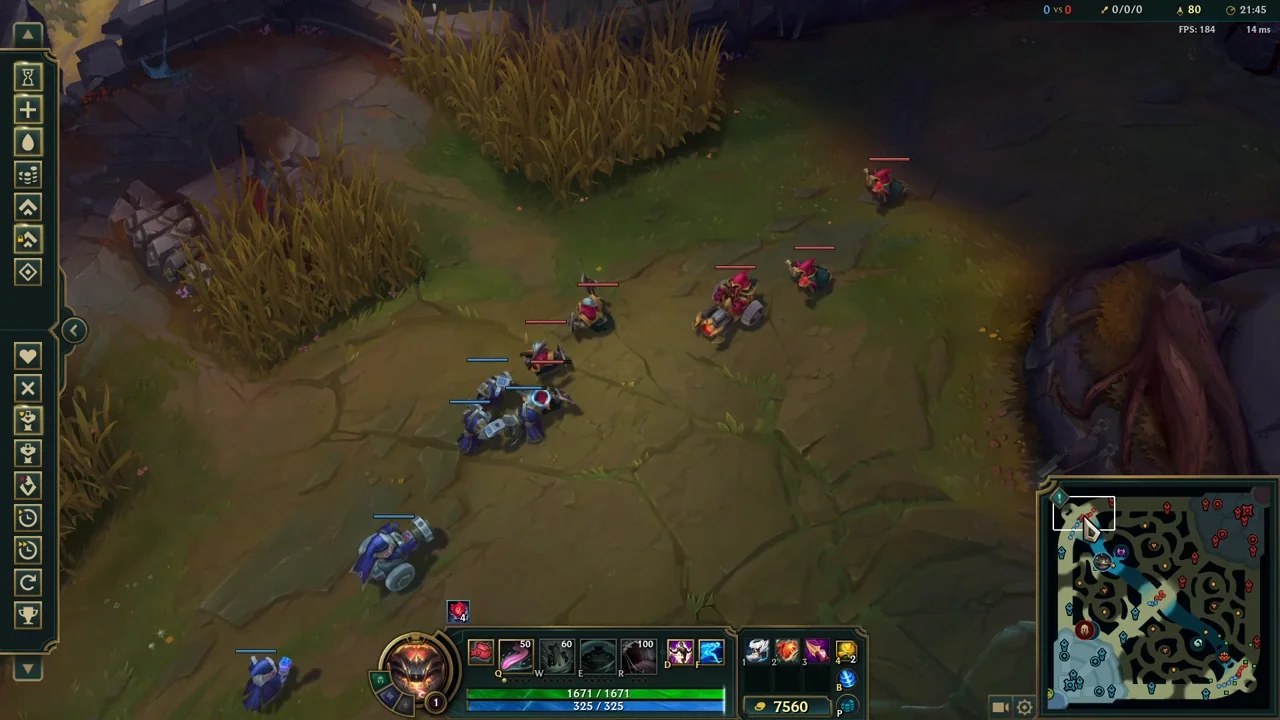
These four wave states are the different types of wave management, and every wave management technique you'll see is one of them or a transition between two.
Wave state | Where the wave sits | How you create it | Waves to set up | What it buys you | Biggest risk |
|---|---|---|---|---|---|
Freeze | Just outside your own tower range | Last-hit only while the enemy wave stays 3-4 minions bigger | 1, usually the bounce after a crash | CS and XP denial, plus an opponent in gank range | Their jungler helps break it and dives you |
Slow push | Growing on your side, then marching to theirs | Kill enemy casters, last-hit melee, leave your wave alone | 2-3, finishing on a cannon wave | One big crash for plates, a dive or a recall | You stand far up an unwarded lane while it builds |
Fast push | Crashed into the enemy tower | Clear with autos and AoE as fast as you can | 1, the one in front of you | Time to recall, roam or reach an objective first | Low mana, a long escape, and a bounce you might miss |
Bounce | Walking back toward your tower | Crash, then let their tower eat your wave | 1 crash, with the bounce on the next wave | A reset of an enemy freeze, or a setup for yours | Miss it and it hits your tower, setting up their freeze |
Freeze: Hold the Wave Just Outside Your Tower
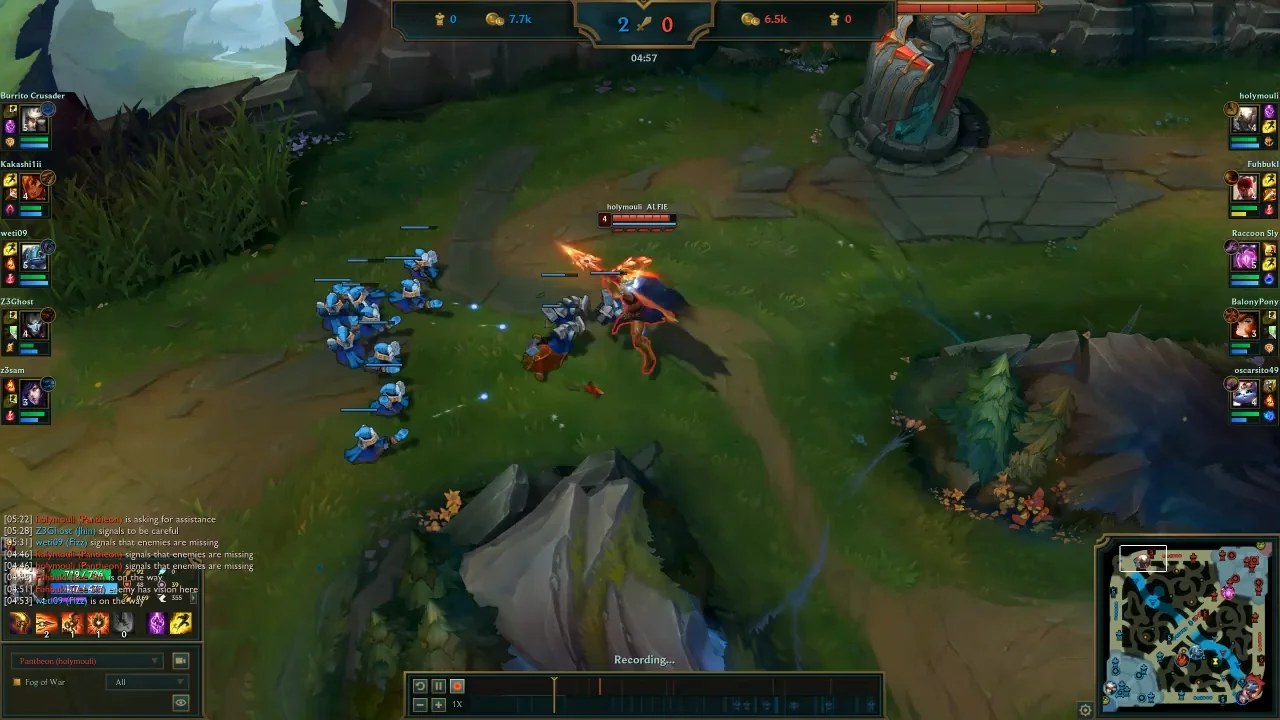
A wave freeze stops the wave from pushing either way. You hold the wave just outside your tower's range, where you farm safely and your opponent can't.
The setup:
- Let the enemy wave be slightly bigger. Right after a bounce is the easiest moment.
- Last-hit only. No autos on healthy minions, no abilities that hit three at once. Every extra kill sends the wave back toward them.
- Trim the wave when it grows. If their stack drifts toward tower range, auto a few extra enemy melee minions to bring the count down.
- Tank the minion wave to reposition it. If the meeting point sits too far up, stand in front of the enemy minions before your wave arrives. They'll hit you and follow you back.
Guides disagree on the threshold: some say two extra enemy minions, others three or four. The mechanics settle it. At a freeze, your fresh wave only walks a short way, so it arrives before theirs. Two leftover enemy minions get deleted by your six fresh ones before reinforcements show up, and the wave creeps forward. Three or four extra melee minions (melee, because they soak) survive until their next wave joins, and the meeting point stays put.
So keep the wave at three to four extra enemy minions, weighted toward melee. Two works only if you tank or trim every wave. Much past a full extra wave, the stack drifts into tower range and your turret breaks the freeze for you. The bot-game drill at the end lets you check this yourself.
To break it, the opponent has to walk the long stretch, which is exactly where your jungler wants them. Ward it and ping. If their jungler comes too, let the freeze go. A lost freeze costs a wave. A death costs more.
Don't freeze when you're behind (they'll zone you off it), when the enemy jungler is on your side (let the wave under tower instead), or when your team needs you. A freeze pins you to lane, so if dragon is up, crash and go.
Slow Push: Let Your Wave Build Over 2-3 Waves
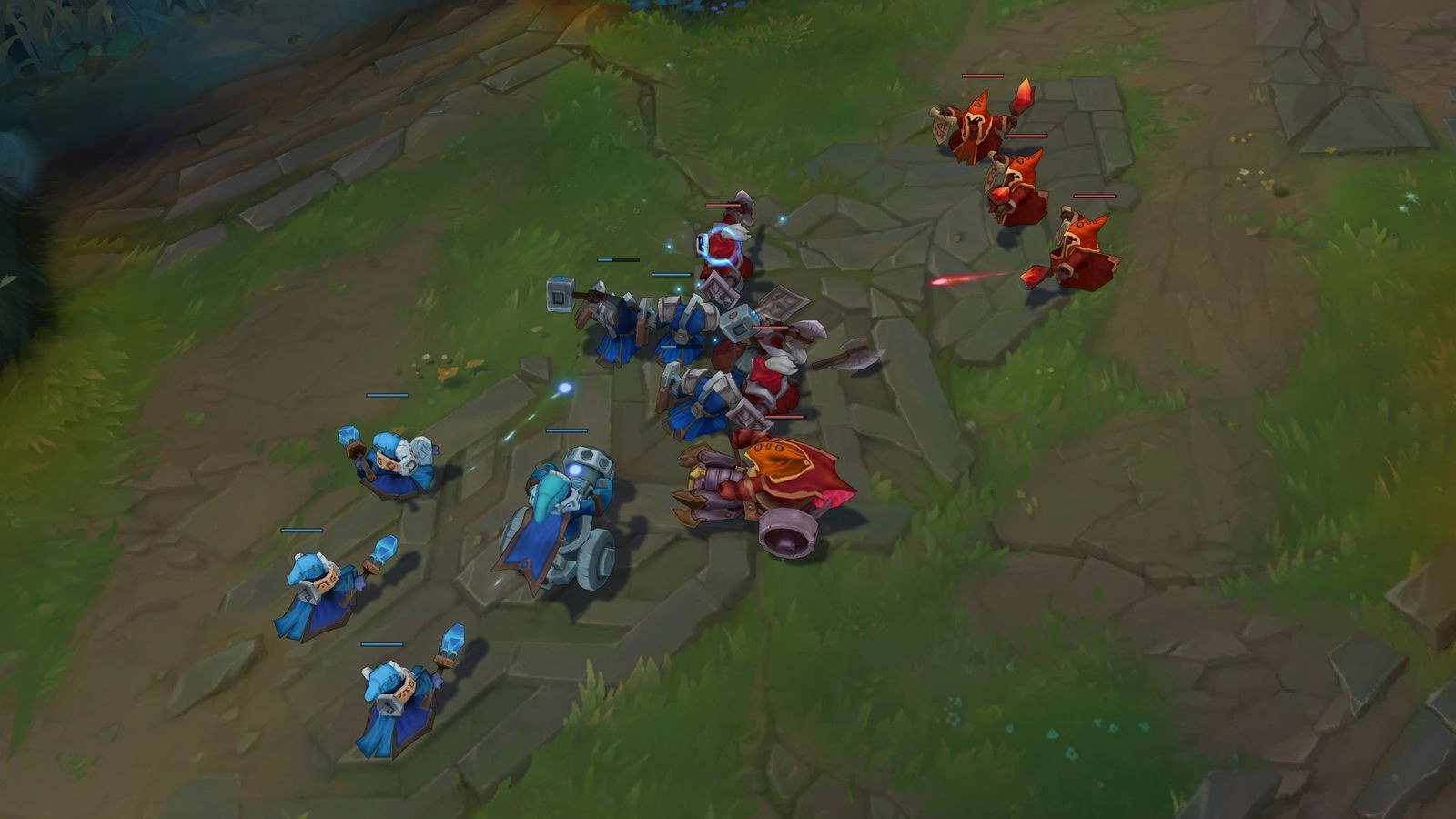
A slow push is the freeze in reverse. To set up a slow push, kill the enemy casters, last-hit the melee minions, and leave your own wave alone. Over 2 waves you have a noticeably bigger wave. Over 3 waves you have a stack the enemy can't clear without burning mana, and a wave to crash later, when you choose.
Here's the classic level-3 cheater recall on 2026 timings:
- Wave 1 (spawns 0:30): Focus the three enemy casters. Target: their wave dead with 2-3 of your minions standing.
- Wave 2 (1:00): Same again. Your leftovers join the fresh wave. Target: 4-5 minions up.
- Wave 3 (1:30, cannon): Stop slow pushing, start shoving. Your stack plus the cannon wave hits their tower.
- Recall as the stack starts eating tower shots.
Matchup and enemy clear will move those counts, so treat them as targets.
Why finish on the cannon? Time. Turrets attack at 0.833 attacks per second, roughly one shot every 1.2 seconds. With the wiki values above, a melee minion takes three shots, a caster two, a cannon at least eight. Six melee, five casters and a cannon is 36 shots: up to about 43 seconds of turret work on paper, before enemy minions shorten it. That's your real recall window.
The crash also cashes out plates at 120 gold each, and since 2026 plates stay on permanently, so a big crash keeps paying later than it used to.
One hard rule: slow push only with vision or a known jungler position. If their jungler was last seen on your side, don't slow push a minion wave into the fog.
Fast Push: Crash the Wave When You Need Time
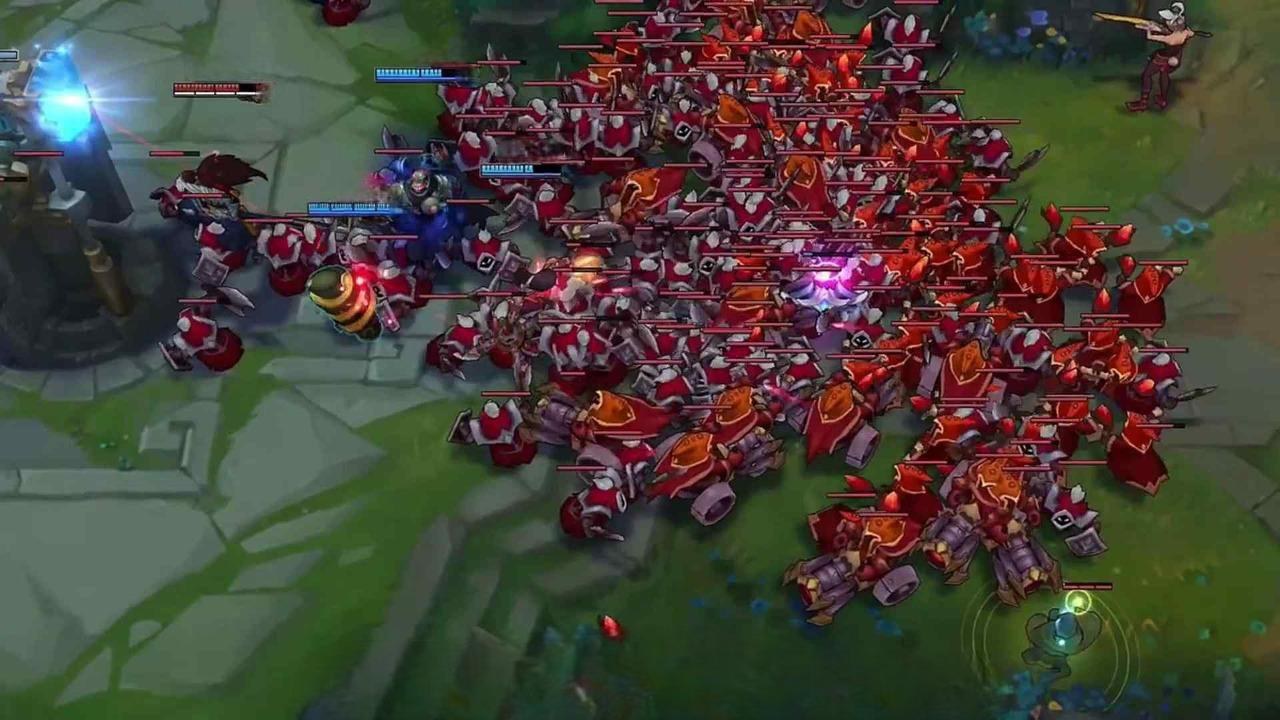
A fast push is simple: clear the wave into the enemy tower as fast as you can and spend the time it buys you.
Shove the wave when you want to recall with no time to slow push, when you want to roam or reach an objective, or when the opponent is dead or backing. Then every minion that dies to their tower is gold and XP they never see.
Wave clear decides who gets to do this. With great wave clear, you push the wave in two rotations and leave while they catch it. If they clear faster, the fast push is theirs, and your plan should be a freeze or slow push instead. When the wave slams into the enemy tower, the laner with worse clear is stuck babysitting.
The risk: you're as far from your tower as it gets, with less mana. A fast push with no plan afterward is a walk into the enemy jungler's favorite bush.
Bounce: What Happens After the Wave Crashes
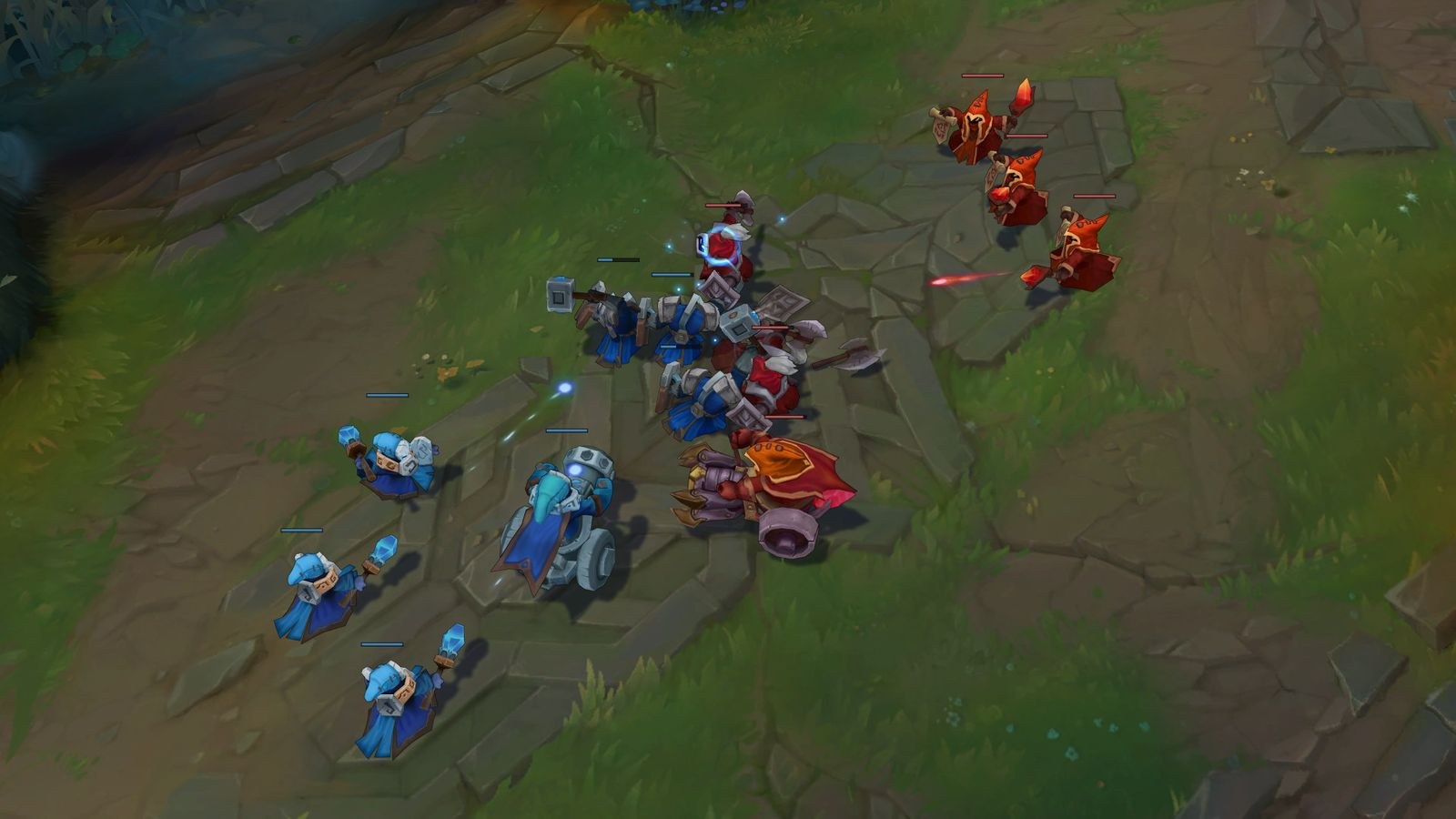
The bounce is how wave management works on autopilot. You crash, the enemy tower kills your wave, and their next wave walks into an empty lane. Now their side has more minions, and the wave is approaching your tower.
Use it to reset the wave when the enemy froze on you: crash a big wave into their tower and the freeze is gone. Or use it to set up your own freeze, since the bounce delivers a slightly bigger enemy wave to your side.
Crash with no follow-up (no recall, roam, ward or objective) and then miss the bounce, and it walks into your tower, your tower thins it, and your next wave marches toward their tower with a small edge. That's the textbook freeze setup, and you gave it away.
How to Set Up the Minion Wave for Recalls, Roams, and Ganks
Every time you leave lane, you're betting on the wave state you left behind.
Recall on a Crash, Not Before
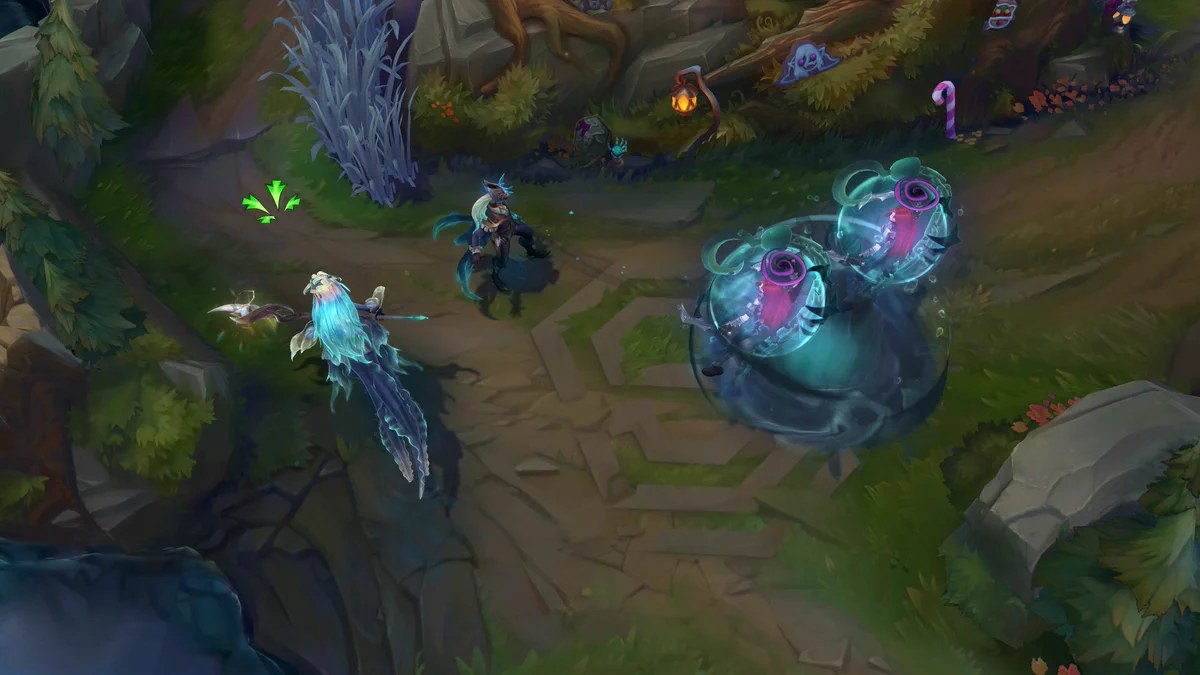
The cheater recall is the gold standard: slow push, crash a big wave into the enemy turret, recall while their tower chews through your minions. They're stuck last-hitting under their own turret while you shop.
Back on a bad wave instead, with the enemy wave bigger and walking at you, and it lands in your tower while you're in base. Every minion your tower kills is gold you don't get, and a big enough wave takes a plate too.
So if you want the wave to get into their tower before you back, crash first. If you're low and getting zoned, back anyway. A lost wave is cheaper than a death.
Roams and Ganks Start With the Wave State
A roam is a recall with a detour. Roam after a crash, never while your wave is losing, or you return to a crashed wave under your tower and a laner who's a level up.
Ganks work from the other side. The gankable states are a laner farming against a freeze, who has to walk the long unwarded stretch, and an overextended laner with a long way home. From the jungler's seat, a wave in the long stretch in front of a tower is gankable, and a wave frozen under the enemy tower is a trap. The jungle pathing guide on this blog reads lanes exactly this way.
For laners: want a gank, get the wave pushing toward you and hold it there.
Timing Waves Around Objectives
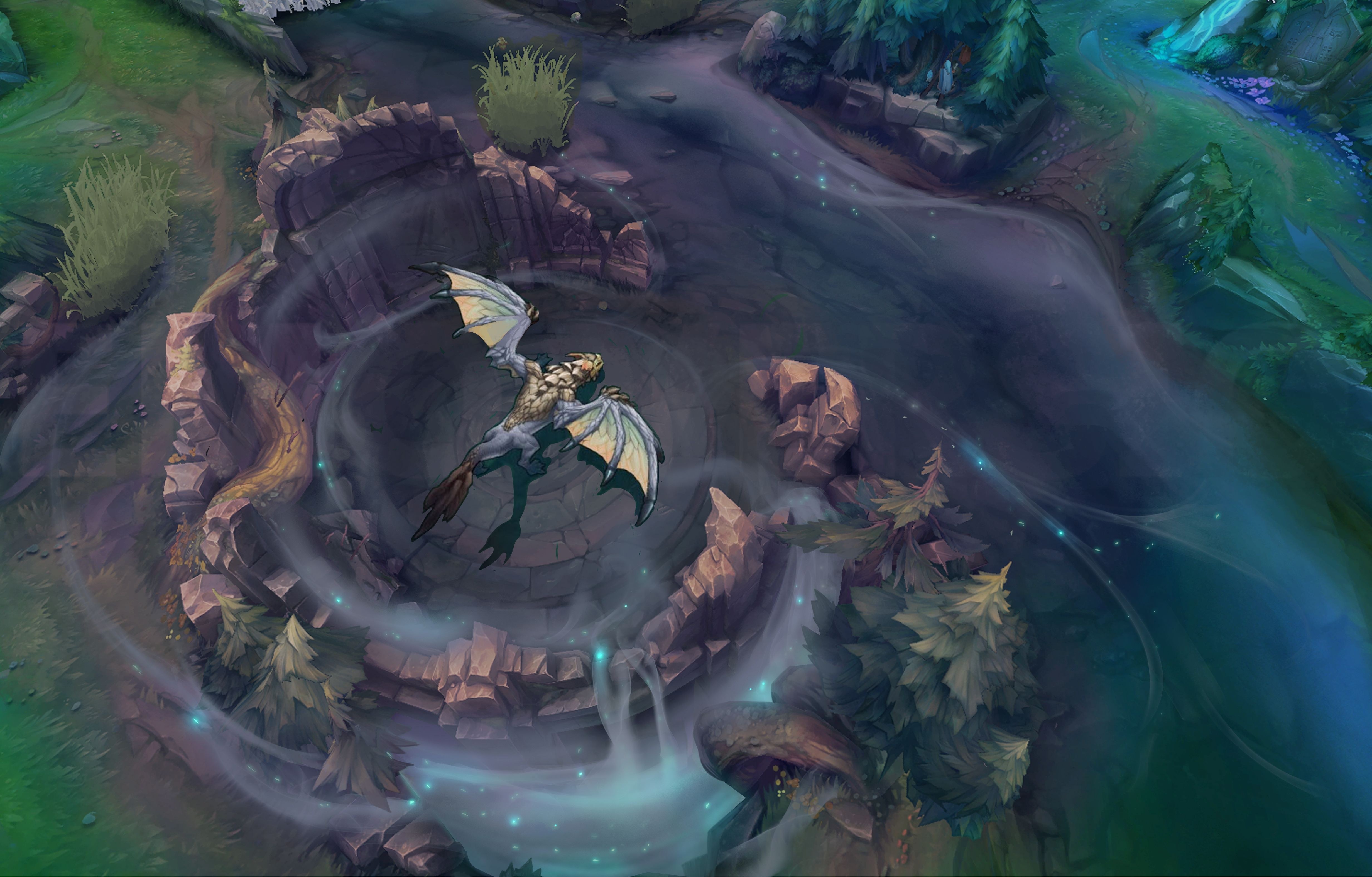
Control the wave so it crashes just before an objective spawns. Your team arrives first, and the enemy laners choose between their wave and the fight.
The first dragon spawns at 5:00 and the Voidgrubs at 8:00. Check the cannon list: a cannon wave spawns at 4:30 and another at 7:30. Convenient. Stack the two waves before each, crash on the cannon, and walk to river while their laner clears. If you start the push on the next wave after the spawn, you're already late.
Wave Management by Lane: Top Lane, Mid Lane, and Bot Lane
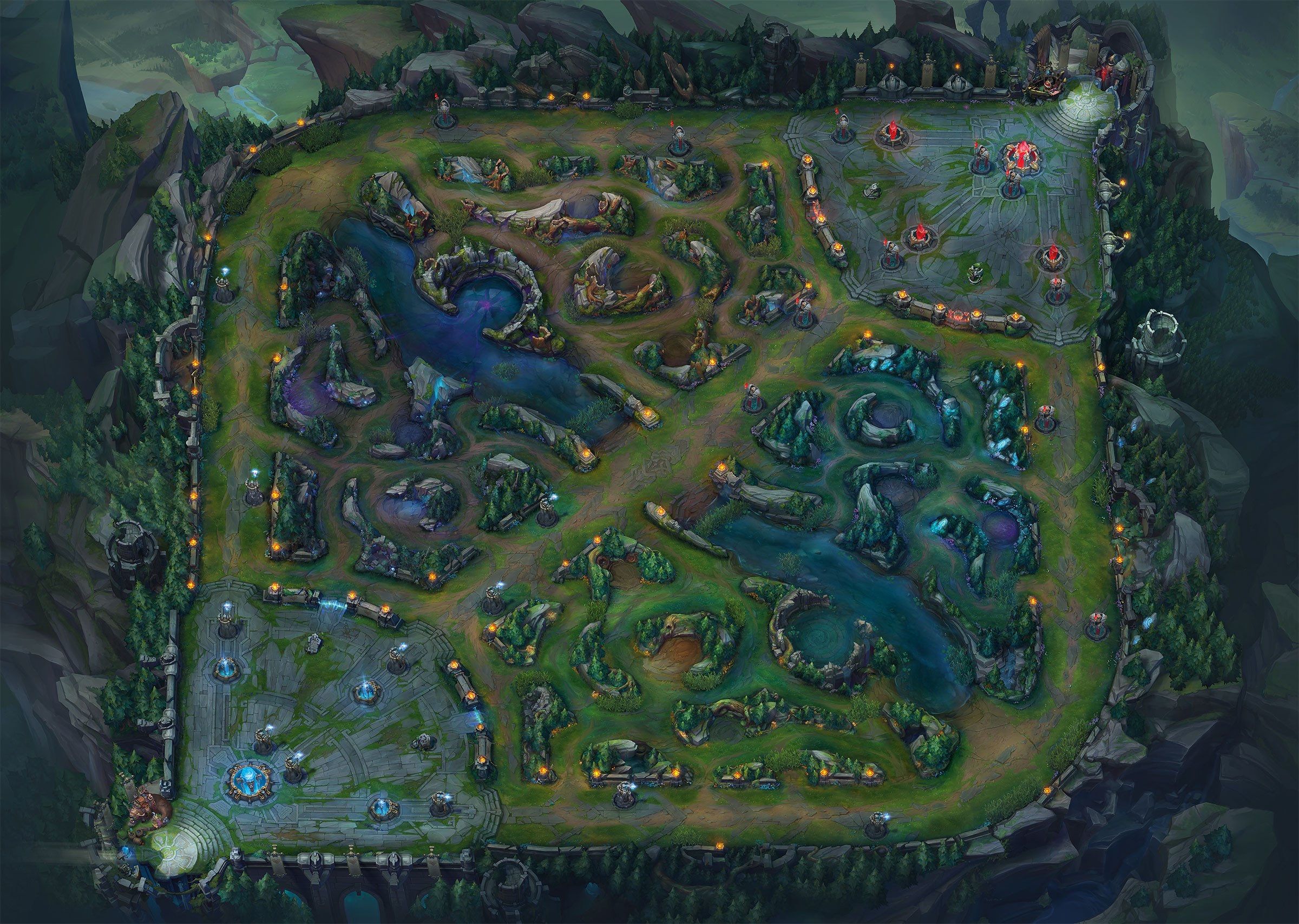
The rules are the same everywhere. The lanes aren't.
Top Lane
Top lane is one of the two long side lanes, so a freeze there denies the most. Walking up to break one takes you far from your tower, usually straight into the enemy jungler.
Crash before you recall, because top is too long to walk back to a bad wave. And crash before you Teleport. The 2026 role quest hands top laners a free Teleport, which makes it tempting to TP to every fight and come back to a wave that's been eating your tower.
If you play top and want someone watching your waves live, top lane coaching with a high-elo coach spends a lot of time on exactly this: freezes, Teleport timing and when to split.
Mid Lane
Mid lane is short. Waves arrive fast, a freeze denies less, and the laner with priority moves first. Not every wave needs to crash, but every wave before a play does, so you can roam or reach river first.
The mid role quest added a boosted 4-second recall earlier in the season, which made crash-and-back cycles even cheaper. The catch: the enemy mid wants the same thing, and better clear wins that race. If that's not you, don't race.
Bot Lane and Support
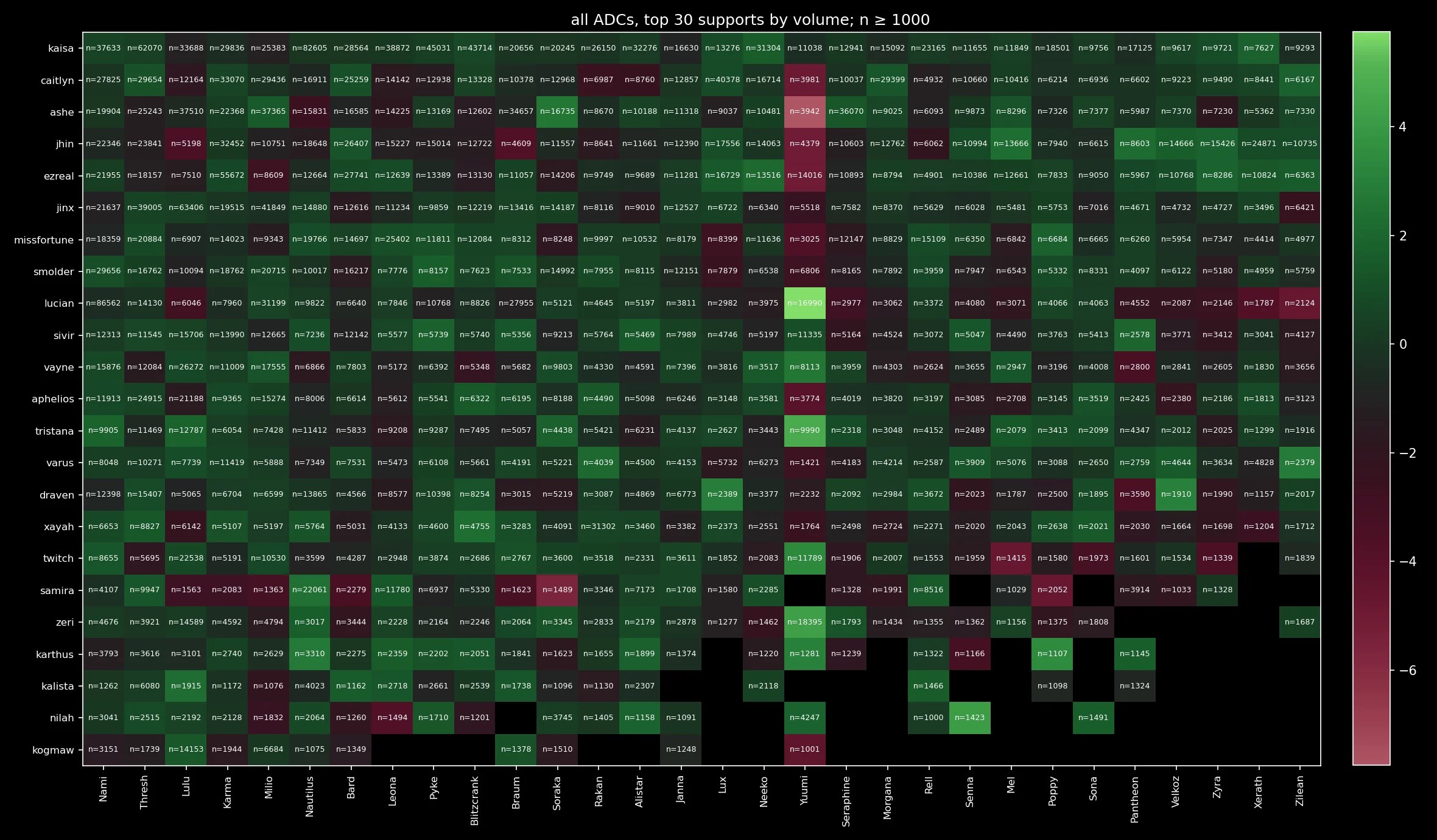
Bot is the one lane in League played 2v2, so both players must agree on the wave state. The classic bot mistake is the ADC freezing while the support autos minions. Pick one and say it out loud.
Slow push into a crash before dragon, starting two waves ahead of the spawn. Once your wave hits their tower, the enemy ADC can't leave without losing CS, which is your support's window to ward or roam mid. If your support leaves while the enemy wave is bigger, play near tower.
Lane Wave Control After the Laning Phase
Waves keep coming after laning ends. Once the first towers fall, wave control is mostly about catching side waves safely.
Catch the wave in side lanes, but don't walk past river without vision or knowing where the enemies are. Four enemies missing usually means one is waiting in your side lane.
Before dragon or Baron (which returned to 20:00 this season), push or freeze the side lanes. Pushed ones force the enemy to send someone. Frozen ones are safe to leave.
And never leave a bad wave about to crash into your tower before a fight. Every minion wave you leave behind says either "take this" or "come deal with this." Good League of Legends wave control after 20 minutes means always sending the second one.
Common Wave State Mistakes and How to Practice
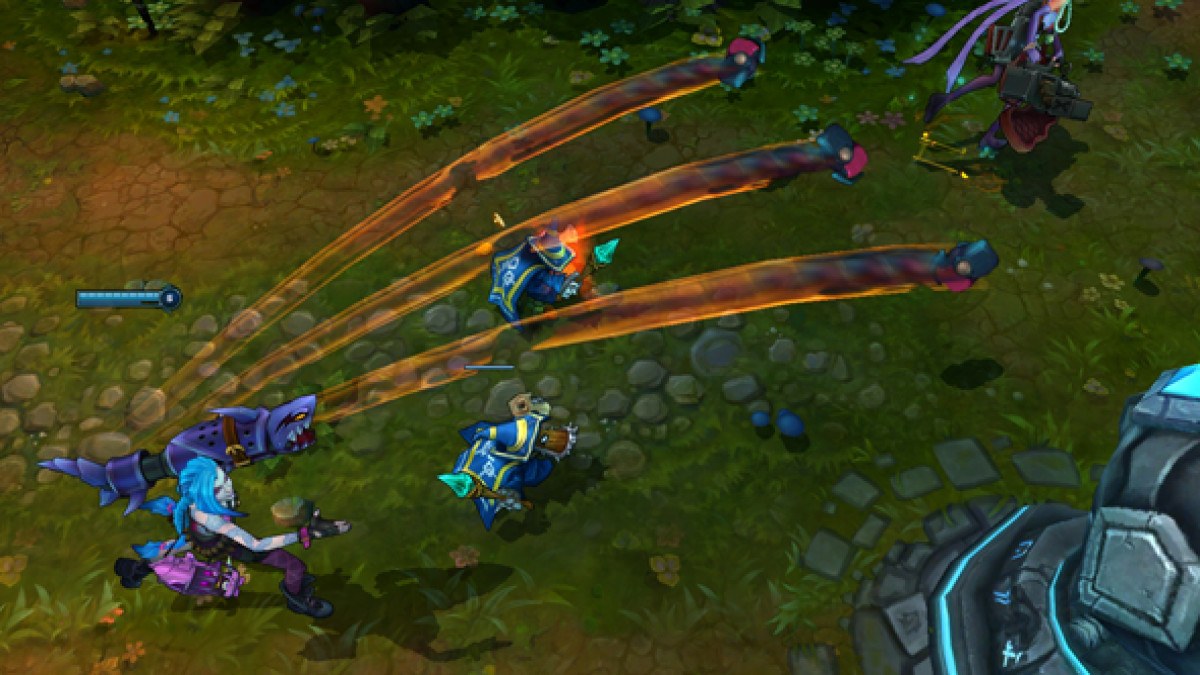
The mistakes that keep players stuck are habits:
- Shoving by default. Clicking every minion walks you toward their jungler.
- Recalling before crashing. Losing a wave because the timing was "whenever."
- Fighting inside a bigger enemy wave. Their minions switch aggro when you hit their champion.
- Slow pushing without vision. A big wave with no wards is a gank invitation.
- Breaking your own freeze with abilities. One AoE spell and the freeze is gone.
- Ignoring the cannon wave. Crashing right before the cannon arrives wastes your best tool.
How to practice:
- Tower last-hit drill. In Practice Tool, let the enemy wave crash under your tower and repeat the melee and caster patterns until they're automatic.
- Freeze threshold test. In a custom game against bots, hold the enemy wave two minions bigger, then three or four, and watch where the wave sits.
- Cheater recall drill. Run the wave 1-3 slow push and count how many minions reach their tower.
Then run the coach's VOD audit on your own games. Open a replay and pause at every recall and every death. Write down the wave state (freeze, slow push, crashed, bounce, or "no idea") and whether you chose it on purpose. Plenty of deaths trace back to a wave state nobody picked, and seeing that in writing is what makes wave management in League stick.
That's the same exercise our coaches run in live sessions and VOD reviews. If you want a second pair of eyes, you can get your VODs reviewed by a Challenger coach who'll call out your waves as you go.
FAQ
How much gold is one minion wave worth in League of Legends?
Since patch 26.01, a melee minion is worth 20 gold and a caster 14, so a standard wave of three of each is 102 gold. The cannon adds 50 (plus 1 per upgrade), making an early cannon wave 152. Miss one cannon wave and you've dropped more than a turret plate's 120 gold.
Do minion waves spawn faster later in the game?
Yes. Waves spawn every 30 seconds until 14:00, then every 25 seconds until 30:00, then every 20 seconds, per the League wiki. They also get slimmer: after 14:00, a wave carrying a cannon spawns one fewer melee minion, and the 20-second waves drop a caster. That's why side lanes crash so fast late.
Which champions are best at wave management?
Any champion can manage waves, but some make certain states easy. Ziggs, Malzahar and Anivia clear a wave in a couple of buttons, so they win fast-push races in mid and can crash before every roam. Sivir does the same from bot with Ricochet. Single-target champions like Fiora and Nasus clear slowly, so they lean on freezes and slow pushes instead.