

Sesenta partidos con un porcentaje de victorias del 50 % no te llevan a ninguna parte.
Treinta partidas con un 57 % te acercan a subir una división completa.
Esa diferencia es precisamente de lo que se trata aquí: la velocidad en la clasificación depende del porcentaje de victorias por partida, no del número de partidas al día.
Así que esto es un orden de operaciones, no diez consejos para subir lanzados al azar.
Papel, repertorio de campeones, juego en carril, macro, mentalidad, análisis y, por último, un plan de cuatro semanas.
La temporada 3 del ciclo de 2026 se prolonga hasta principios de enero sin que se reinicien las clasificaciones antes de esa fecha, por lo que tienes unos cuatro meses de SoloQ.
Las matemáticas reales de una subida rápida
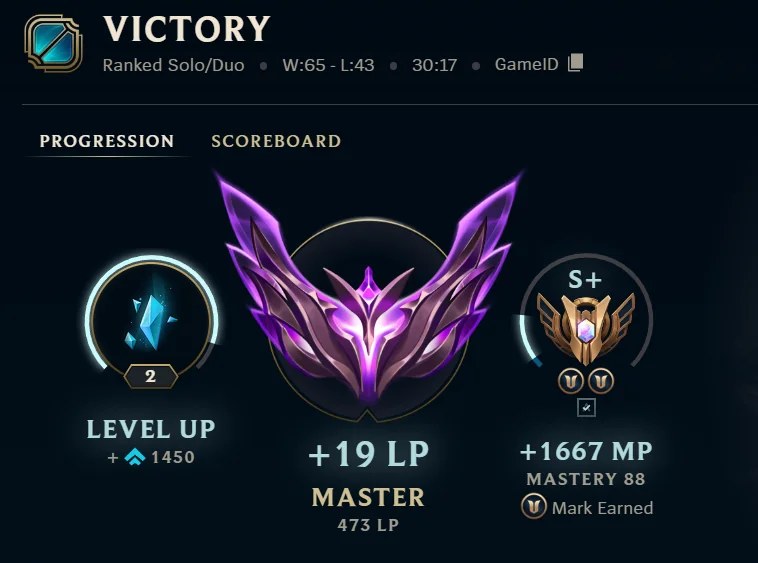
Una división son 100 LP; un nivel, 400. Las victorias otorgan entre 20 y 25 LP aproximadamente, dependiendo de tu MMR. Haz los cálculos antes de tu próxima selección de campeones.
100 partidas clasificatorias con un 50 % de acierto: saldo cero. Acabas donde empezaste, pero habiendo perdido 60 horas.
100 partidas con un 55 % de victorias: diez victorias netas, unos 220 LP, dos divisiones.
100 partidas con un 60 %: veinte victorias netas, unos 440 LP, un nivel completo.
Una variación de cinco puntos en la tasa de victorias es mejor que duplicar tu volumen de partidas.
Los LP son la insignia; el MMR es lo que cree el emparejador. Ganar 14 y perder 24 significa que tu MMR está por debajo de tu rango mostrado y que el sistema te está haciendo bajar de nuevo. La actualización «Ranked 2026» de Riot añadió un indicador de ascenso para el caso contrario. Persigue el MMR; la insignia vendrá sola.
Hay dos mitos que hay que desmentir. No existe ninguna serie de promoción ni hay que ganar cinco partidas seguidas para subir de rango: las promociones desaparecieron por completo con el parche 13.14, y asciendes en el instante en que superas los 100 LP. El «smurfing» tampoco es un atajo, ni lo es comprar un ascenso que no puedas mantener.
Sí que existe una ventaja gratuita. Desde el parche 26.15, la «Égida del valor» otorga el doble de LP por una victoria en una partida con emparejamiento automático sin requisito de nivel de maestría, y los jugadores que se especializan en jungla y apoyo suelen aprovecharla a menudo.
Por qué unas pocas partidas de calidad superan a la rutina
Todo el mundo tiene una curva de fatiga: en la cuarta partida la concentración baja, en la sexta te pones en cola en piloto automático y en la octava acabas regalando LP. Comprueba la tuya comparando las tres primeras partidas de una sesión con todas las siguientes. Juega menos y conserva los LP.
Cíñete a un rol: principal y secundario
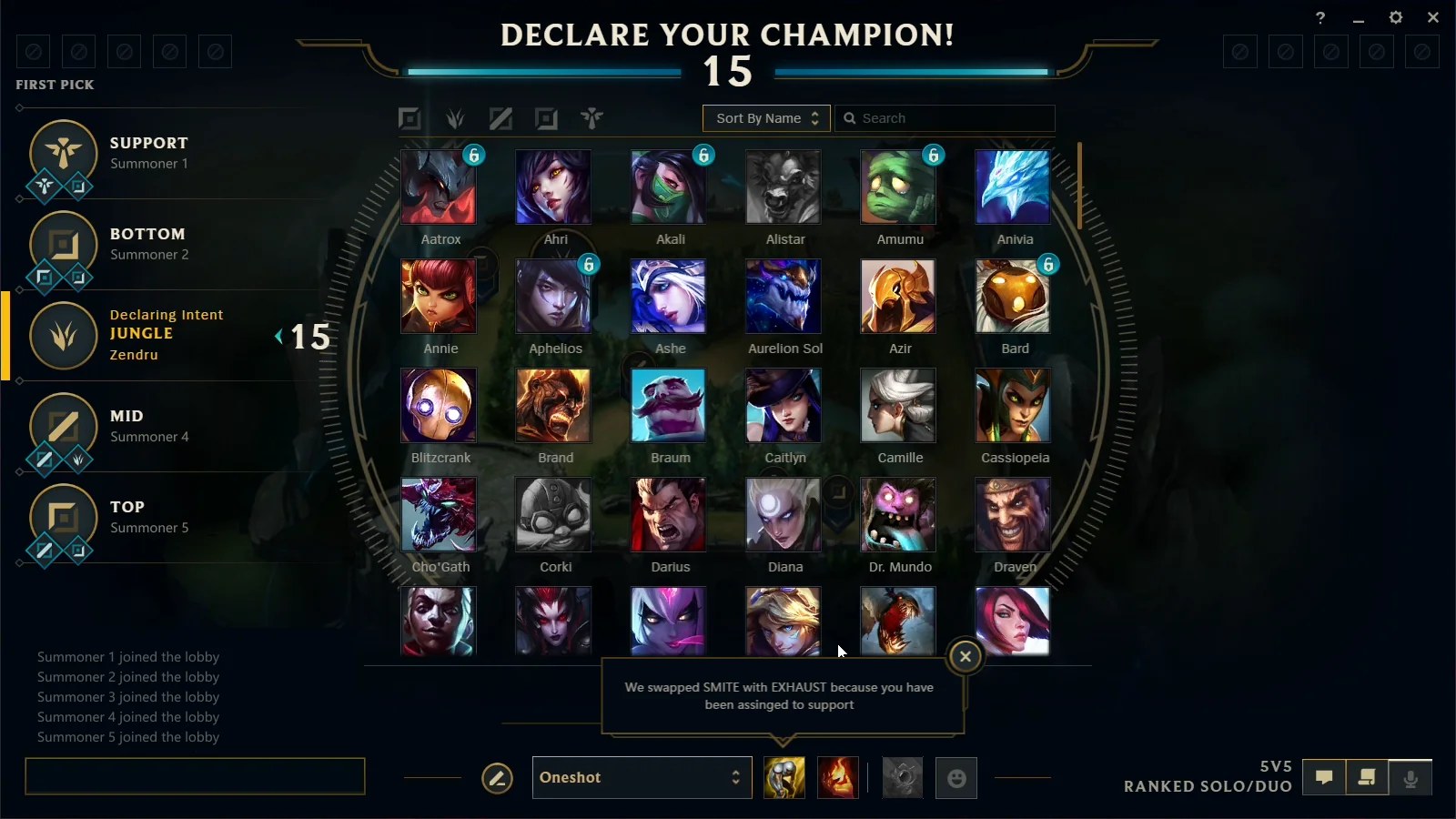
El «fill» no es un rol; son cinco funciones aprendidas a medias. Los rangos de emparejamiento, la limpieza de la jungla y los temporizadores de buffs, las ventanas de roam y los hábitos de oleadas son específicos de cada posición, y ninguno de ellos es transferible.
Elige tu rol principal basándote en la posición en la que ya tengas más partidas clasificatorias, no por corazonadas. Añade un rol secundario que puedas desempeñar con soltura. El emparejador de 2026 ahora empareja a los jugadores asignados automáticamente entre sí en la misma posición, por lo que tu rol secundario solo tiene que ser funcional.
Sabe cuál es tu punto fuerte. La línea superior se encarga de una oleada lateral. Los junglers ganan por ritmo, la línea central por prioridades y desplazamientos, el ADC por farm y posición, y el apoyo por visión y momento de ataque, aunque el parche 26.16 aumentó la penalización por desplazamientos tempranos a un recorte del 33 % de oro y XP antes del nivel cinco.
Por qué un grupo reducido de campeones permite subir de rango más rápido
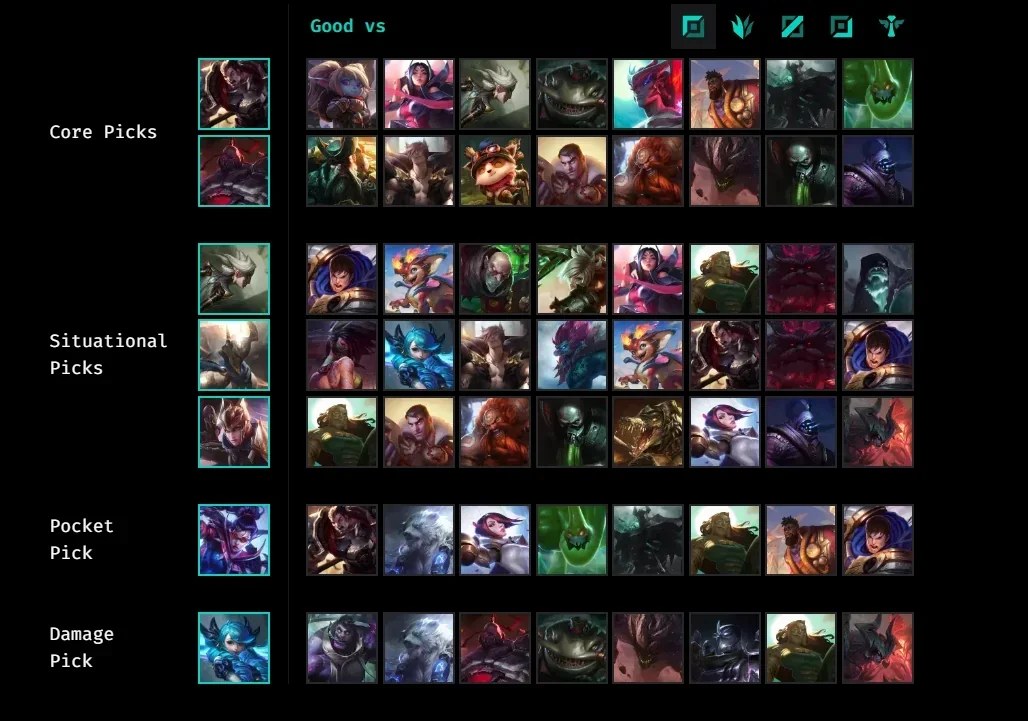
Abre tu historial de partidas. La cuenta típica que se queda estancada tiene once campeones con cuatro o cinco partidas cada uno. Los que se dedican a subir su Elo con un solo campeón tienen más de 30 partidas con su campeón principal en esta split.
La maestría consiste en conocer tu daño en el nivel seis con dos objetos frente a los cuatro campeones con los que te enfrentas más a menudo. Eso se consigue con la repetición, y la repetición requiere un repertorio reducido de campeones.
Redúcelo a tres. Menos de 20 partidas en esta temporada significa que no conoces al campeón; un porcentaje inferior al 47 % en más de 25 partidas significa que hay que descartarlo. Por debajo de 20 partidas, la tasa de victorias no es relevante.
Elegir tus tres: ciego, contramedida, seguro
Asigna una función a cada elección, no tres variantes del mismo campeón.
La elección a ciegas se centra primero en cualquier cosa: pocas contramedidas, limpieza de oleadas segura, ningún emparejamiento que te elimine. La elección de contramedida es tu botón de castigo cuando sabes a qué te enfrentas. El «seguro» de autocompletado es un campeón meta en tu rol secundario.
Comprueba primero las tasas de prohibición. Si dos de tus tres están prohibidos de forma permanente en tu rango, una sola selección de campeón te deja sin opciones. Ten en cuenta también la sinergia: en la línea inferior, reserva una elección para un apoyo de inicio de combate y otra para el poke.
Seguir el meta frente a lo que ya conoces
Cambia de campeones cuando la partida cambie a tu alrededor, no cuando se mueva una lista de tiers. Un buff o nerf directo a un ratio clave, una revisión de objetos que arruine tu primera compra o un cambio en el sistema de tu rol lo justifican. Una miniatura que califique algo como «OP» no lo justifica.
Lee las notas del parche solo para tres cosas: tus campeones, sus contrincantes habituales y tus objetos principales. Cinco minutos cada quince días. Los jugadores que se pasan a los campeones fuertes en cada parche nunca acumulan la práctica necesaria para conseguir una ventaja competitiva.
Gana la línea con la gestión de oleadas
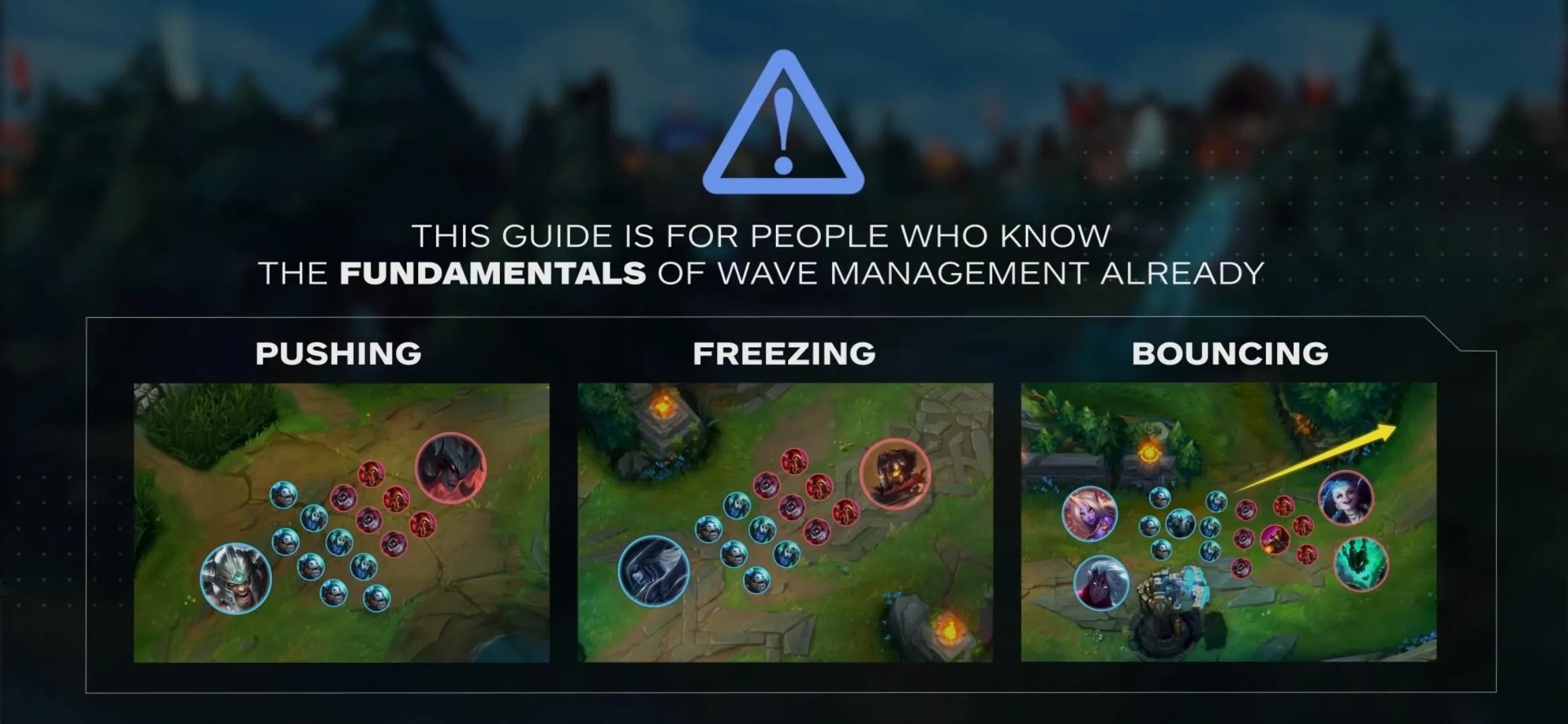
La gestión de oleadas es lo que diferencia a un jugador de línea de Oro de uno de Esmeralda. Tres situaciones, una tarea para cada una.
Congelación: mantén la oleada fuera del alcance de tu torreta, matando solo a los súbditos que, de otro modo, avanzarían. Esto deja sin recursos al rival de la línea y le obliga a quedarse en el alcance de las emboscadas para conseguir las migajas.
Avance lento: mata a sus súbditos poco a poco para que tu oleada se convierta en una gran embestida. Úsalo para preparar un «recall», una armadura o una ventana de tempo antes de un objetivo.
Avance rápido: despeja todo, embiste su torreta y vete. Esto te da libertad para deambular, rotar o reiniciar.
Si vas por detrás en la línea, quédate quieto cerca de tu torre. En un enfrentamiento «all-in», nunca mantengas la oleada más allá de la maleza del río sin visión. Contra un campeón inmóvil, realiza un avance lento y ataca la torre para que tu jungler pueda colapsar la línea. Con un apoyo de combate, mantén la oleada en tu lado e intercambia golpes cuando las habilidades estén en tiempo de recarga; con un apoyo de hostigamiento, avanza lentamente y consigue placas.
Un cambio de 2026 eleva las apuestas: las placas de las torretas ya no desaparecen a los 14 minutos, y las torretas interiores también tienen placas. Una oleada derribada da oro durante toda la partida.
Referencias de CS y muertes por rango
A los diez minutos, aparecen aproximadamente 114 súbditos en una línea en solitario. Objetivos:
De Hierro a Bronce: de 45 a 60 CS a los 10 minutos, de 75 a 95 a los 15
De Plata a Oro: de 60 a 75 a los 10 minutos, de 100 a 115 a los 15
De Platino a Esmeralda: de 75 a 85 a los 10 minutos, de 115 a 135 a los 15
Diamante y superiores: de 85 a 95 a los 10 minutos, más de 140 a los 15
Hay dos cifras más importantes que el KDA. Muertes: menos de cinco por partida, menos de cuatro si quieres subir de rango. Placas: dos por partida como jugador en carril en solitario, 240 de oro de pura presión en el carril.
El entrenamiento, porque «farmear mejor» no es un consejo: diez minutos en la herramienta de práctica, sin objetos, sin runas, sin habilidades, solo golpes finales. Anota contra 114, tres veces a la semana durante quince días.
Convierte una ventaja en una victoria

La mayoría de las ventajas en partidas de bajo Elo se esfuman entre los 15 y los 25 minutos: cinco personas apostadas en la línea central, nadie en las oleadas laterales, y un temporizador de muerte de 40 segundos que lo acaba todo.
Aprende a leer el reloj. Los dragones a las 5:00 y luego cada cinco minutos, el Heraldo de la Grieta a las 15:00, el Barón a las 20:00 con una reaparición cada seis minutos, y las mejoras de la jungla cada cinco. Llega al foso 30 segundos antes con tu oleada ya llegada, y mantén a los invocadores a raya durante los dos minutos previos a la aparición.
Rota o farmea: si tu oleada está chocando contra su torreta y aparece un objetivo en menos de 45 segundos, ve a por él. Si te rebota hacia ti, cógelo y llega tarde con el oro. Haz un ping para indicar tu intención 20 segundos antes de moverte.
Las tres peleas que nunca debes aceptar
Rechaza estas tres y tu porcentaje de victorias subirá por sí solo.
Sin visión. Si no puedes controlar a dos enemigos y no hay ninguna marca en la lucha, es como lanzar una moneda al aire que tú mismo has pagado.
Los temporizadores de reaparición te son desfavorables. Pasados 20 minutos, un aliado muerto es un objetivo gratis para ellos. Reinicia, farmea, espera.
Hay un objetivo disponible y tu oleada está avanzando en la dirección equivocada. Perderás la vida y el objetivo en 15 segundos.
Evitar una sola pelea mala en una partida vale más LP que cualquier cantidad de práctica de combos.
Protege tu estado mental

El «tilt» es un fallo en el proceso, no un defecto de carácter. Solucionalo con reglas.
Silencia a todo el mundo en la selección de campeones, en cada partida. Para en seco tras una racha de dos derrotas, sin eso de «una más para recuperarme», porque la partida que sigue a dos derrotas es aquella en la que tu porcentaje de victorias es más bajo. Juega en bloques de dos o tres y tómate un descanso entre ellos. Nada de partidas clasificatorias cuando estés cansado.
Tus compañeros de equipo son cinco personas diferentes en cada partida, y tú estás en todas ellas. Culpar a un compañero de equipo parece un análisis, pero no aporta nada, y calificar una victoria como una «buena partida» tampoco.
Analiza una partida al día como si fueras un entrenador
Quince minutos, un partido, y tiene que ser una derrota.
Detén la repetición en cinco momentos: de 0 a 2 minutos, 5, 10, 15 y cada muerte. En cada muerte, responde a tres preguntas: ¿dónde estaba la oleada?, ¿dónde se vio por última vez al jungler enemigo?, ¿qué intentaba conseguir? A continuación, escribe una frase en la que señales el mayor error que pudiste controlar. Esa misma frase se repetirá en el plazo de dos semanas.
Los entrenadores trabajan siguiendo un orden fijo porque los fallos se acumulan en uno: primero las muertes, luego la diferencia de CS respecto a tu rival de línea, después el estado de la oleada en cada muerte y, por último, el momento de los objetivos. La mayoría de las derrotas del tipo «mi equipo lo echó a perder» se producen por una muerte a los 14 minutos con la oleada avanzada y el Heraldo a punto de aparecer.
Ver a jugadores profesionales solo ayuda si te fijas en lo correcto. Sáltate las peleas en equipo; fíjate en la primera vuelta a base y en lo que hacen con una ventaja. Mejor aún, observa a un jugador especializado en tu campeón que esté dos niveles por encima de ti. Cuando tus notas dejen de generar nuevas frases, pide a un entrenador de nivel Challenger que revise tus grabaciones (VOD).
El plan de ascenso de cuatro semanas
Un objetivo cuantificable por sesión, anotado antes de entrar en la cola.
Semana 1: comprométete. Fija tu rol principal, tu rol secundario y tres campeones. Objetivo: menos de cuatro muertes por partida.
Semana 2: farmear. Diez minutos de práctica con la herramienta primero. Objetivo: alcanzar la cifra de CS a los 10 minutos de tu rango en cada partida, ganes o pierdas.
Semana 3: ritmo. Objetivo: acabar con una oleada antes de cada dragón, coger dos placas y anunciar en voz alta el tiempo que queda para el siguiente objetivo.
Semana 4: corrección. Analiza una derrota al día y aborda el error que se repite. Fíjate un objetivo de LP: 25 partidas al 56 % equivalen a unos 65 LP.
Unas 100 partidas clasificatorias en bloques de tres, y sabrás exactamente por qué ha funcionado.
Cuando un entrenador supera otras 50 partidas
La autoevaluación tiene un límite, más bajo de lo que la mayoría de los jugadores cree. Hay tres situaciones que lo superan: estar estancado durante dos splits con una tasa de victorias estancada, perder partidas que no puedes explicar y reiniciar tu rol y tu selección de campeones cada mes.
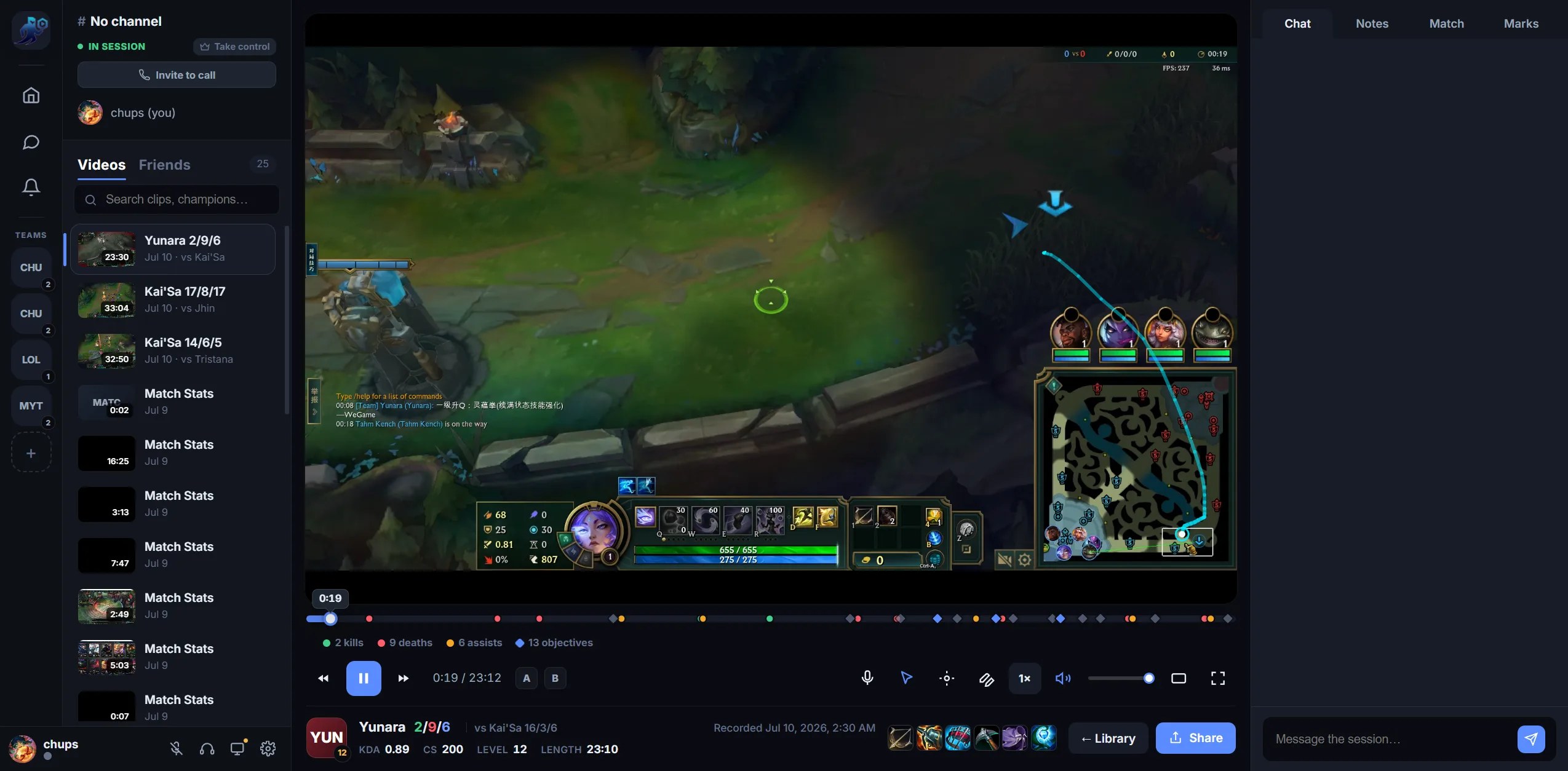
Una sesión consiste en que un jugador de Diamante, Maestro o Desafiante te observe jugar y señale el momento concreto de la retirada, la oleada concreta o el combate concreto. Los buenos abarcan la fase de carriles, la gestión de oleadas, la macro, la selección de campeones y los fundamentos del rol, y una hora suele equivaler a 50 partidas de conjeturas. Trae dos grabaciones (una derrota que se podría haber ganado y una victoria aplastante) y una pregunta más concreta que «¿cómo subo de rango?». El buscador de entrenadores, que tarda 30 segundos, te empareja según tu rol, rango y objetivo.
Preguntas frecuentes
¿Merece la pena la pérdida de LP por evitar una mala selección de campeón?
Una primera evasión cuesta 5 LP y seis minutos; una segunda en menos de 24 horas, 15 LP y 30 minutos; y una tercera te bloquea el acceso durante 12 horas. Una derrota cuesta unos 20 LP, por lo que evitar una partida que sabes que vas a perder sale a cuenta. En el nivel Maestro y superiores, un abandono cuenta como una derrota completa con pérdida de MMR.
¿Cuál es la posición más difícil para subir de rango en League of Legends?
El de apoyo, si te refieres a subir rápido: son las partidas en las que menos influye tu propio juego en el resultado. La jungla es la más difícil de jugar bien, ya que una mala limpieza cuesta tres carriles a la vez, pero es la que ofrece mayor potencial para llevar el peso del equipo en solitario. La línea central y la jungla son las que hacen subir los LP más rápido.
¿Cómo sigo subiendo de rango una vez que me quedo estancado en Diamante?
Diamante es el 5 % superior, y la mecánica deja de ser el factor diferenciador. Limítate a dos campeones, aprende las condiciones para ganar en el draft y acostúmbrate a jugar desde una posición de desventaja en lugar de forzar un reinicio. Analiza cada derrota, no solo una al día. Nuestro análisis sobre cómo salir de Diamante cubre el aspecto macro.
¿Tengo que estar en el nivel 30 para jugar partidas clasificatorias y cuánto tiempo se tarda en llegar?
Sí. Las partidas clasificatorias en solitario o en dúo requieren un nivel de cuenta de 30 y 20 campeones propios, y las cuentas nuevas deben completar primero 10 partidas normales en la Grieta del Invocador. Alcanzar el nivel 30 requiere entre 100 y 150 partidas: de dos a tres semanas jugando de forma constante, o seis semanas a razón de un par de partidas por noche.
¿Cuál es realmente el rango medio en League of Legends?
Oro IV es la mediana. La distribución en la cola en solitario en agosto de 2026 es de aproximadamente un 3,4 % de Hierro, un 16 % de Bronce, un 21 % de Plata, un 24 % de Oro, un 18 % de Platino, un 13 % de Esmeralda, un 4 % de Diamante y menos del 1 % de Maestro. Oro es el nivel medio; Esmeralda es realmente bueno, así que fíjate ese objetivo.