Deine Camps spawnen jetzt bei 0:55. Der Scuttle ist bei 2:55 da, der Baron taucht bei 20:00 statt bei 25:00 auf, und die Void Grubs sitzen ab 8:00 oben. Die meisten Jungle-Guides lehren immer noch die 1:30-Karte.
Der Jungle ist die einzige Rolle, die ohne Lane und ohne Laner startet. Nichts zwingt dich in eine bestimmte Position, weshalb es sich fünfzig Spiele lang unmöglich anfühlt und warum es so viele davon entscheidet. Jungle spielen zu lernen in League bedeutet vor allem, die Timer zu lernen. Hier ist der komplette Ablauf: Camps, erster Clear, Wegwahl, Ganking, Objectives und Championauswahl. Wenn du von einer Lane wechselst, lassen sich deine Spielfertigkeiten übertragen. Dein Timing jedoch nicht.
Was ein Jungler in League of Legends eigentlich macht
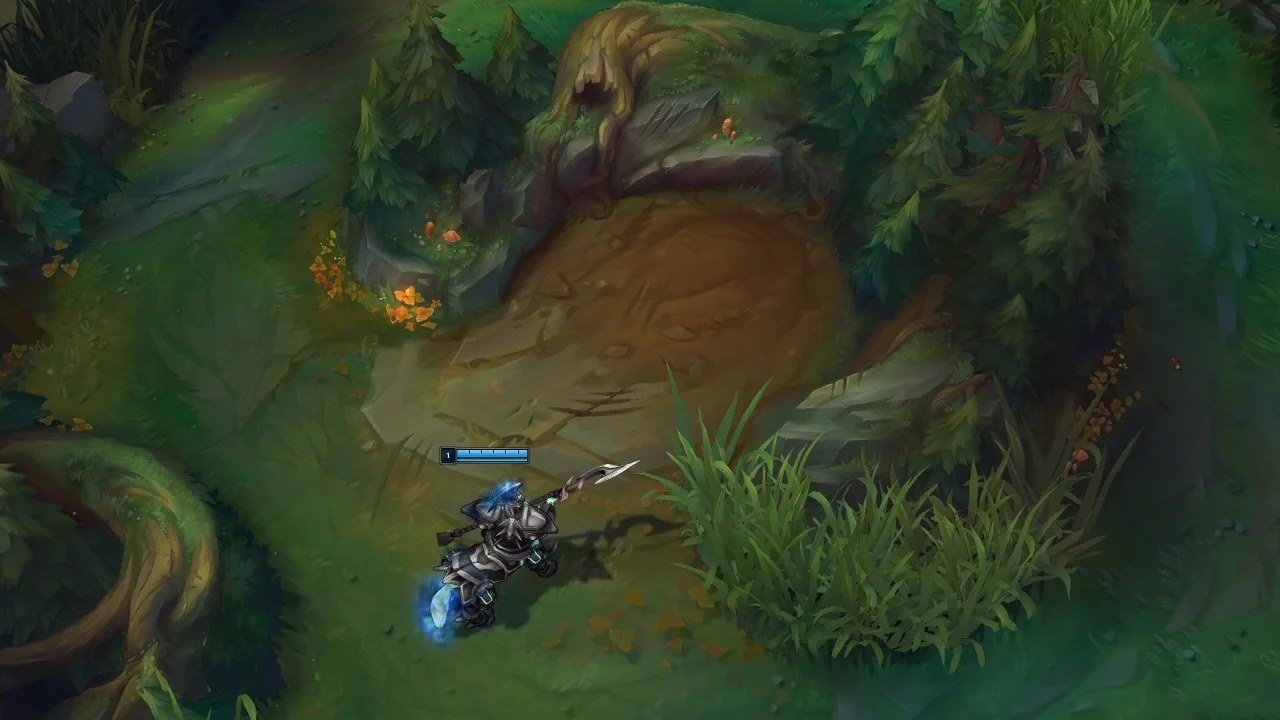
Dein Gold und deine Erfahrung stammen von neutralen Monstern statt von Minions. Keine Welle hält dich an Ort und Stelle, kein Laner tauscht mit dir aus, und die gesamte Minikarte wird zu deinem Problem. Fünf Aufgaben machen die Rolle in League of Legends aus:
Jungle-Camps farmen, um mit den Lanern Schritt zu halten.
Gank die Lanes, um aus einem verlorenen 1v1 ein 2v1 zu machen.
Erreiche Objectives: Drachen, Grubs, Herold, Baron.
Behalte den gegnerischen Jungler im Auge, den einzigen Spieler, der deine Arbeit zunichte machen kann.
Sichere die Vision des Flusses und des gegnerischen Jungle.
Alle fünf dienen einem Ziel: Du kontrollierst das Tempo, denn du entscheidest, wo die Karte kurzzeitig zu einem 2-gegen-1 wird.
Die Jungle-Karte: Camps, Buffs und Timer
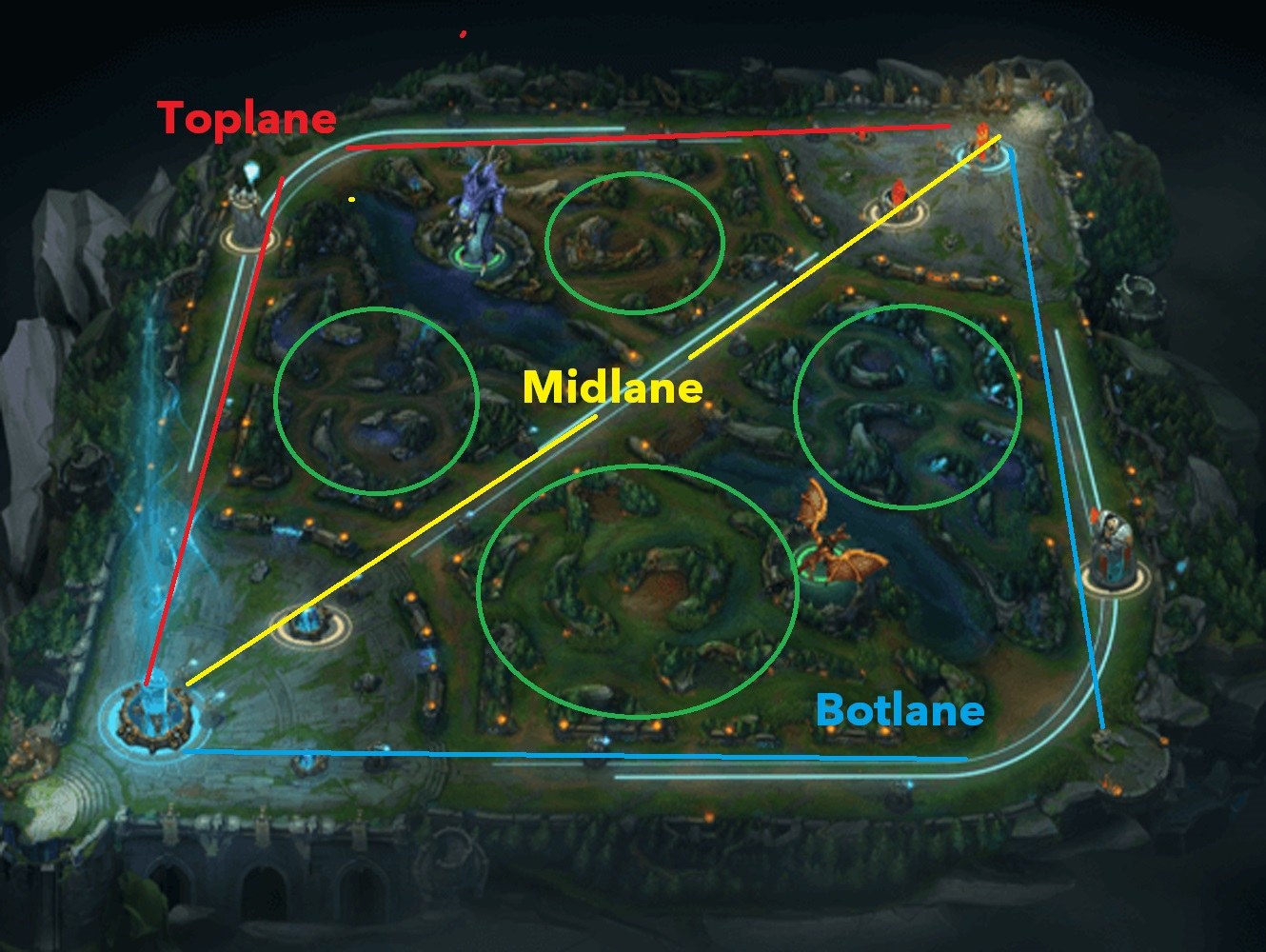
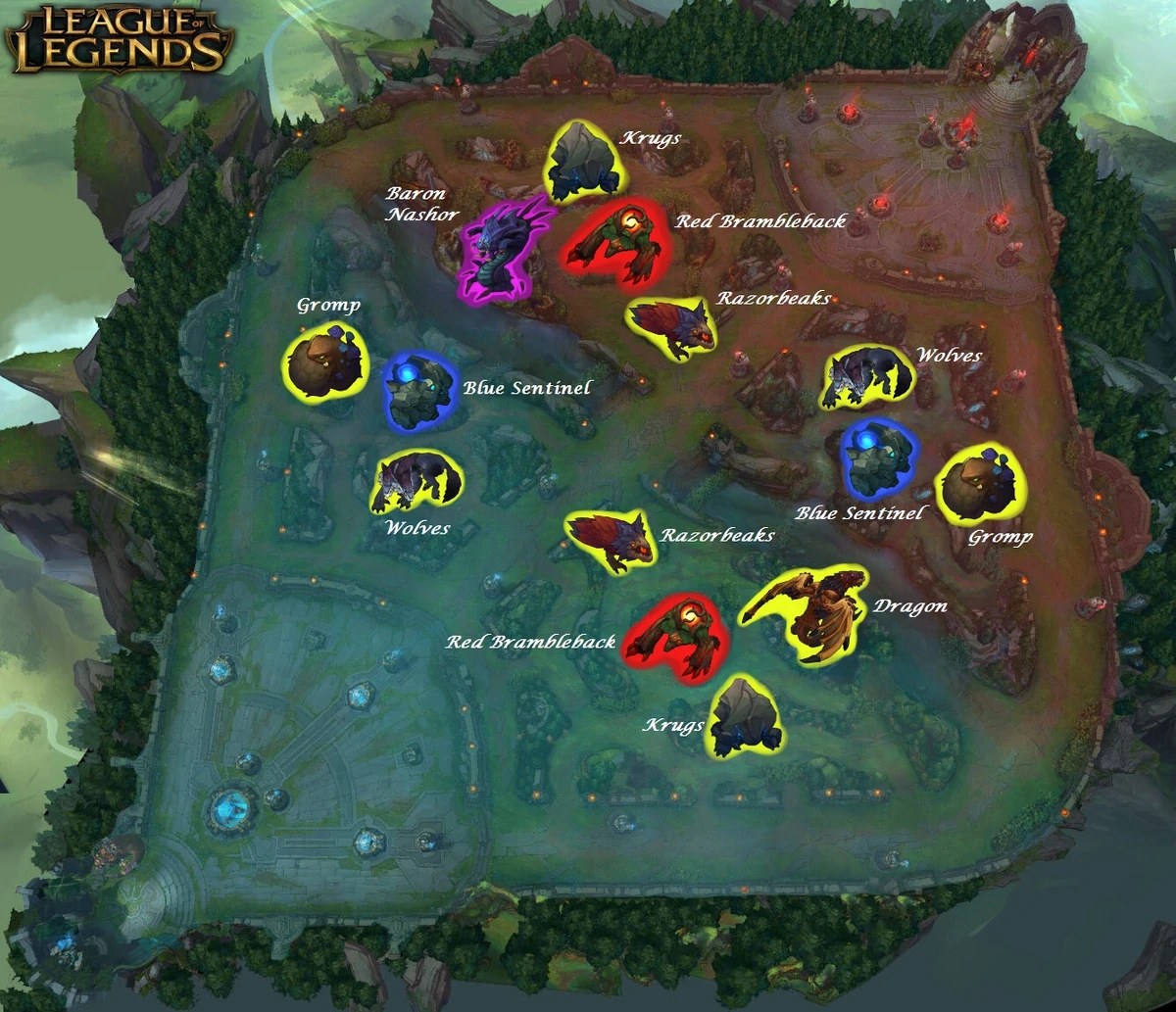
Jedes Team hat sechs Camps, die durch den Fluss in eine obere und eine untere Hälfte geteilt sind. Lerne zuerst, auf welcher Seite der Karte sich jedes Camp befindet, bevor du dir irgendwelche Routen einprägst.
Die sechs Camps und der Scuttle Crab
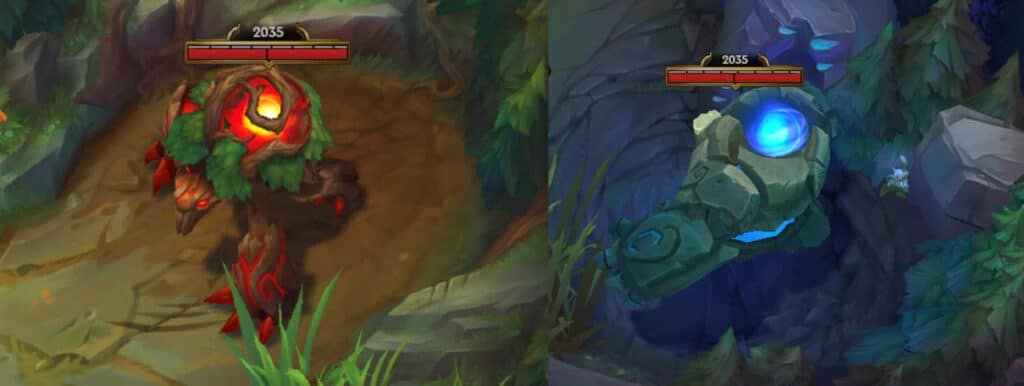
Blue Sentinel, Gromp und die Murk Wolves teilen sich die eine Hälfte; Red Brambleback, Raptors und Krugs teilen sich die andere. Der blaue Buff gewährt Mana- oder Energieregeneration sowie Fähigkeitsbeschleunigung; der rote Buff gewährt Lebensregeneration und fügt deinen Angriffen einen Brand- und einen Verlangsamungseffekt hinzu. Nach den ersten beiden Spawns gehört der blaue Buff dem Midlaner, der am dringendsten Mana benötigt.
Krugs bestehen aus acht Monstern, sobald sich das große Monster teilt. Raptoren sind sechs, Wölfe drei, Gromp und jeder Buff je eines: 20 Monster bei einem Full Clear, die auf der Anzeigetafel als 24 CS angezeigt werden, 4 pro Camp –, was wichtig wird, sobald du anfängst, die CS des gegnerischen Junglers zu lesen. Scuttle erscheint um 2:55 im Fluss und hinterlässt Vision sowie einen Geschwindigkeitsschrein.
Smite, dein Dschungel-Begleiter und die Respawns der Camps
„Smite“, der Beschwörerzauber, der die Rolle definiert, verfügt über zwei Ladungen im Abstand von 15 Sekunden bei einer Abklingzeit von 90 Sekunden. Verwende eine beim Clearen, um gesund zu bleiben, und hebe dir die andere für ein Objective auf.
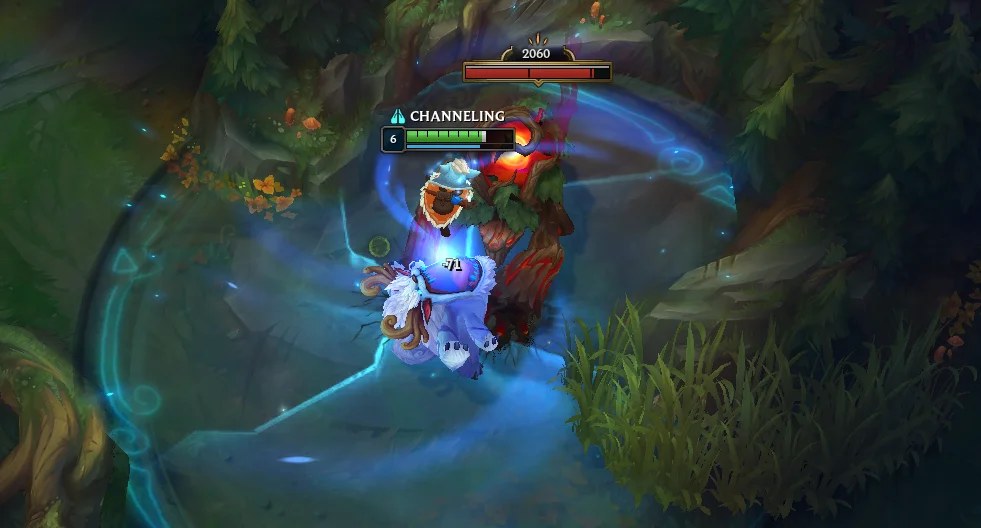
Dein Begleiter ist eine echte Entscheidung. Mosstomper schützt dich mit einem Schild, Gustwalker gewährt Bewegungsgeschwindigkeit, Scorchclaw verursacht Verbrennungen und verlangsamt. Große Monster füttern es, und die Jungle-Rollenquest endet bei 35 Leckerbissen. Dadurch wird dein „Smite“ verbessert und du erhältst 10 Gold und 10 EP pro großem Monster sowie 4 % Bewegungsgeschwindigkeit im Jungle und im Fluss.
Buffs kehren fünf Minuten nach ihrem Tod zurück; jedes zweite Camp um 2:15. Wölfe, Raptoren und beide Buffs erscheinen um 0:55; Krugs und Gromp um 1:07.
Jungle-Camps räumen, ohne die Hälfte deiner Gesundheit zu verlieren
Konzentriere dich zuerst auf das große Monster, dann kite: greife an, geh auf das nächste Camp zu, greife erneut an. Jeder Schritt zurück ist Schaden, den du nie einsteckst.
Zieh sie nicht über die Leash-Reichweite hinaus, sonst werden sie mit voller Gesundheit zurückgesetzt. Bei den Krugs soll der Große die Minis mit seinem Körper blockieren. Bei den Raptoren musst du mit kleinem Schaden von sechs Gegnern gleichzeitig rechnen, das Camp, das eine schwache frühe Räumung offenbart.
Patch 26.1 hat den Schaden, den Jungler von nicht-epischen Monstern erleiden, halbiert, sodass Clears, die früher bei halber Gesundheit endeten, nun eher bei drei Vierteln enden. HP ist eine Ressource genau wie Gold: Du kannst bei 40 % nicht ganken, und im Dschungel durch ein Camp zu sterben, ist unverzeihlich.
Grundlagen der Jungle Route
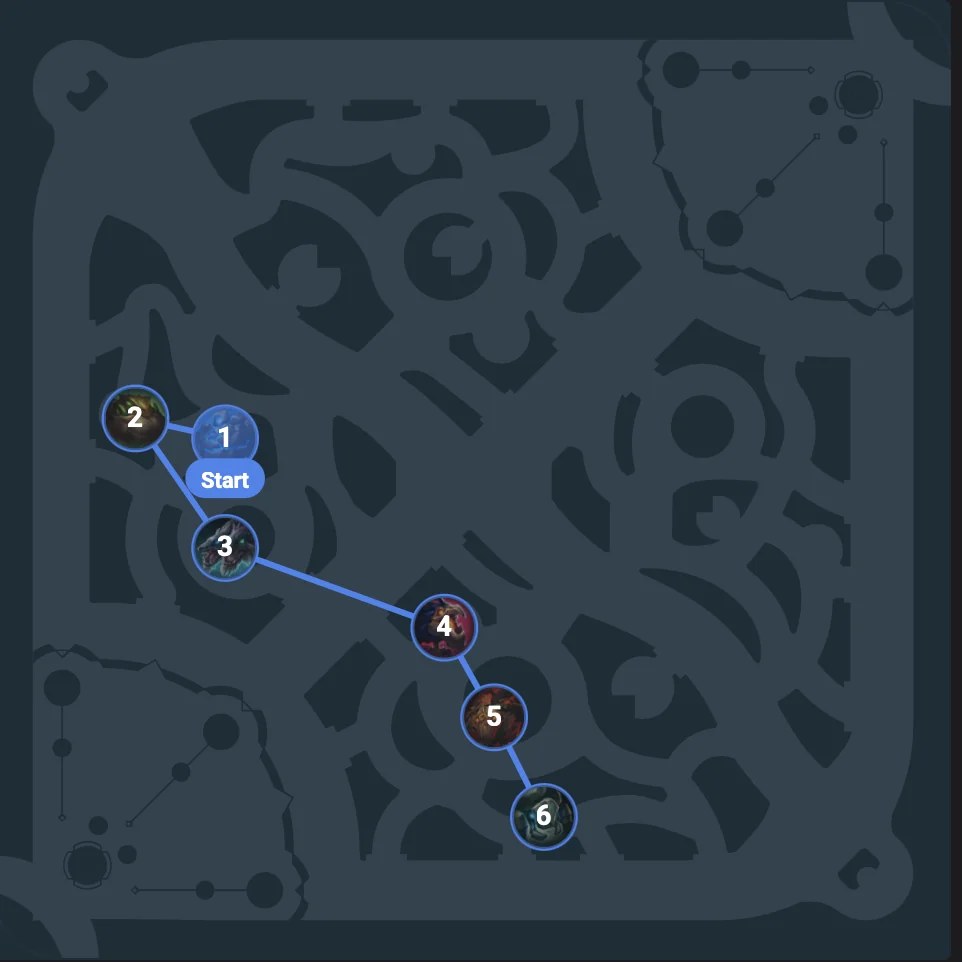
Die Wegführung im Jungle ist nicht nur die Reihenfolge, in der du die Camps tötest. Es geht darum, wo du dich aufgrund dieser Reihenfolge befindest, wenn etwas erscheint.
Der Standard-Full Clear
Blauer Start: Blau, Gromp, Wölfe, Raptoren, Rot, Krugs, Scuttle. Roter Start: Rot, Krugs, Raptoren, Wölfe, Blau, Gromp, Scuttle. Beide beginnen bei 0:55 und enden an derselben Stelle: Level 4 bei etwa 3:00, mit einem Scuttle, der seit 2:55 im Fluss sitzt.
Dieser Checkpoint ist der Grund, warum Anfänger standardmäßig den „Full Clear“ wählen sollten. Dabei bleibt kein Gold auf der Karte zurück und du landest im Fluss mit voller Gesundheit, „Smite“ und einem Levelvorsprung, sobald der erste Kampf beginnt.
Wann man von der Route abweichen sollte
Zwei Dinge rechtfertigen ein vorzeitiges Verlassen der Route. Eine Lane, die bereits auf Level 3 gankbar ist, wobei dein Teamkollege noch bei Gesundheit ist und der Gegner ohne Vision weit vorgedrungen ist: Nimm drei Camps, gank, komm zurück. Oder ein gegnerischer Jungler, den du im 1-gegen-1 nicht schlagen kannst: Wenn er oben entlangzieht, farmst du unten.
Ein Recall, während noch Camps stehen, ist niemals richtig. Unterhalb der Goldschwelle ist Ganking oft besser als die Route bis auf die Sekunde zu optimieren, da gegnerische Laner sich ständig zu weit vorwagen und das Eindringen in die gegnerische Lane ein Glücksspiel bleibt, bis du ein 1-gegen-1 auf Level 3 gewinnen kannst.
Wie man gankt
Ein Gank kostet etwa 40 Sekunden und zwei Camps, egal ob er klappt oder nicht, das macht aus „Hör auf, Ganks zu erzwingen“ eine reine Rechenaufgabe. Du brauchst einen Kill, einen verbrauchten Flash oder eine abgewehrte Welle, um die Kosten zu decken.
Beurteile zuerst die Lane-Situation
Gank die Lane, auf der der Gegner über die Mitte hinausgedrängt wurde und keinen freien Weg zurück hat. Dann rechne den Rest zusammen: Hat dein Laner Crowd Control, um nachzusetzen? Hast du einen Level- oder Gesundheitsvorsprung? Ist sein Flash aufgebraucht? Wenn drei dieser Punkte zutreffen, sollte das zu einem Kill führen.
Lanes, die unter dem gegnerischen Turm feststecken, und solche, die auf den Turm zudrängen. Ein Toplaner, der sicher in seiner eigenen Hälfte Farming betreibt, ist kein Gank, das ist ein Spaziergang. Die Bot-Lane ist das beste Ziel in der frühen Phase, denn zwei gegnerische Laner an einem Ort bedeuten zwei „Flash“-Einheiten, die du verbrennen kannst.
Den Gank ausführen
Überprüfe die offensichtlichen Ward-Spots, dann nähere dich aus dem Nebel, anstatt den Fluss entlangzulaufend, wo jede Ward hinschaut. Ein Lane-Gank aus einem Busch, an dem der Gegner vor zwei Minuten vorbeigelaufen ist, ist jedes Mal besser als ein River-Gank.
Wenn dein Crowd Control eher die Folgeaktion als der Auftakt ist, lass deinen Laner zuerst angreifen. Wenn sich innerhalb von zehn Sekunden nichts tut, zieh dich zurück. Ein verbrauchtes „Flash“ zählt immer noch als erfolgreicher Gank, also behalte den Timer im Auge: Er ist in fünf Minuten wieder verfügbar, und wenn du schon nach viereinhalb Minuten zurückkommst, ist das ein Spielzug, den niemand erwartet.
Lanes, die du nicht ganken solltest
Lanes, die stark im Rückstand sind, sind Fallen: Einen 0/3-Teamkollegen gegen einen gestärkten Gegner zu ganken, beschert diesem einen Double Kill und einen Snowball, der in die falsche Richtung rollt. Scaling Laner, die gerne Farmen, wollen dich dort auch nicht haben, und manche Matchups lassen sich überhaupt nicht Ganken, weil Mobilität und Selbstschutz dein Ultimate zu einem verschwendeten Knopfdruck machen.
Wenn keine Lane in Frage kommt, hilfst du den Lanes trotzdem, indem du Farming ausübst, das nächste Objective vorbereitest oder in die gegnerische Lane eindringst, um den gegnerischen Jungler ärmer zu machen als dich selbst.
So verfolgst du den gegnerischen Jungler
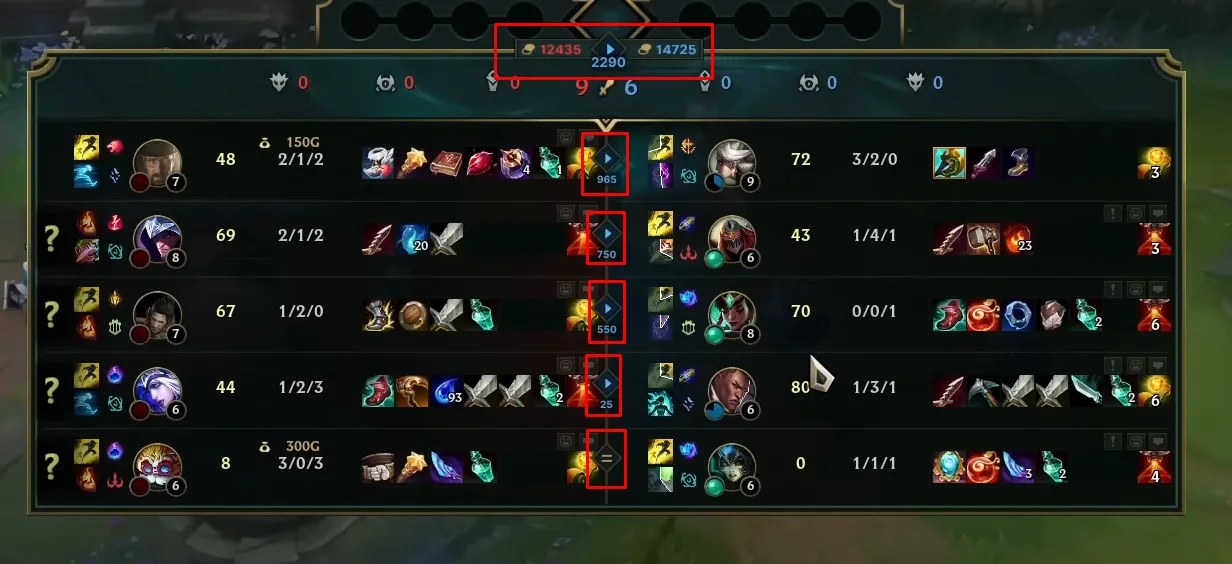
Um 1:00 schau nach, welchen Champion der gegnerische Jungler gewählt hat, denn Mana-Charaktere fangen fast immer mit dem blauen Camp an. Um 1:30 schau nach, welche gegnerischen Laner zu spät angekommen sind: Eine Bot-Lane, die 15 Sekunden hinter dem Zeitplan liegt, hat das Camp neben sich geleashed.
Nutze dann die Spielstatistik. Ein sauberer Full Clear umfasst 20 Monster, also hat ein gegnerischer Jungler, der um 3:10 24 CS anzeigt, alles geräumt und ist auf dem Weg zum Scuttle. Zwölf bedeuten drei Camps und einen Abstecher, also befindet er sich gerade in einer Lane.
Setz die Jungle-Verfolgung in Taten um. Wenn er zuletzt auf deiner Seite gesehen wurde, schnapp dir seine Camps. Wurde er auf der gegenüberliegenden Seite der Karte gesehen, Gank sofort auf deiner Seite. Sind sie 30 Sekunden lang nicht zu sehen, geh davon aus, dass sie am nächsten Objective sind, und setze zuerst einen Ward. Wenn du den gegnerischen Jungler überhaupt nicht entdecken kannst, farme die Camps, die deinen Türmen am nächsten liegen, und ganke die Lane, von der aus du dich zurückziehen kannst. Mit dem richtigen Gespür wird ein Lee Sin, der in deine Bot-Lane läuft, zu einem Gegen-Gank, bei dem du bereits bereitstehst.
Zielkontrolle und Vision
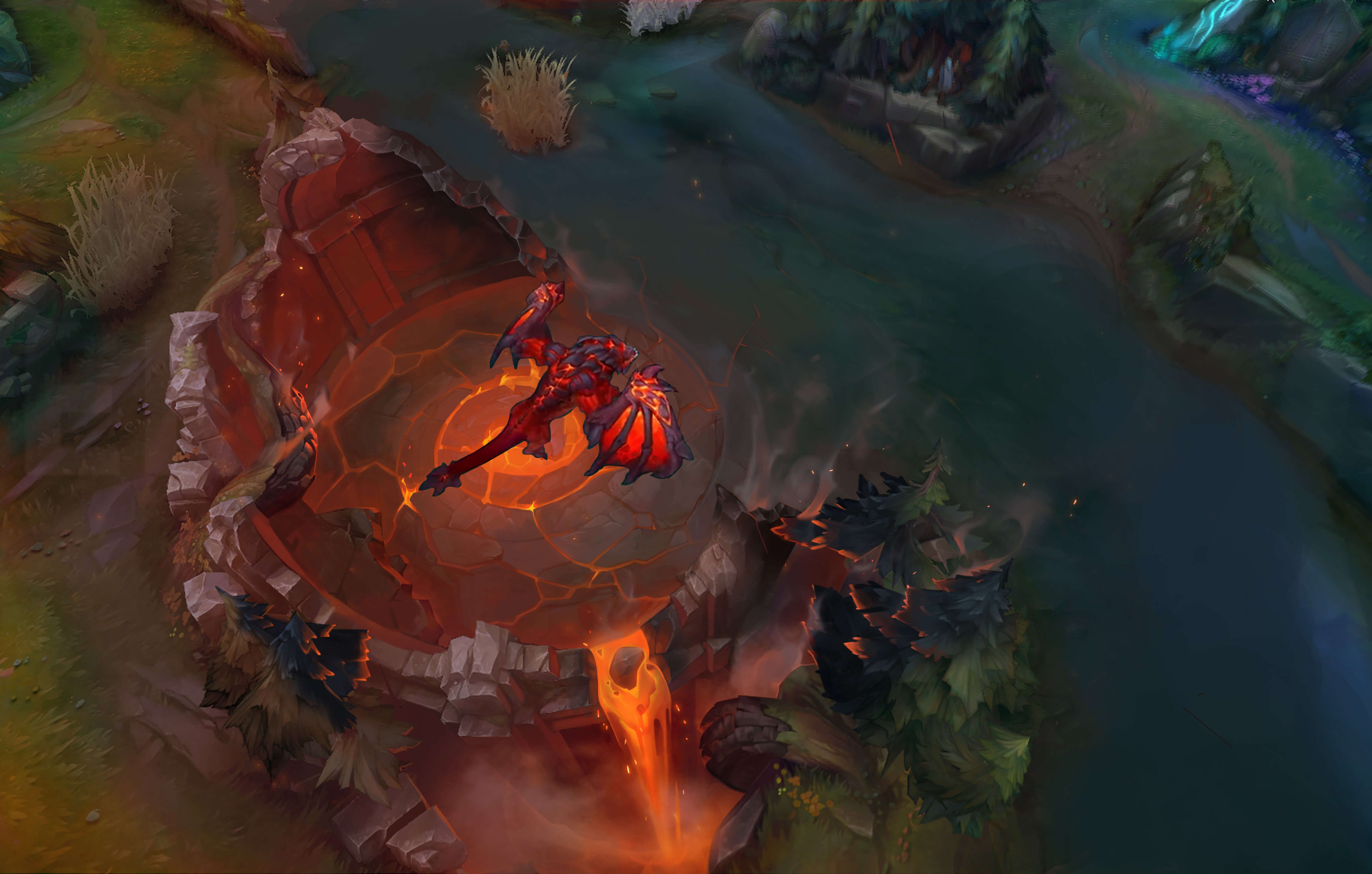
Drachen erscheinen um 5:00 und kehren fünf Minuten nach jedem Kill zurück; vier davon bringen euch eine permanente Drachenseele ein, danach werden sie durch den Ältesten ersetzt. Void Grubs tauchen um 8:00 oben auf, spawnen einmal pro Spiel und verschwinden um 14:45: Jeder gibt deinem Team einen Stack, der gegnerische Türme verbrennt, und alle drei beschwören Voidmites. Der Rift-Herold landet um 15:00 Uhr und ist um 19:45 Uhr wieder weg. Der Baron erscheint um 20:00 Uhr mit einer Wiedererscheinungszeit von sechs Minuten, und der Baron-Buff stärkt eure Minions drei Minuten lang.
Eine Regel ist besser, als sich alles zu merken: Sei 30 bis 45 Sekunden früher am Ziel, während die Minion-Welle auf den Gegner zudrängt und ein Kontroll-Ward gesetzt ist. Timer sagen dir, wann etwas erscheint; Vision-Kontrolle sagt dir, wann du dein Camp verlassen solltest.
Die Lane-Priorität ist die eigentliche Voraussetzung: Wenn Mid und Bot beim Erscheinen des Drachen unter ihre eigenen Türme gedrängt werden, gerätst du in einen 5-gegen-3-Kampf, egal wie gut dein „Smite“ ist. Tausch stattdessen: Schnapp dir Grubs, während sie den Drachen nehmen, und lass deine Win Condition entscheiden. Kauf bei jedem Back eine Kontroll-Ward.
Die Wahl deines ersten Jungle-Champions
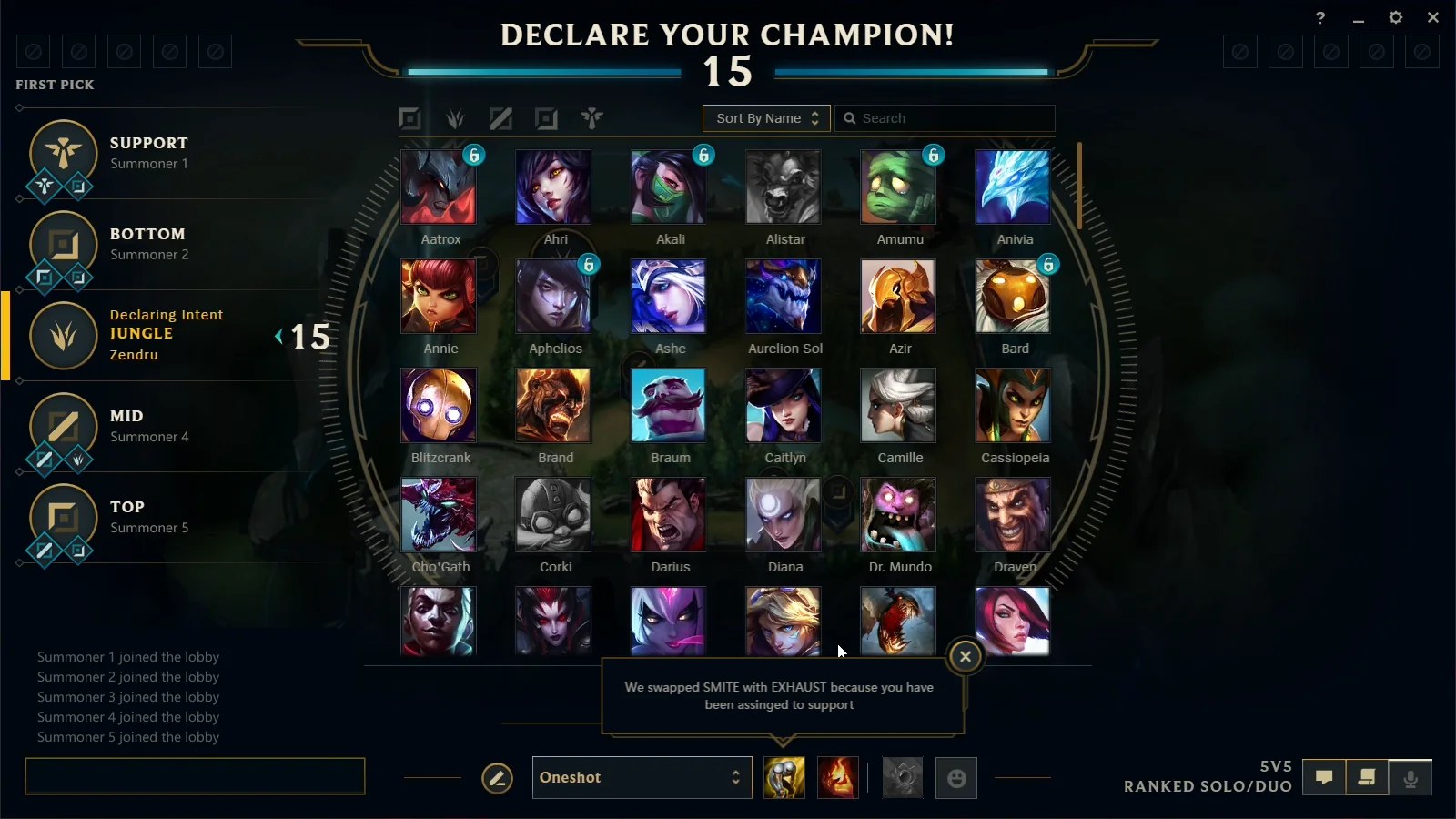
Jungle-Champions lassen sich in zwei Gruppen einteilen: Power-Farmer räumen schnell ab, nehmen jedes Camp ein und gewinnen, indem sie nach 20 Minuten drei Level Vorsprung haben, während Early-Aggressoren zwar schwächer beim Clearen sind, dafür aber ein starkes Early Game haben und gewinnen, indem sie eine Lane unspielbar machen.
Entscheide dich für zwei oder drei Champions, anstatt in jedem Spiel einen neuen auszuwählen, denn die Hälfte davon, ein großartiger Jungler zu sein, besteht darin, deine eigenen Clear-Zeiten auf die Sekunde genau zu kennen. Patch 26.16 hat die AP- und Tank-Scaling-Faktoren der Jungle-Begleiter verbessert, was drei dieser vier Anfänger-Jungler zugutekommt.
Champion | Archetyp | Erster echter Powerspike | Gesundheitskosten pro Clear | Gank-Setup-Tool |
|---|---|---|---|---|
Amumu | AP-Tank | Level 6, Fluch der traurigen Mumie | Niedrig, „Wutanfall“ dämpft jeden Treffer | „Bandage Toss“ betäubt |
Warwick | Ausdauernder Scharmützelkämpfer | Stufe 6, „Infinite Duress“ | Nahezu null, Q heilt, während du den Gegner besiegst | Unaufhaltsamer Sprint in eine 1,5-Sekunden-Unterdrückung |
Vi | Früher Angreifer | Stufe 3, aufgeladener „Vault Breaker“ | Mäßig, tauscht HP gegen Klarungsgeschwindigkeit ein | „Vault Breaker“ gegen eine Wand |
Nunu & Willump | Power-Farmer | Stufe 3, Schneeball-Salve | Niedrig, „Consume“ heilt bei jedem Camp einen Teil der HP wieder auf | Hochgeworfener Schneeball |
Ein Spielplan Minute für Minute
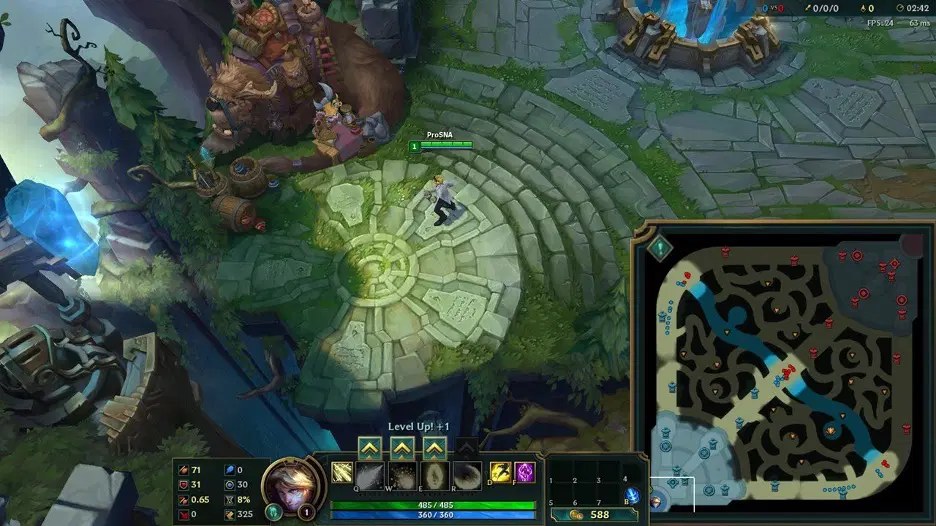
Das Junglen wird einfacher, wenn du aufhörst, Tipps und Tricks zu sammeln, und einfach eine Runde durchziehst. Full Clear von 0:55 bis etwa 3:00. Um 2:55 musst du die Scuttle-Entscheidung treffen: Kämpfe darum, wenn du gesund bist und Level 4 hast; tausche ihn ein, wenn sie zuerst da waren. Dann stell dir nach jedem Clear nacheinander drei Fragen.
Wo ist der gegnerische Jungler? Zuletzt gesehene Position plus seine CS.
Welche Lane kann nachsetzen? Crowd Control verfügbar, Teamkollege am Leben.
Was spawnt in den nächsten 60 Sekunden?
Wenn ein Objective kommt und die Lane-Priorität gut ist, bereite es vor. Befindet sich der gegnerische Jungler auf der anderen Seite und ist eine Lane weit vorgerückt, Gank sie. Wenn beides nicht zutrifft, farme und Roame in Richtung dessen, was als Nächstes spawned. Das ist der Spielplan, der alle 90 Sekunden wiederholt wird.
Die Fehler, die Jungle-Spiele tatsächlich kosten
Drei Fehlermuster tauchen in fast jedem Replay auf, das wir uns ansehen. Im frühen Spielverlauf durch eine Invasion oder einen Kampf ohne Vision zu sterben. Totzeit, also 20 Sekunden zielloses Herumlaufen, was reines verlorenes Goldeinkommen ist. Und auf der falschen Seite der Karte zu sein, wenn ein Objective erscheint.
Öffne eine Wiederholung und überprüfe vier Dinge: noch stehende Camps nach 10 Minuten, dein Gold und deine XP im Vergleich zum gegnerischen Jungler nach 10 und 15 Minuten, ungenutzte „Smite“-Ladungen, als Objectives erschienen, und pro „Back“ gekaufte Wards. Ein einziger schlechter Wert verrät dir dein Problem, und wenn es nicht offensichtlich ist, ist das genau die Lücke, die eine Sitzung mit einem Jungle-Coach am schnellsten schließt.
Jungle-FAQ
Ist Jungle die schwierigste Rolle in League of Legends?
Sie ist am schwersten zu erlernen, aber nicht am schwersten auszuführen. Mechanisch gesehen ist ein Warwick-Clear einfacher als eine Riven-Combo. Was den Jungle so brutal macht, ist die Vielzahl an Entscheidungen: Ein Midlaner muss sich um eine Welle kümmern; du musst sechs Camps, vier Zieltypen, drei Lanes und einen gegnerischen Jungler im Blick behalten.
Was soll ich tun, wenn alle drei meiner Lanes zurückliegen?
Hör auf zu ganken und fang an zu farmen, denn jeder Gank in eine verlierende Lane bringt dem Gegner Geld ein. Spiegle den gegnerischen Jungler, damit er nicht ungehindert farmen kann, hol dir jedes sichere Camp und versuch, bis zur 15. Minute der Spieler mit dem höchsten Level in deinem Team zu sein.
Ab welcher Lebensenergie sollte ich den Drachen oder den Baron mit „Smite“ besiegen?
„Smite“ verursacht standardmäßig 600 echten Schaden, „Unleashed Smite“ 1.000 bei 15 Trinks und „Primal Smite“ 1.400, sobald deine Quest abgeschlossen ist. Der Baron stirbt also durch „Primal Smite“ bei 1.400 Lebenspunkten. Fang an, den Finger über der Taste zu halten, wenn die Lebenspunkte ungefähr doppelt so hoch sind, da dein Team ihm weiter Schaden zufügt, während du reagierst.
Wie höre ich auf, zu getilten, wenn mein Team den Jungler beschimpft?
Tippe „/mute all“, sobald das Spiel geladen ist, und schau nie wieder in den Chat. Das blendet das Flaming aus und lässt alle Pings stehen, das ist die einzige Kommunikation, die du brauchst. Einen Absatz über deine Ganks zu lesen kostet dich die drei Sekunden, die du gebraucht hättest, um die richtige Route zu wählen.
Deine nächsten zehn Spiele
Wähle einen Champion aus, fahre eine Route so lange, bis Level 4 um 3:00 automatisch erreicht ist, und stelle dir nach jedem Clear die drei Fragen. Wenn du möchtest, dass das Muster hinter deinen Niederlagen benannt statt nur erraten wird: Unsere Coaches, die sich auf die Jungle-Rolle spezialisiert haben, machen das beruflich.